
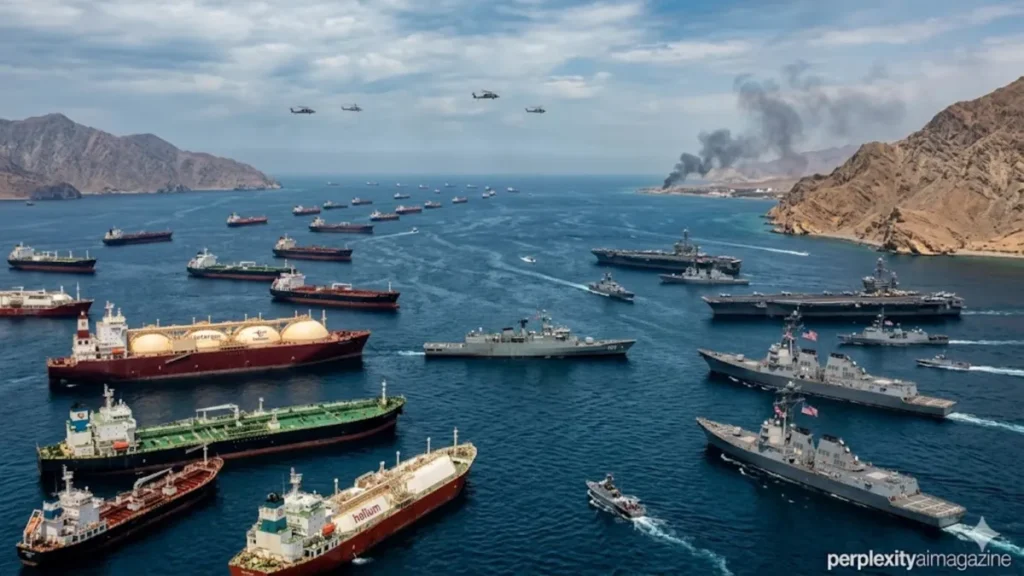
The role of helium in AI is non-negotiable. In the ultra-high vacuum environments required for semiconductor manufacturing, helium is used as a purging gas to remove contaminants and as a critical coolant for the superconducting magnets in lithography tools. Unlike other industrial gases, helium’s unique properties—its small atomic size and extreme thermal conductivity—make it nearly impossible to substitute. As supply vanishes, spot prices for the gas have surged between 40% and 100% in a matter of weeks. While the United States remains a major producer via domestic reserves, those supplies are largely spoken for by domestic aerospace and defense contracts, leaving Asian tech giants to scramble for costlier, dwindling alternatives.
The fragility of this supply chain is now on full display. South Korean manufacturers Samsung and SK Hynix produce roughly two-thirds of the world’s AI memory chips. Their dependence on Qatari LNG ports is a vulnerability that few anticipated would be exploited so decisively. As QatarEnergy declares force majeure on shipments, the strategic focus has shifted from chip architecture to basic elemental logistics. Without helium, the precision required for 3nm and 2nm process nodes cannot be maintained, leading to either a total halt in production or a significant reduction in wafer throughput.
| Manufacturer | Helium Dependency (Qatar) | Estimated Stockpile | Primary Risk Factor |
| Samsung | ~68% | 6–12 Weeks | HBM production for AI accelerators |
| SK Hynix | ~65% | 7–10 Weeks | High-bandwidth memory supply for Nvidia |
| TSMC | ~35% | 10–20 Weeks | EUV lithography for Blackwell/B200 GPUs |
| Intel | <10% | 15–25 Weeks | Domestic U.S. supply edge |
The Fragility of Global Memory
The crisis in the Strait of Hormuz has created a hierarchy of vulnerability among chipmakers. Samsung and SK Hynix are currently at the highest risk. These firms are the backbone of the AI hardware ecosystem, supplying the High-Bandwidth Memory (HBM) that sits alongside Nvidia’s GPUs to enable massive data processing. Because their supply lines are almost entirely dependent on Qatari exports passing through the Strait, their operations are a ticking clock. “The AI boom was built on a foundation of liquid helium that we assumed would always flow,” says Phil Kornbluth, a leading helium industry consultant. “We are now seeing the reality of a just-in-time supply chain meeting a hard geopolitical wall.”
In contrast, Taiwan’s TSMC is slightly better positioned, though still under immense pressure. TSMC’s diversified sourcing and advanced on-site recycling systems allow for a buffer of roughly 10 to 20 weeks. However, even these stockpiles are finite. If the regional hostilities between the U.S. and Iran continue to escalate, TSMC will likely be forced to ration helium for its highest-margin AI chips, potentially sacrificing automotive and consumer electronics production to keep Nvidia’s supply lines open. The secondary impact is a spike in LNG prices, which has inflated power expenses for fabs across Taiwan and China by nearly 60%, further squeezing margins.
Data Centers and the Compute Crunch
The scarcity of helium ripples upward into the cloud. Hyperscalers like Google, xAI, and OpenAI are already seeing the effects in their hardware procurement timelines. The delay in Blackwell GPU production directly translates to a slowdown in the scaling of compute capacity. For startups like xAI, which are in a race to build the world’s largest supercomputers, a four-month delay in chip delivery is an existential threat. “We are looking at a scenario where the physical limits of a gas determine the speed of the intelligence explosion,” notes a lead engineer at an American data center developer.
| Impact Category | Estimated Delay | Cost Increase | Affected Entities |
| AI Chip Fabrication | 3–5 Months | 40%–100% (Helium) | TSMC, Samsung, SK Hynix |
| Data Center Buildouts | 4–9 Months | 15% (Hardware) | Google, OpenAI, xAI |
| Memory Supply | 6+ Months | 30% (HBM) | Nvidia, AMD |
| Operational Energy | N/A | 60% (LNG) | East Asian Fabs |
The strategic advantage has temporarily shifted back to the United States, which benefits from domestic helium reserves and a surplus of natural gas. While Intel and other U.S.-based manufacturers are better protected, the interconnected nature of the global supply chain means they cannot entirely escape the fallout. Even if an Intel chip is made in Arizona, it often requires memory from South Korea or packaging that involves materials passing through the troubled waters of the Middle East.
Geopolitical Standoff: US, Iran, and Qatar
The closure of the Strait is a direct consequence of the breakdown in regional stability following U.S. and Israeli airstrikes aimed at degrading Iranian nuclear and military capabilities. The death of Supreme Leader Ali Khamenei served as the catalyst for the IRGC to deploy its ultimate economic weapon: the blockade. Qatar finds itself in a precarious position. While it hosts the Al Udeid Air Base—the largest U.S. military facility in the Middle East—it is also economically bound to its energy exports. The disruption of Ras Laffan’s helium production is a blow to Qatari revenue, but more importantly, it is a lever being used to pressure the West into de-escalation.
“Helium has become the new oil in terms of strategic leverage,” says Dr. Elena Rodriguez, a geopolitical analyst. “Iran knows that by holding the Strait, they are holding the keys to the global AI race.” This leverage is complicated by the fact that helium, unlike oil, cannot be easily stockpiled in massive quantities for years due to its propensity to leak from almost any container. The world’s “just-in-time” reliance on a handful of facilities—specifically Qatar’s Train 1, 2, and 3 at Ras Laffan—has turned a narrow waterway into the most significant bottleneck in modern history.
Takeaways from the Helium Crisis
- Critical Shortage: The closure of the Strait of Hormuz has eliminated 30-33% of the world’s helium supply.
- AI Production at Risk: Semiconductor fabs like Samsung and SK Hynix face production cuts as early as May 2026.
- No Substitutes: Helium is essential for EUV lithography and vacuum purging; no chemical alternatives exist.
- Data Center Delays: Planned AI infrastructure worth $650 billion faces 4-to-9-month delays in scaling.
- Energy Spikes: LNG price increases are driving up operational costs for chipmakers in East Asia.
- Strategic Vulnerability: South Korea is the most exposed nation, relying on Qatar for 65% of its helium.
- U.S. Advantage: Domestic U.S. reserves provide a temporary buffer for North American fabs like Intel.
Conclusion
The helium crisis of 2026 serves as a stark reminder that the digital revolution is ultimately tethered to the physical world. While we discuss the boundless potential of artificial intelligence, that potential is currently contingent on the security of a narrow strip of water in the Persian Gulf. The conflict between the U.S., Israel, and Iran has exposed the profound fragility of a global supply chain that concentrates 30% of a critical resource in a single geographic point. As helium stockpiles at TSMC and Samsung begin to dwindle, the tech industry faces a reckoning: the “cloud” is not a nebulous space, but a collection of hardware that requires rare gases, stable energy, and clear shipping lanes. If diplomacy fails to reopen the Strait of Hormuz soon, the pace of AI advancement will not be dictated by the speed of algorithms, but by the availability of a gas that is literally slipping through our fingers. The coming months will determine if the AI boom continues its upward trajectory or if it is grounded by the ancient realities of geography and war.
READ: DACH Region Companies Google Cloud Platform Adoption
FAQs
Why can’t we use another gas instead of helium for AI chips?
Helium has the smallest atomic radius and the lowest boiling point of any element. These properties allow it to leak-test at an atomic level and cool components to near absolute zero without turning into a solid or liquid that would interfere with the delicate EUV lithography process. No other gas can replicate these thermal and physical characteristics.
How long can chip manufacturers last without new helium?
TSMC has the most robust stockpiles, lasting up to 20 weeks. However, South Korean giants like Samsung and SK Hynix are much more vulnerable, with supplies estimated to last only 6 to 12 weeks. If the Strait remains closed beyond May 2026, major production cuts are inevitable.
Does the U.S. produce its own helium?
Yes, the U.S. is a major producer, largely from natural gas fields in Texas, Oklahoma, and Kansas. However, the U.S. supply is mostly consumed domestically by NASA, the Department of Defense, and local medical facilities (MRIs), leaving little surplus to replace the massive Qatari exports that Asia relies on.
Will this make AI hardware more expensive?
Almost certainly. With helium spot prices doubling and LNG costs rising, the cost of manufacturing high-end GPUs and memory chips is skyrocketing. These costs will likely be passed down to data center operators and, eventually, to consumers of AI services.
What is the “shelf life” of liquid helium?
Liquid helium is extremely difficult to store. Even in the most advanced ISO containers, it slowly boils off. In a transport or storage setting, its practical viability is usually limited to 35-48 days before significant loss occurs, making long-term stockpiling difficult compared to oil or coal.
References
- Energy Information Administration (EIA). (2026). Strait of Hormuz: A strategic chokepoint for global energy and helium. U.S. Department of Energy.
- Kornbluth, P. (2026, March). The helium shortage 4.0: Geopolitics and the tech industry. Helium Advisory Services.
- QatarEnergy. (2026, April). Statement on force majeure and LNG byproduct exports. Ras Laffan Operational Report.
- Semiconductor Industry Association (SIA). (2026). Supply chain vulnerabilities in the age of AI: The role of noble gases. Annual Report 2026.
- United States Geological Survey (USGS). (2026). Helium: Mineral commodity summaries 2026. U.S. Department of the Interior.
