
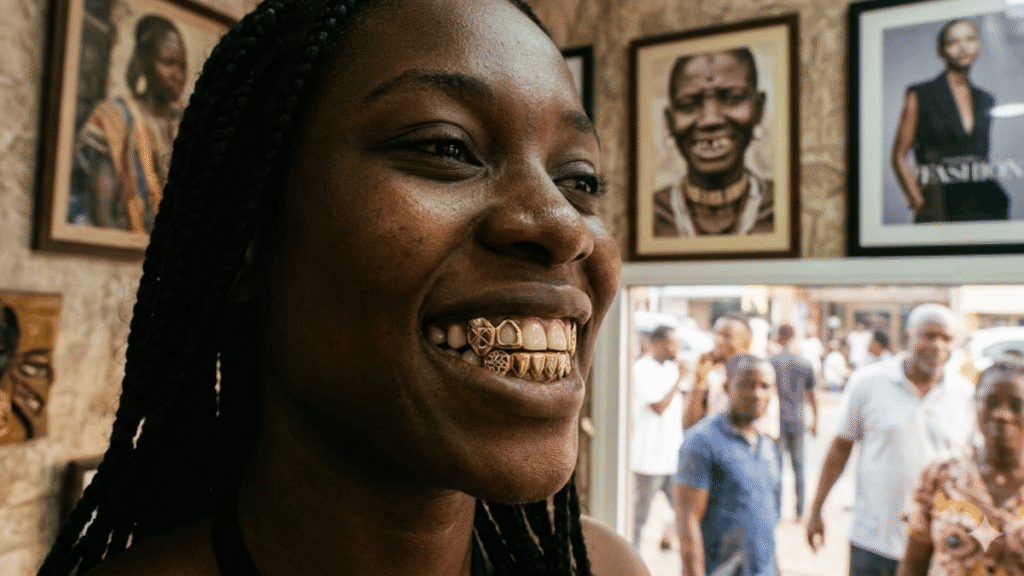
In an era defined by hyper-visibility—selfies, short-form video, and algorithmic beauty standards—the human smile has become a curated asset. “Brasssmile,” a term increasingly circulating in online subcultures and niche cosmetic dentistry forums, refers to the intentional incorporation of brass-toned dental elements into one’s smile, whether through caps, grills, or custom overlays. For those encountering the term for the first time, brasssmile is neither a clinical procedure nor a standardized treatment; rather, it is an aesthetic movement, blending dentistry, fashion, and identity into a single, conspicuous statement.
At its core, brasssmile represents a shift away from the conventional ideal of uniform, ultra-white teeth toward something more expressive and, in some cases, deliberately disruptive. Within the first moments of understanding the trend, the intent becomes clear: it is about visibility, individuality, and, often, rebellion against homogenized beauty standards.
Yet beneath the visual impact lies a more complex story. Dentists caution about material safety and long-term oral health implications. Sociologists interpret the trend as a response to globalized beauty norms. Economists note the emergence of micro-industries catering to custom dental aesthetics. As brasssmile gains traction, it raises broader questions about how far individuals are willing to reshape their bodies in pursuit of identity—and who gets to define what a “perfect” smile looks like.
The Origins of BrassSmile: From Subculture to Spotlight
The aesthetic lineage of brasssmile can be traced to earlier forms of dental ornamentation. Archaeological evidence suggests that decorative dental modifications date back thousands of years, from jade inlays in ancient Mesoamerica to gold caps in Southeast Asia. In modern contexts, the closest precursor is the rise of hip-hop–inspired grills in the late 20th century, popularized in the United States during the 1980s and 1990s.
Brasssmile diverges from these predecessors in both material and intent. Unlike gold, which historically signified wealth and prestige, brass carries a more industrial, raw aesthetic. Its muted, slightly weathered tone aligns with broader fashion movements favoring “anti-luxury” and utilitarian design. By the early 2020s, social media platforms began amplifying experimental dental aesthetics, and brasssmile emerged as a distinct niche.
A 2024 report by the American Academy of Cosmetic Dentistry noted a 18% increase in inquiries related to “non-traditional dental aesthetics,” a category that includes colored caps and metallic finishes. While brass specifically remains a minority choice, its growth trajectory is notable.
“People are no longer just whitening their teeth—they’re designing them,” said Dr. Lena Ortiz, a cosmetic dentist based in Los Angeles. “Brasssmile is part of that broader shift toward personalization.”
Materials, Methods, and Medical Concerns
From a clinical perspective, brass is not a standard dental material. Traditional restorative dentistry relies on ceramics, composite resins, and medically approved metals like gold alloys or titanium. Brass, an alloy of copper and zinc, introduces potential complications.
Dentists express concerns about corrosion, biocompatibility, and oral toxicity. Copper exposure, in particular, can lead to adverse reactions if not properly sealed or treated. While some practitioners experiment with coated or hybrid materials to mimic brass’s appearance, the use of untreated brass remains controversial.
The table below outlines key comparisons between traditional dental materials and brass-like alternatives:
| Material Type | Biocompatibility | Durability | Aesthetic Appeal | Clinical Approval |
|---|---|---|---|---|
| Porcelain | High | High | Natural white | Widely approved |
| Gold Alloy | High | Very high | Metallic yellow | Widely approved |
| Composite Resin | Moderate | Moderate | Customizable | Approved |
| Brass (untreated) | Low | Variable | Industrial tone | Not approved |
| Coated Brass Hybrid | Moderate | Moderate | Brass-like | Experimental |
Dr. Amir Qureshi, a dental materials researcher, emphasized caution: “The oral environment is highly dynamic—saliva, temperature, pH. Introducing unregulated materials can have unpredictable outcomes.”
Despite these warnings, demand persists, particularly among younger demographics seeking unconventional aesthetics.
Cultural Meaning: Identity, Rebellion, and Visibility
Brasssmile is not merely about appearance; it is a cultural signal. In many cases, it represents resistance to standardized beauty ideals—particularly the globally dominant “Hollywood smile,” characterized by perfectly aligned, uniformly white teeth.
Sociologist Dr. Maya Henderson argues that brasssmile reflects a broader cultural moment. “We’re seeing a fragmentation of beauty standards,” she said. “Instead of aspiring to a single ideal, people are embracing hyper-specific, sometimes intentionally polarizing aesthetics.”
In online communities, brasssmile is often associated with themes of authenticity, industrial fashion, and post-luxury identity. The aesthetic aligns with trends like distressed clothing, raw materials, and visible imperfections.
This shift is particularly pronounced in digital spaces, where visibility equates to currency. A distinctive smile—especially one that defies expectations—can become a personal brand.
Economic Ecosystem: A Niche Industry Emerges
As with many aesthetic trends, brasssmile has spawned its own micro-economy. Independent dental technicians, jewelry designers, and online retailers now offer custom brass-inspired dental accessories. Prices vary widely, from $50 for removable grills to over $2,000 for semi-permanent installations.
The following table illustrates the emerging market structure:
| Product Type | Price Range | Target Audience | Distribution Channel |
|---|---|---|---|
| Removable Brass Grills | $50–$300 | Youth, casual users | Online marketplaces |
| Custom Caps | $500–$1,500 | Niche aesthetic buyers | Specialty dental labs |
| Hybrid Coated Crowns | $1,000–$2,500 | High-end adopters | Cosmetic dentists |
| DIY Kits | $20–$100 | Experimental users | E-commerce platforms |
The rise of DIY kits, in particular, has alarmed dental professionals. These kits often lack regulatory oversight, increasing the risk of improper fitting and infection.
Expert Perspectives: Balancing Innovation and Risk
Across the dental and academic communities, opinions on brasssmile remain divided. Some view it as a natural evolution of cosmetic dentistry, while others see it as a potentially hazardous fad.
Dr. Helen Brooks, a professor of dental ethics, offered a measured perspective: “We have to distinguish between patient autonomy and informed consent. People have the right to modify their bodies, but they also need accurate information about risks.”
Meanwhile, cultural critic Jamal Reyes framed the trend differently: “Brasssmile isn’t just about teeth—it’s about rejecting the idea that beauty has to be polished, uniform, and marketable.”
A third voice, public health expert Dr. Nisha Patel, highlighted systemic concerns: “When trends like this emerge outside regulated systems, they often expose gaps in education and access. Not everyone has equal access to safe cosmetic procedures.”
The Digital Amplification Effect
Social media platforms have played a pivotal role in brasssmile’s visibility. Short-form video content, particularly on platforms like TikTok and Instagram, rewards visually striking features. A brass-toned smile, catching light differently than traditional enamel, becomes instantly recognizable.
Algorithms amplify novelty. As a result, even a small number of adopters can create the illusion of widespread popularity. This feedback loop accelerates trend adoption, often outpacing scientific or medical scrutiny.
By late 2025, hashtags related to unconventional dental aesthetics had accumulated millions of views, with brasssmile occupying a growing share of that digital space.
Ethical and Regulatory Questions
The rise of brasssmile raises pressing ethical questions. Should dentists accommodate requests for non-traditional materials? Where should regulators draw the line between innovation and safety?
In many countries, dental regulations do not explicitly address materials like brass, creating a gray area. Some practitioners refuse outright, citing ethical obligations. Others experiment cautiously, using coatings or alternative alloys to achieve similar visual effects.
Regulatory bodies face a challenge: responding quickly enough to emerging trends without stifling innovation. Historically, similar debates have occurred around teeth whitening, veneers, and orthodontic shortcuts.
Takeaways
- Brasssmile is an emerging aesthetic trend blending dentistry, fashion, and identity
- It challenges traditional beauty standards centered on uniform white teeth
- Medical concerns include corrosion, toxicity, and lack of clinical approval
- A niche economy has developed around custom dental accessories
- Social media plays a కీల role in amplifying and normalizing the trend
- Experts remain divided between supporting innovation and prioritizing safety
Conclusion
Brasssmile occupies a fascinating intersection of culture, medicine, and technology. It is at once a personal choice, a cultural statement, and a public health consideration. As individuals continue to experiment with their appearance in increasingly visible ways, the boundaries of cosmetic dentistry will inevitably expand.
Yet the tension between expression and safety remains unresolved. Trends like brasssmile force both practitioners and regulators to confront difficult questions about autonomy, risk, and responsibility. They also reveal how deeply aesthetics are intertwined with identity in the digital age.
Whether brasssmile endures or fades, its significance lies in what it represents: a willingness to redefine beauty on one’s own terms—even when that definition challenges convention.
Click Here to Check Out More Interesting Blogs!
FAQs
What is brasssmile?
Brasssmile refers to a dental aesthetic trend involving brass-colored or brass-like elements applied to teeth, often for visual impact rather than medical necessity.
Is brass safe for dental use?
Untreated brass is not widely approved for dental use due to potential toxicity and corrosion. Safer alternatives involve coated or hybrid materials.
How much does a brasssmile cost?
Costs range from $50 for removable grills to over $2,000 for custom or semi-permanent installations.
Why is brasssmile becoming popular?
It reflects a broader shift toward personalized aesthetics and is amplified by social media’s emphasis on unique visual identities.
Can brasssmile damage teeth?
Improperly fitted or low-quality materials can lead to enamel damage, irritation, or infection, especially with DIY applications.
