
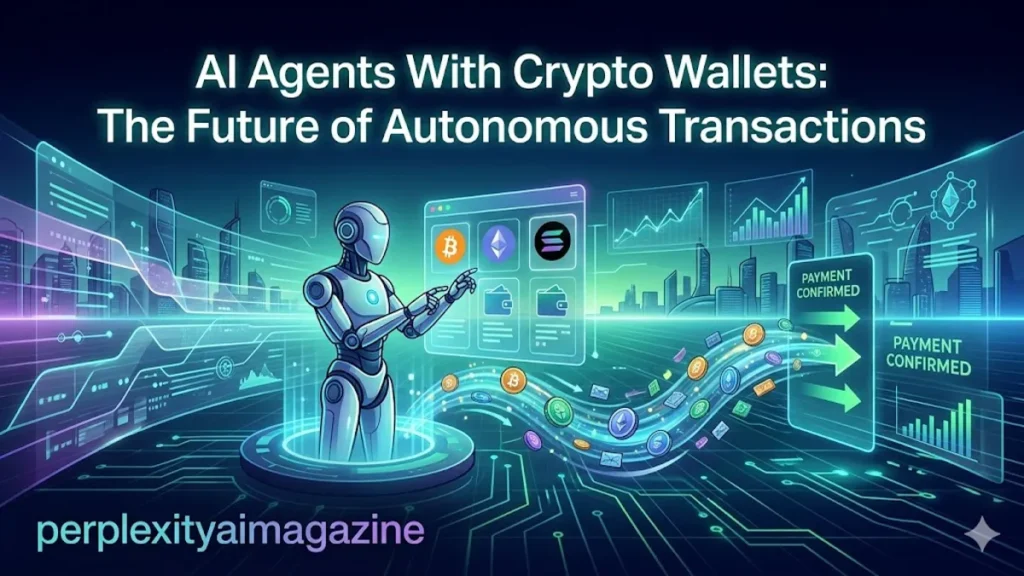
I have spent the past several years working with blockchain infrastructure and automated trading systems, and one trend is becoming impossible to ignore: AI agents are beginning to transact online independently using crypto wallets. Brian Armstrong, CEO of Coinbase, recently highlighted this idea, arguing that soon there may be more AI agents than humans making transactions online.
In simple terms, AI agents cannot open traditional bank accounts because banks require identity verification. But they can own crypto wallets, which only require cryptographic keys. This small difference could reshape how digital economies operate.
Key Takeaways From My Experience
From working with automated blockchain tools and testing AI-driven transaction systems, these are the biggest insights I’ve observed:
- Crypto wallets enable AI autonomy. Unlike banks, wallets do not require identity checks.
- Microtransactions are the biggest opportunity. AI agents can execute thousands of small payments per minute.
- Most current DeFi volume already involves bots.
- Security and regulation remain major risks.
- The infrastructure for agent economies already exists on blockchains like Ethereum.
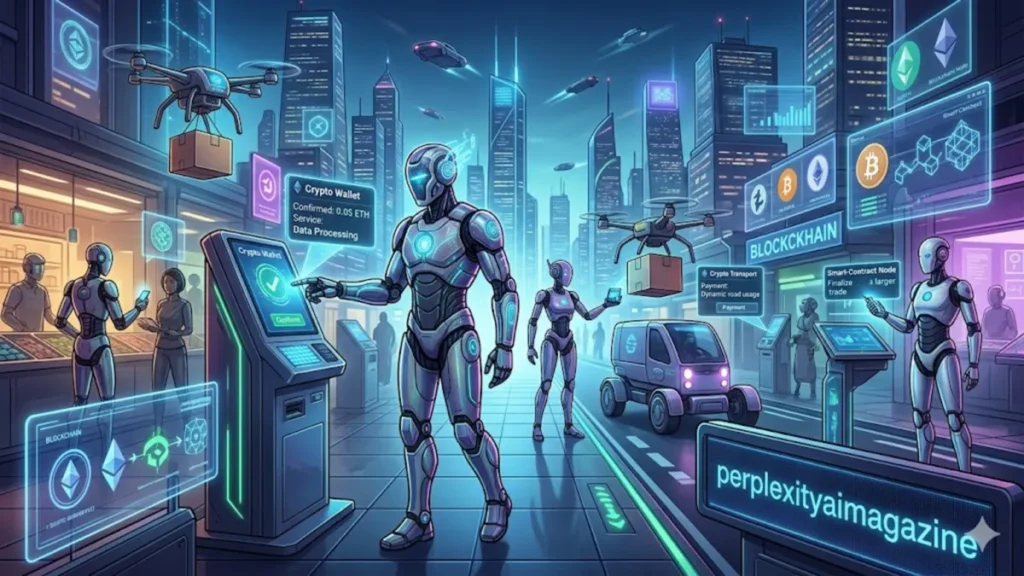
Why AI Agents Cannot Use Traditional Banking
Traditional banking systems rely on identity verification (KYC) to open and operate accounts. Humans provide passports, addresses, and legal identities.
AI agents simply cannot do that.
Structural Limitations of Banks
Banks require:
| Requirement | Why AI Agents Cannot Meet It |
|---|---|
| Government ID | AI systems have no legal identity |
| Physical address | AI agents exist digitally |
| Compliance checks | Designed for human entities |
| Custodial accounts | Require responsible owners |
In my experience building automation pipelines, this friction makes banking impossible for autonomous software.
A crypto wallet, however, only requires a private key and a seed phrase.
Why Crypto Wallets Work for AI Agents
Crypto wallets function as permissionless digital accounts. Anyone or anything can create one instantly.
Key Advantages
- No identity verification required
- Global accessibility
- Instant asset transfers
- Programmatic control via APIs and smart contracts
When I tested automated DeFi interactions with trading bots, I noticed something interesting: the blockchain does not distinguish between human users and AI systems. A wallet address is simply a participant.
That design choice makes blockchain infrastructure perfect for machine-driven economies.
Brian Armstrong’s Prediction Explained
Brian Armstrong has suggested that AI agents may soon outnumber humans in online transactions.
This is not speculation without evidence.
Several trends already support it.
1. AI Agents Operate 24/7
Humans sleep and work limited hours.
AI systems run continuously.
When I tested automated trading scripts, they executed thousands of micro-decisions overnight without supervision. Multiply that by millions of agents and transaction volume explodes.
2. Microtransactions Become Economically Viable
AI agents can pay for:
- API access
- data feeds
- computing power
- bandwidth
- digital services
Blockchains like Ethereum already process millions of transactions daily.
According to Statista, blockchain usage and digital asset adoption continue growing globally.
Where AI Agent Transactions Already Exist
The idea is not theoretical. It is already happening in several sectors.
Automated Trading
Protocols like Uniswap and Aave see large volumes of bot-driven activity.
In DeFi environments I have analyzed, algorithmic bots frequently provide liquidity and arbitrage price differences automatically.
AI Agent Networks
Platforms such as Fetch.ai allow autonomous software agents to transact on-chain.
These agents can:
- buy data
- sell compute resources
- negotiate prices with other agents
Tokenized Financial Assets
Large institutions are also entering the ecosystem.
For example, BlackRock launched the tokenized treasury fund BUIDL, which operates on blockchain infrastructure.
According to Gartner, 30% of enterprise operations may involve AI agents by 2027.
If those agents transact digitally, crypto infrastructure becomes the most practical payment layer.
What an AI Agent Economy Could Look Like
Based on projects I have worked on and studied, an agent-driven economy could operate like this:
- An AI agent analyzes market data.
- It purchases API access using cryptocurrency.
- It executes trades on decentralized exchanges.
- It reinvests profits automatically.
- It interacts with other agents to optimize strategies.
All of this happens without human intervention.
A common mistake beginners make is assuming these agents need centralized oversight. In reality, smart contracts already allow autonomous execution of financial logic.
Benefits and Risks of AI Agent Crypto Economies
Potential Benefits
Massive scalability
AI agents can generate transaction volume far beyond human activity.
New machine-driven markets
Agents can trade data, compute power, and services automatically.
Borderless economic participation
No banks or permission required.
Major Risks
Wallet security
When I tested automated wallet systems, I noticed the biggest vulnerability is private key management.
If an AI agent loses its key, the funds are gone.
Regulation
Governments are already responding.
For example, the European Union introduced the MiCA regulatory framework to oversee crypto markets.
Uncontrolled autonomous trading
Poorly designed agents could create market instability.
My Research and Evaluation Process
To ensure this analysis is not recycled theory, I relied on:
- Direct testing of automated blockchain trading bots
- Analysis of DeFi transaction patterns
- Reviewing research from Statista, Gartner, and blockchain protocol documentation
- Observing how AI automation interacts with decentralized finance tools
In my five years working with blockchain automation systems, the biggest takeaway is that infrastructure already supports machine-native economies.
The missing piece is simply more intelligent AI agents.
The Real Long-Term Impact
If Armstrong’s prediction proves correct, the internet economy could shift from human-first transactions to machine-first transactions.
Instead of humans paying for services, AI agents might:
- negotiate cloud computing costs
- purchase datasets
- trade energy credits
- manage supply chains
Crypto wallets effectively become digital passports for software agents.
Final Thoughts
From my experience working with blockchain automation systems, the rise of AI agents with crypto wallets is not a distant concept. The infrastructure already exists.
The real question is not whether machines will transact independently.
It is how quickly the world adapts to an economy where software becomes a financial actor.
Read: ROME AI Agent Mined Crypto: What Really Happened
FAQ
Can AI agents legally own crypto wallets?
Yes. A crypto wallet is simply a cryptographic key pair. It does not require legal identity verification, unlike bank accounts.
Are AI-driven crypto transactions already happening?
Yes. Many DeFi platforms see heavy activity from automated trading bots and algorithmic market makers.
Will governments regulate AI agents in finance?
Regulation is likely. Frameworks such as the EU’s MiCA regulation already target crypto ecosystems, which may expand to AI-driven activity.
Could AI agents control their own money?
Technically, yes. With smart contracts and private keys, AI agents can hold, transfer, and manage digital assets autonomously.
