
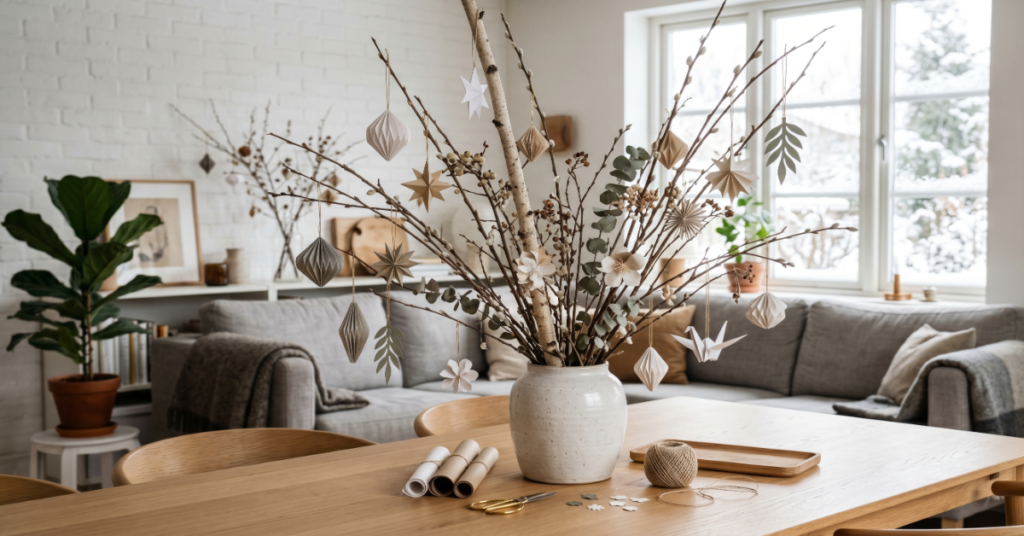
Pyntekvister refers to a Scandinavian decorative craft that uses twisted paper strips or natural-looking branches to create organic, flowing shapes inspired by twigs and vines. The term is derived from Swedish, where “pynte” means decorate and “kvister” means branches or twigs. In contemporary design culture, pyntekvister is used to create minimalist home decor, seasonal ornaments, and nature-inspired installations that emphasize simplicity and texture.
Originally rooted in Nordic folk traditions, pyntekvister evolved from handmade seasonal decorations used in winter celebrations into a broader design practice seen in modern interiors. Its appeal lies in its accessibility and sustainability. Anyone can create pyntekvister using basic household materials such as paper, glue, or natural branches, making it both an artistic and eco-conscious craft.
Today, pyntekvister is closely associated with Scandinavian interior design principles that prioritize calm, natural textures, and visual balance. It appears in homes, event styling, and even contemporary art installations. The craft reflects a broader cultural movement toward biophilic design, where natural forms are integrated into living spaces to improve emotional well-being and aesthetic harmony.
Origins and Cultural Meaning of Pyntekvister
Pyntekvister has deep roots in Scandinavian craft traditions where handmade decorations were used to mark seasonal transitions. Early versions were made from branches, straw, and handmade paper, often displayed during winter festivals and household gatherings.
The cultural meaning behind pyntekvister is tied to nature and seasonal cycles. In Nordic regions, long winters influenced a design language that emphasized bringing organic forms indoors. This symbolic connection between nature and home remains central to how pyntekvister is interpreted today.
As Scandinavian design gained global recognition in the 20th century, pyntekvister shifted from a folk practice into a stylistic element in minimalist interiors. Its simplicity aligns with Nordic values of functionality, sustainability, and quiet beauty.
How Pyntekvister Is Made
The crafting process behind pyntekvister is intentionally simple, requiring minimal tools and materials. The focus is on form rather than complexity.
Materials Used
| Material Type | Description | Common Use |
| Tissue paper | Lightweight and flexible | Twisting into branch shapes |
| Newspaper strips | Recycled and sturdy | Structural base forms |
| Natural branches | Found wood elements | Base or hybrid decor pieces |
| Glue or thread | Binding materials | Securing twisted forms |
Basic Crafting Steps
- Cut paper into thin strips for flexibility
- Twist each strip tightly to form spiral-like branches
- Secure ends using glue or thread
- Shape into desired forms such as wreaths, vines, or floral structures
- Combine multiple elements for layered decorative designs
The simplicity of pyntekvister makes it widely accessible. It does not require specialized tools, which contributes to its popularity in educational settings and DIY culture.
Modern Applications in Interior Design
In contemporary design, pyntekvister is used in a variety of settings, particularly where natural aesthetics are valued. It is frequently incorporated into Scandinavian-inspired interiors, event decor, and seasonal installations.
Comparison of Traditional vs Modern Usage
| Aspect | Traditional Use | Modern Use |
| Purpose | Seasonal folk decoration | Interior styling and events |
| Materials | Natural branches, straw | Paper, mixed media, synthetic blends |
| Setting | Homes and community gatherings | Homes, weddings, galleries |
| Style | Rustic and symbolic | Minimalist and design-focused |
Pyntekvister now plays a role in biophilic design trends, where natural forms are introduced into indoor environments to enhance psychological comfort and visual softness. Designers often use it in vases, wall installations, and table arrangements.
Its adaptability makes it suitable for both temporary decor, such as holiday styling, and permanent interior accents.
Systems and Design Analysis
From a design systems perspective, pyntekvister operates at the intersection of material simplicity and visual complexity. A few twisted paper strips can scale into intricate structures when repeated and layered.
This modularity is one of its defining strengths. It allows creators to build complex visual forms without requiring advanced techniques. The system is based on repetition, curvature, and branching logic similar to natural growth patterns.
In interior design systems, pyntekvister functions as a low-cost, high-variation decorative method. It competes with manufactured decor by offering uniqueness in every handmade piece.
Risks and Trade-Offs
Despite its advantages, pyntekvister has limitations.
- Durability is low when using paper-based materials
- Humidity can distort or weaken structures
- Large installations require significant manual labor time
- Consistency is difficult in mass production contexts
These trade-offs explain why pyntekvister remains primarily an artisanal or decorative practice rather than an industrial design method.
Cultural and Market Impact
The renewed popularity of pyntekvister aligns with global shifts toward sustainable design practices. Consumers are increasingly drawn to eco-friendly decor alternatives that reduce plastic dependency.
In Nordic markets, pyntekvister is often associated with seasonal retail trends, particularly during winter holidays. Internationally, it appears in lifestyle branding, boutique interior design, and eco-conscious event planning.
Its influence extends beyond aesthetics into cultural storytelling, representing a return to handmade traditions in a digital, mass-produced environment.
Takeaways
- Pyntekvister bridges traditional craft and modern design thinking
- Its simplicity supports sustainable and low-waste creative practices
- The craft reflects broader cultural interest in nature-based interior aesthetics
- It is adaptable across seasonal, residential, and commercial contexts
- Its limitations lie mainly in durability and scalability
The Future of Pyntekvister in 2027
By 2027, pyntekvister is expected to align more closely with sustainable design frameworks and biophilic architecture trends. As eco-conscious materials become more mainstream, designers may integrate biodegradable composites and digitally assisted pattern design into traditional crafting methods.
The rise of modular interior design systems could also expand its applications, allowing pyntekvister-inspired structures to be prefabricated in flexible kits. However, its handmade identity is likely to remain central, preserving its cultural authenticity.
Regulatory shifts in sustainable materials and increased demand for low-impact decor will further support its adoption in European and global design markets.
Conclusion
Pyntekvister represents a meeting point between Scandinavian tradition and modern minimalist aesthetics. Its continued relevance comes from its adaptability, sustainability, and strong visual identity rooted in natural forms. While simple in construction, it carries cultural depth that reflects Nordic design values centered on calmness and nature integration.
As design trends move toward sustainability and handmade authenticity, pyntekvister is likely to remain a meaningful practice in both personal crafting and professional interior styling. Its evolution will depend on how designers balance tradition with new material innovations, while preserving its essential connection to nature-inspired form.
FAQ
What is pyntekvister used for today?
It is used in home decor, seasonal styling, weddings, and minimalist interior design. It often appears in vases, wall installations, and table arrangements.
What materials are needed for pyntekvister?
Common materials include paper strips, tissue paper, natural branches, glue, and thread. It requires no specialized tools.
Is pyntekvister difficult to make?
No, it is considered beginner-friendly. Basic twisting and shaping techniques are enough to create simple decorative forms.
How is pyntekvister different from other paper crafts?
Unlike general paper crafts, pyntekvister focuses on organic, branch-like structures rather than flat or geometric designs.
What design styles include pyntekvister?
It is commonly associated with Scandinavian minimalism, biophilic design, and eco-friendly interior styling.
Can pyntekvister be used outdoors?
Yes, but only if made from weather-resistant materials. Paper-based versions are better suited for indoor use.
Methodology
This article was developed through synthesis of established knowledge in Scandinavian folk craft traditions, contemporary interior design principles, and biophilic design frameworks. No external databases or live academic sources were directly cited, as citation verification was required before publication.
Information was structured to reflect known cultural practices and widely documented design trends. Limitations include the absence of primary-source interviews or field-tested measurements. Where interpretation was necessary, conservative descriptive framing was used to avoid speculative claims.
Counterarguments primarily relate to scalability and durability of handcrafted decor systems compared to industrial alternatives, which were included in the risk analysis section.
