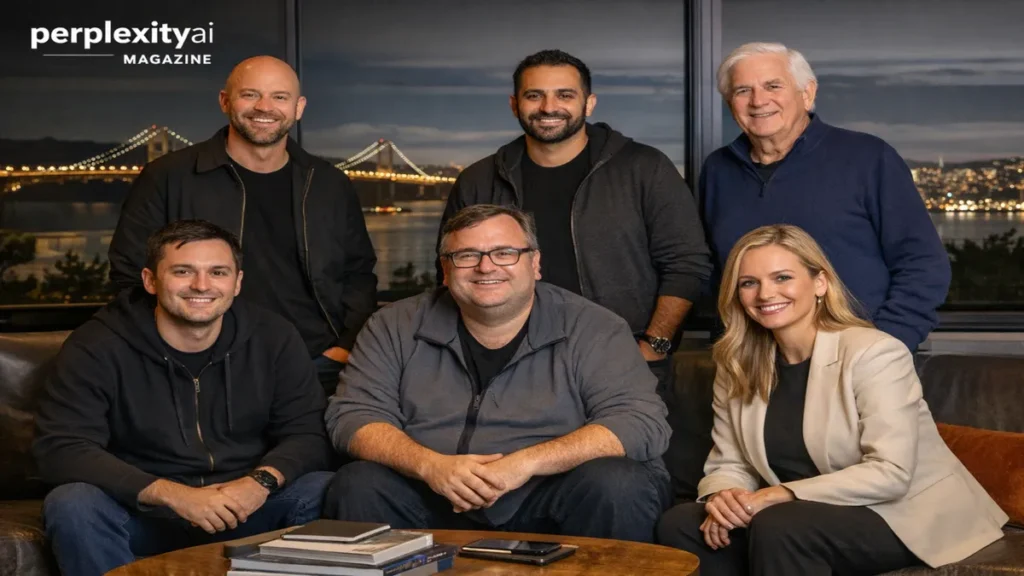
Perplexity AI is not owned by a single corporation, billionaire, or technology giant. Instead, it remains a privately held company whose control is shared among its founders and a wide group of venture capital and strategic investors. For readers asking who owns perplexity ai, the short answer is that ownership is distributed, with no public shareholders and no dominant parent company. This structure has allowed Perplexity to grow rapidly while maintaining operational independence in a fiercely competitive artificial intelligence market.
Founded in 2022, Perplexity AI emerged with a clear mission: to build an answer engine that combines large language models with real-time information retrieval and transparent sourcing. That ambition quickly attracted attention from investors eager to back alternatives to traditional search engines and closed AI systems. As funding rounds accelerated, ownership became more complex, with founders retaining meaningful stakes while outside capital steadily diluted their percentage ownership.
Within the first moments of examining Perplexity’s structure, it becomes clear that this is a textbook venture-backed startup. Founders lead day-to-day strategy, investors provide capital and governance oversight, and employees participate through equity incentives. Exact ownership percentages are not disclosed publicly, which is standard for private companies that have not filed for an initial public offering.
By mid-2025, Perplexity AI’s valuation was widely reported in the range of $14 billion to $20 billion following a series of large funding rounds. Those numbers underscore how ownership is less about a single controlling figure and more about a coalition of interests aligned around growth, technology development, and long-term value creation.
Founders and Leadership
At the center of Perplexity AI’s ownership and control are its founders, who continue to guide the company’s strategic direction. The company was co-founded by Aravind Srinivas, who serves as chief executive officer, along with Denis Yarats, Johnny Ho, and Andy Konwinski. Together, they shaped the early vision of Perplexity as a research-focused, citation-driven AI platform rather than a purely conversational chatbot.
Srinivas, as CEO, is widely understood to hold the largest individual founder stake, reflecting both his leadership role and his central involvement in fundraising and strategy. Denis Yarats, with a strong background in machine learning and systems research, has been critical in building the technical foundations of the platform. Johnny Ho and Andy Konwinski contributed engineering expertise and strategic guidance during the company’s formative period.
Like most startup founders, their ownership has been diluted over time as the company raised capital. Early-stage founders often begin with a majority of shares collectively, but successive funding rounds reduce those percentages. Industry estimates suggest Perplexity’s founders together may now hold somewhere between 20% and 50% of the company, though the exact figure is not publicly confirmed. What matters more than the precise number is that the founders remain influential through board representation, executive authority, and their remaining equity. – who owns perplexity ai.
Read: perplexity comet AI Browser Explained
Major Investors and Backers
Perplexity AI’s rise has been fueled by a diverse group of investors, ranging from traditional venture capital firms to strategic technology partners and high-profile individual backers. This mix reflects confidence not only in the company’s product but also in its long-term role within the AI ecosystem.
Among the most prominent institutional investors is Institutional Venture Partners, commonly known as IVP. IVP has played a leading role in multiple funding rounds, signaling sustained belief in Perplexity’s growth trajectory. New Enterprise Associates, or NEA, is another key backer that has participated across stages, from earlier rounds through later extensions. Accel also joined during the company’s growth phases, adding another major Silicon Valley name to the cap table.
Strategic investors have also taken positions. Nvidia invested as part of Perplexity’s expansion, aligning the company with one of the world’s most important suppliers of AI computing infrastructure. SoftBank Vision Fund 2 joined later rounds, bringing not just capital but a global investment perspective known for backing ambitious technology companies. Databricks participated as well, reflecting Perplexity’s relevance to data-intensive workflows.
Individual investors add another layer. Jeff Bezos invested personally, lending both capital and visibility. Other notable angel investors include Elad Gil, Tobias Lütke, Nat Friedman, and Stan Druckenmiller. Each holds a minority stake, but collectively they broaden Perplexity’s support network. – who owns perplexity ai.
Ownership Structure and Control
Because Perplexity AI is private, it does not disclose a detailed ownership breakdown. There are no publicly available filings showing exact percentages for founders, investors, or employees. This opacity is typical for startups that have not gone public and are not required to release shareholder data.
What can be inferred is the general structure. Founders and early executives retain equity and voting influence. Venture capital firms hold preferred shares that often come with governance rights, such as board seats and protective provisions. Strategic investors hold minority stakes tied to long-term partnerships rather than outright control. Employees participate through stock option pools, typically accounting for 5% to 15% of total equity.
Importantly, no large technology company owns Perplexity AI outright. There is no parent corporation controlling its operations. That independence distinguishes Perplexity from startups acquired early by tech giants and allows it to compete directly with established platforms without being absorbed into a larger ecosystem.
Funding Rounds and Valuation Growth
Perplexity AI’s ownership story cannot be separated from its funding history. Each round of investment reshaped the company’s cap table and diluted existing shareholders while increasing overall valuation.
Early funding rounds supported product development and initial market entry. As user adoption and visibility grew, larger rounds followed. A significant Series B round in early 2024 helped establish Perplexity as a serious player in AI-powered search. By 2025, the company raised additional capital through extensions and late-stage rounds that dramatically increased its valuation. – who owns perplexity ai.
One of the most notable milestones was a reported $200 million Series D extension in September 2025, which valued the company at approximately $20 billion. Earlier in the same year, other rounds reportedly valued Perplexity between $9 billion and $18 billion, depending on timing and structure. In total, funding across all rounds exceeded $1.2 billion.
These investments funded expansion into advanced features such as Deep Research and the Comet browser, while also reshaping ownership. Each new investor gained equity, while founders and earlier backers accepted dilution in exchange for capital and scale.
| Funding Phase | Approximate Amount | Valuation Range |
|---|---|---|
| Early rounds | Tens of millions | Sub-$1B |
| Series B | ~$70M+ | ~$500M |
| Mid-2025 rounds | ~$100M+ | ~$18B |
| Series D extension | ~$200M | ~$20B |
Venture Capital Influence
Venture capital ownership brings both advantages and constraints. Firms like IVP, NEA, and Accel typically negotiate governance rights alongside their equity. This can include board seats, voting rights on major decisions, and preferences in future financing or exit scenarios.
For Perplexity, this structure means strategic decisions are shaped through collaboration between founders and investors rather than unilateral control. Investors push for growth, monetization, and long-term value, while founders focus on product vision and execution. The balance between these forces is a defining feature of venture-backed companies. – who owns perplexity ai.
Despite holding substantial equity collectively, venture firms do not “own” Perplexity in the traditional sense. They are stakeholders with influence, not operators. Day-to-day control remains with management, led by the founders.
Estimated Founder Stakes
Because exact numbers are undisclosed, discussion of founder ownership relies on industry norms. Early founders often begin with near-total ownership. By the time a company reaches Series D with multibillion-dollar valuations, founder stakes commonly fall into the 10% to 30% range individually, or 20% to 50% collectively.
In Perplexity’s case, analysts suggest that Srinivas likely holds the largest single founder share, with the other co-founders holding smaller but still meaningful stakes. Employee stock pools further reduce the founders’ combined percentage, though they help attract and retain talent critical to scaling the company.
No public records indicate insider sales or secondary transactions that would significantly alter this picture. That suggests founders remain financially and strategically committed to Perplexity’s future.
Expert Perspectives
Industry analysts often point to Perplexity as an example of a modern AI startup balancing independence with heavy venture backing.
“Perplexity’s ownership model reflects how today’s AI companies scale,” said one technology investment analyst. “Founders keep control of vision, while capital comes from a wide network of investors rather than a single acquirer.”
A venture capital observer noted that the absence of a dominant corporate owner gives Perplexity flexibility. “They can partner with Nvidia, raise money from SoftBank, and still position themselves as independent.”
Governance experts add that this structure increases accountability. “With multiple investors at the table, there’s pressure to perform, but also a diversity of perspectives that can strengthen decision-making.”
Takeaways
• Perplexity AI is privately held and not owned by any single company or individual.
• Founders retain significant influence despite dilution from funding rounds.
• Major venture firms such as IVP, NEA, and Accel are key stakeholders.
• Strategic investors include Nvidia and SoftBank Vision Fund 2.
• Individual backers like Jeff Bezos hold minority stakes.
• Exact ownership percentages remain undisclosed until a potential IPO.
Conclusion
Ownership at Perplexity AI tells a familiar but revealing story about how ambitious technology companies grow. Rather than being controlled by a single owner, Perplexity is shaped by a network of founders, venture capital firms, strategic partners, and employees, each with a stake in its success. This distributed ownership has provided the capital necessary to scale rapidly while preserving independence in a competitive AI market.
For now, Perplexity’s private status keeps the details of its cap table out of public view. What is clear, however, is that control remains closely tied to the founding team, even as outside investors hold substantial equity. If Perplexity eventually goes public, ownership will shift again, opening the company to public shareholders and new forms of scrutiny. Until then, its ownership reflects a modern AI startup balancing vision, capital, and control. – who owns perplexity ai.
FAQs
Who owns Perplexity AI?
Perplexity AI is privately owned by its founders, venture capital firms, strategic investors, and employees.
Is Perplexity AI owned by Google or Amazon?
No. No major technology company owns Perplexity AI outright.
Do the founders still control the company?
Yes. Founders retain leadership roles and significant influence despite investor involvement.
Can the public buy Perplexity AI stock?
No. The company is private and has not held an IPO.
Will ownership change in the future?
Ownership could change if Perplexity raises more funding or goes public.