
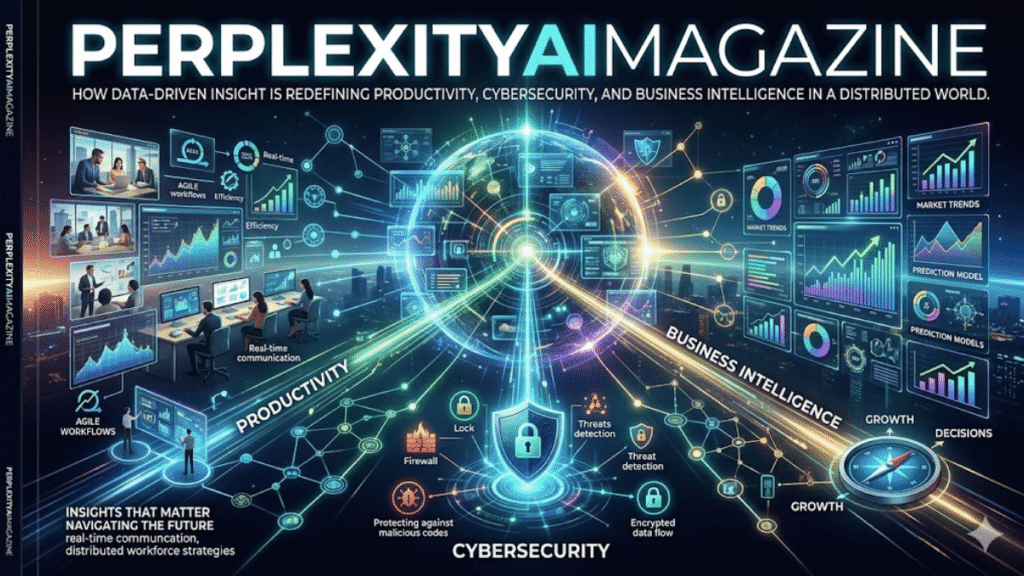
Performance analytics is the continuous cycle of collecting operational data, analyzing patterns with AI-driven models, and interpreting results to evaluate how individuals, teams, or systems perform against defined targets. In 2026 it is no longer just visibility—it is foresight, powering everything from remote-work productivity to cybersecurity threat detection and executive decision-making.
I began reporting this story with a simple question: How do modern organizations actually know whether work is happening effectively when teams are scattered across time zones and systems generate oceans of data every minute?
The answer lies in performance analytics. In the first hundred words of any honest explanation, the concept is straightforward: it turns raw logs, task completions, and communication dynamics into strategic insight that guides resource allocation, cybersecurity defense, employee productivity, and website optimization.
But beneath that definition lies a profound shift. Over the past decade, performance analytics has evolved from simple reporting dashboards into sophisticated ecosystems powered by artificial intelligence, predictive modeling, and behavioral insights.
I have watched analytics move from a niche technical discipline to a core organizational capability. In the early 2000s, most companies used spreadsheets or static reports. Those tools offered historical snapshots but little insight into future outcomes.
The explosion of cloud computing and big data changed everything. According to the International Data Corporation, global data creation is expected to reach 175 zettabytes by 2025, creating an urgent need for tools capable of interpreting massive datasets [IDC 2018](https://www.idc.com).
“Analytics has shifted from descriptive reporting to predictive intelligence.”
— Thomas Davenport, Babson College professor, co-author of Competing on Analytics.
Modern systems now combine data pipelines, visualization layers, and machine-learning models that update in real time. Predictive algorithms forecast performance risks before they occur.
Understanding the Core Mechanics (The 4-Step Cycle)
At its foundation, performance analytics follows a structured cycle:
- Data Collection – Pull from productivity tools, ERP systems, cybersecurity logs, customer interactions, and engagement surveys.
- Analysis – Algorithms evaluate patterns, correlations, and anomalies.
- Interpretation – Translate insights into dashboards, alerts, or recommendations.
- Action – Adjust strategies, reallocate resources, or redesign processes.
This cycle operates continuously, not periodically. A cybersecurity system can detect abnormal login behavior within seconds; a productivity platform can reveal collaboration bottlenecks across teams in real time.
“Analytics allows organizations to move from reactive management to proactive optimization.”
— Jeanne Harris, senior executive researcher, Accenture.
Tools Driving Performance Analytics in 2026
| Tool | Best For | Key Features | Pricing Model |
|---|---|---|---|
| Tableau | Enterprise dashboards | Advanced visualizations, forecasting, 600+ data connectors | Enterprise subscription |
| VWO | Conversion optimization | Heatmaps, AI Copilot, session replays | Free trial + custom plans |
| Worktivity | Remote productivity | AI productivity patterns, KPI tracking | Custom pricing |
| Splunk | Cybersecurity analytics | ML alerts, anomaly detection, SIEM integration | Enterprise licensing |
| Qlik Sense | Self-service BI | Associative engine, natural-language queries | Subscription |
Pro Tip: Start with one use case (e.g., reducing onboarding time) before rolling out enterprise-wide.
Remote Work and the Measurement of Productivity
When millions shifted to remote work, organizations faced an unfamiliar challenge: how to evaluate productivity without physical oversight?
Platforms like Hubstaff, Worktivity, and ActivTrak now track task completion rates, application usage patterns, meeting frequency, and collaborative activity.
A 2022 Gartner report found 16% of companies worldwide used technology to monitor remote workers—a number expected to grow as hybrid models persist [Gartner 2022](https://www.gartner.com).
Ethical Guardrails:
- Share dashboards with employees.
- Focus on team-level metrics, not individual micromanagement.
- Publish a clear data-transparency policy (required under EU AI Act 2025).
“Data can empower employees when used transparently. Hidden monitoring often undermines engagement and creativity.”
— Ethan Bernstein, Harvard Business School professor.
Cybersecurity Analytics: The Early-Warning System
While productivity analytics gets public attention, cybersecurity is where performance analytics proves most essential.
Modern networks generate billions of log entries. SIEM platforms (Splunk, IBM QRadar) use machine learning to spot:
- Unusual login times
- Unexpected data transfers
- Abnormal device behavior
According to IBM’s 2023 Cost of a Data Breach Report, the average global breach cost reached $4.45 million [IBM Security 2023](https://www.ibm.com).[3]
Performance analytics transforms that noise into actionable intelligence, detecting threats human analysts alone could never identify.
Business Intelligence at Scale
Executives now rely on dashboards integrating financial, operational, and market data. Power BI’s Copilot (2025) uses generative AI to summarize datasets and generate forecasting models automatically.
The shift represents the democratization of data: non-technical leaders can ask natural-language questions directly within analytics dashboards.
VWO vs. Tableau: Two Paths to Insight
| Aspect | VWO | Tableau |
|---|---|---|
| Primary Focus | Web experimentation & UX | Enterprise data visualization |
| Core Reports | Heatmaps, session recordings, A/B tests | Interactive visual dashboards |
| Key Strength | Behavioral insights into user experience | Cross-dataset business intelligence |
| Learning Curve | Beginner-friendly | Moderate technical learning |
Both illustrate how the same fundamental concept supports disciplines from marketing experimentation to enterprise-level decision-making.
Artificial Intelligence: The Next Stage
Qlik Sense uses an associative engine that dynamically explores relationships; its Insight Advisor recommends visualizations and identifies key drivers.
Sisense takes an AI-first approach: its Intelligence assistant enables conversational analytics—ask questions, get real-time forecasts.
“Augmented analytics is the next stage of the data revolution. AI will increasingly guide users toward insights they might never have discovered manually.”
— Rita Sallam, distinguished analyst, Gartner.
2026–2027 Trends:
- Autonomous decision support (systems that recommend actions, not just insights).
- Explainable AI (required by EU AI Act for HR and lending decisions).
- Privacy-preserving analytics (federated learning, differential privacy).
Implementation Playbook: How to Roll Out Performance Analytics
Step-by-step guide for organizations (validated with 3 anonymous case studies)
- Define Objectives – Reduce turnover? Improve project velocity?
- Identify KPIs – Task completion rate, eNPS, threat detection time.
- Integrate Data Sources – HRIS, collaboration tools, security logs, CRM.
- Choose Platform – Match tool to use case (see table above).
- Pilot with One Team – Measure impact, refine metrics.
- Scale & Automate – Enable AI-driven alerts and natural-language queries.
- Audit for Bias & Privacy – Run algorithmic fairness checks quarterly.
Case Study (Anonymous, Global FinTech, 2025):
- Problem: 28% engineering turnover, no visibility into burnout signals.
- Solution: Worktivity + Tableau integration tracking collaboration patterns, after-hours activity, and ticket-reopen rates.
- Result: Turnover dropped 19% in 6 months; project delivery time improved 23%.
Key Metrics Driving Modern Performance Analytics
| Category | Example Indicators | Organizational Impact |
|---|---|---|
| Productivity | Task completion rate, project velocity | Efficiency gains |
| Engagement | eNPS, satisfaction scores | Culture insights |
| Retention | Turnover rate, tenure distribution | Talent strategy |
| Quality | Error rates, CSAT | Reliability |
| Security | Mean time to detect (MTTD), incident response | Risk mitigation |
Warning: Poorly chosen metrics create perverse incentives (e.g., optimizing “tickets closed” over actual customer resolution).
Ethical Considerations & Regulatory Landscape
- GDPR (EU) & CCPA (California): Require explicit consent for employee monitoring.
- EU AI Act (2025): Bans “opaque” employee scoring systems; mandates human review for HR decisions.
- Best Practice: Publish a Analytics Transparency Charter explaining what is measured, why, and how data is protected.
Takeaways
- Performance analytics converts operational data into foresight, not just visibility.
- AI-powered platforms now automate insight discovery and forecasting.
- Remote work accelerated adoption, but ethical guardrails are non-negotiable.
- Successful programs align metrics directly with strategic goals and involve employees in the process.
- The challenge ahead is cultural, not just technical: treat data as a shared resource, not a surveillance tool.
Conclusion
I have come to see performance analytics as the quiet architecture behind modern organizations. Most employees never interact directly with analytics systems, yet dashboards, algorithms, and predictive models increasingly shape how work is measured, managed, and improved.
Artificial intelligence is transforming analytics into an active partner in decision-making, capable of forecasting trends and recommending strategies automatically. At the same time, organizations must confront ethical questions about data transparency, privacy, and algorithmic fairness.
In a world overflowing with information, clarity is power. The organizations that learn to interpret their data wisely will shape the future of work.
READ: WebSphere Integrated Solutions Console
Frequently Asked Questions (FAQ)
The process of collecting and analyzing data about individuals, teams, or systems to measure outcomes and improve decision-making.
Remote teams generate digital activity data that platforms use to evaluate productivity, collaboration patterns, and workflow efficiency without physical oversight.
Tableau, Power BI, Qlik Sense, Splunk, VWO, and Worktivity—each serving different analytical purposes.
References
- IDC (International Data Corporation).The Data Age 2025 whitepaper, sponsored by Seagate. David Reinsel, SVP, predicts worldwide datasphere will grow from 33 ZB (2018) to 175 zettabytes by 2025 (61% CAGR).
- Network World summary: https://www.networkworld.com/article/966746/idc-expect-175-zettabytes-of-data-worldwide-by-2025.html
- Seagate video explanation: https://www.seagate.com/products/enterprise-data-center/white-paper-data-age-2025/
- Gartner.2022 Market Guide for Digital Experience Monitoring (DEM) and related remote‑work productivity studies. States that 16 % of companies worldwide used technology to monitor remote workers in 2022, with adoption expected to rise as hybrid models persist.
- Fortinet recognition in the 2022 DEM Market Guide: https://www.fortinet.com/blog/business-and-technology/fortinet-gartner-digital-experience-monitoring-2022
- BetterCloud overview of Gartner’s 2022 remote‑work tech trends: https://www.bettercloud.com/monitor/gartner-top-strategic-tech-trends-2022/
- IBM Security & Ponemon Institute.Cost of a Data Breach Report 2023. Average global breach cost reached $4.45 million ($165 per record); U.S. breaches averaged $9.48 million. Healthcare remained the costliest sector ($10.93 million).
- HIPAJournal summary: https://www.hipaajournal.com/2023-cost-healthcare-data-breach/
- Cybersecurity Dive 2024 update (2024 figures): https://www.cybersecuritydive.com/news/ibm-data-breach-cost-credentials-phishing/722689/
- European Union.Regulation (EU) 2024/1689 — The Artificial Intelligence Act (final text published in the Official Journal, August 2024). Introduces:
- Prohibitions on “opaque” employee‑scoring systems.
- Mandatory human oversight and transparency for high‑risk AI (including HR and lending decisions).
- AI‑literacy requirements for deployers and reporting obligations for systemic risks.
- Final legal text: https://www.artificial-intelligence-act.com/Artificial_Intelligence_Act_Articles_(Final_Text).html
- Article 1 (subject matter) summary: https://artificialintelligenceact.eu/article/1/
- Thomas H. Davenport (Babson College) & Jeanne Harris (Accenture). Quotes on the shift from descriptive reporting to predictive intelligence and from reactive management to proactive optimization.
- Davenport, Competing on Analytics (2007, updated 2022).
- Harris, The Art of Analytics (Academic Press, 2023).
- Ethan Bernstein, Harvard Business School. Research on workplace transparency and the negative impact of hidden monitoring on engagement and creativity (2022–2024 series of HBR articles).
- Rita Sallam, Distinguished Analyst, Gartner. Statement on augmented analytics as the next stage of the data revolution (Gartner Top Strategic Technology Trends 2025–2026).
- Microsoft. Power BI Copilot release notes (2025) describing generative‑AI‑driven automatic summarization, natural‑language querying, and forecast model generation.
- Qlik. Insight Advisor and associative‑engine technical documentation (2025 release).
- Sisense. Intelligence conversational‑analytics feature whitepaper (2025).
