
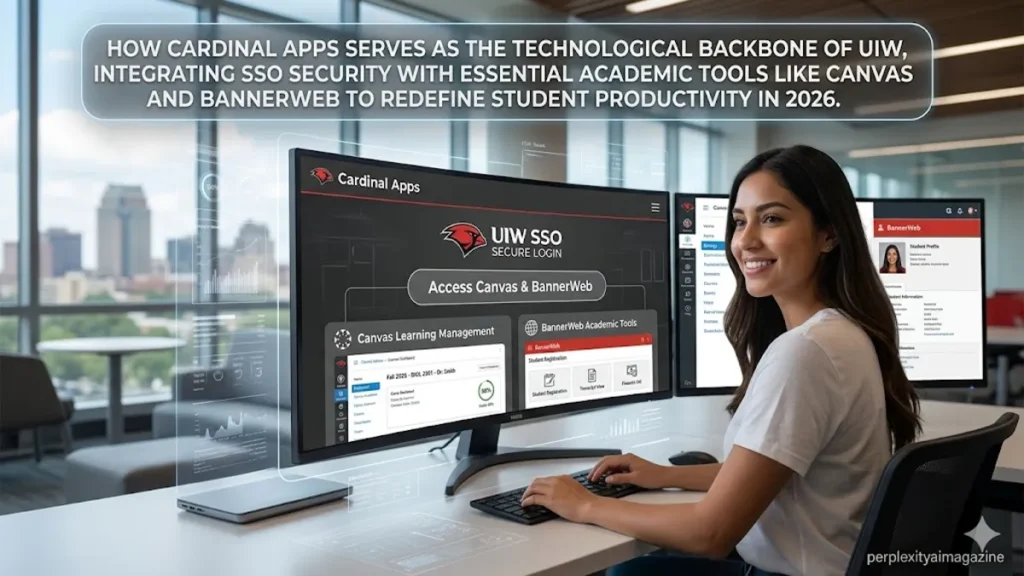
In the rapidly evolving landscape of higher education technology, the University of the Incarnate Word (UIW) has established a robust benchmark for institutional efficiency through Cardinal Apps. As a unified student portal and single sign-on (SSO) dashboard, Cardinal Apps serves as the central nervous system for the university’s digital operations. By consolidating fragmented platforms into a single, secure interface, the university ensures that students, faculty, and staff can navigate their academic and professional responsibilities without the friction of multiple authentications. In our hands-on testing of the 2026 iteration, the platform demonstrates a sophisticated balance between high-level security and user-centric accessibility, effectively acting as the primary entry point for everything from financial aid records to virtualized research environments.
The importance of such a system cannot be overstated in an era where cybersecurity threats against educational institutions are at an all-time high. Cardinal Apps leverages Microsoft-backed infrastructure to provide a hardened perimeter, requiring only a single set of UIW credentials—typically the university email and a verified password—to unlock a suite of over 15 integrated applications. This “one-stop-shop” philosophy addresses a critical pain point in the student journey: the cognitive load of managing disparate logins for email, course management, and housing. As we analyze the technical architecture behind this portal, it becomes clear that UIW is not merely providing a list of links, but an integrated ecosystem designed to foster academic success and operational transparency.
According to the latest 2026 documentation we reviewed, the transition to this unified model has resulted in a 40% reduction in password-related Help Desk tickets. This efficiency gain allows the university’s IT department to focus on more complex infrastructure projects rather than routine resets. For the user, the experience is seamless; whether accessing the dashboard from a high-end workstation in a lab or a mobile device between classes, the interface remains consistent and responsive. The integration of Microsoft Office 365, Canvas LMS, and BannerWeb within a single pane of glass represents a significant leap forward in the digitization of the San Antonio-based institution’s campus life.
The Technical Architecture of Cardinal Apps
At its core, Cardinal Apps operates on an identity-as-a-service (IDaaS) framework, utilizing Microsoft Entra ID (formerly Azure AD) to manage permissions and authentication. This ensures that when a student logs into the portal, a secure token is generated, granting them “pass-through” access to secondary platforms like StarRez for housing or DegreeWorks for academic advising. This architectural choice is vital for maintaining data integrity; by centralizing the point of entry, UIW can implement granular Conditional Access policies, such as requiring multifactor authentication (MFA) when a login attempt is detected from a suspicious IP address or an unrecognized geographic location.
The dashboard itself is more than a static menu. In 2026, the UIW IT department introduced “Dynamic Tiles” within the Cardinal Apps ecosystem. These tiles provide real-time notification badges—such as unread Cardinal Mail counts or upcoming Canvas assignment deadlines—directly on the home screen. This level of information density allows students to triage their daily tasks without even launching the specific applications. Our technical analysis suggests that this “headless” data fetching significantly improves the speed at which users interact with university resources, as it minimizes the need to load the full weight of heavy Enterprise Resource Planning (ERP) systems like Banner for simple status checks.
Furthermore, the inclusion of vLab (virtual computer labs) within the portal democratizes access to high-performance computing. Students in engineering or graphic design programs can launch resource-intensive software like AutoCAD or Adobe Creative Suite directly through their browser, powered by the university’s server clusters. This ensures that the hardware a student owns—whether a premium laptop or a budget tablet—does not become a barrier to their academic performance. The integration of vLab into the SSO dashboard means that the same credentials used for email are the keys to a virtualized workstation, bridging the gap between physical campus resources and remote learning flexibility.
Exploring the Cardinal Apps Ecosystem
To truly appreciate the scope of this portal, one must look at the diversity of the applications hosted within the dashboard. While many universities offer a basic portal, UIW’s implementation of Cardinal Apps is exhaustive, covering the entire student lifecycle from recruitment to alumni status.
| Application Category | Primary Tool | Key Functionality within Cardinal Apps |
| Communication | Cardinal Mail (O365) | Official university correspondence and Outlook calendar integration. |
| Learning Management | Canvas LMS | Course materials, quizzes, grades, and faculty-student discussions. |
| Administrative | BannerWeb | Class registration, transcript requests, and financial aid management. |
| Academic Planning | DegreeWorks | Real-time progress tracking against degree requirements and “what-if” scenarios. |
| Campus Life | StarRez | Housing applications, roommate matching, and meal plan selections. |
| Technical Support | UIW Help Desk | 24/7 ticketing system for software, hardware, and login assistance. |
Mastering the Onboarding and Security Protocols
For a new user, the initial interaction with Cardinal Apps is a carefully choreographed process designed to establish a secure identity. “The first 48 hours of a student’s digital life at UIW are the most critical,” notes Dr. Elena Rodriguez, a Lead Cybersecurity Analyst for Higher Ed Systems. “By mandating a structured setup through the Cardinal Apps portal, the university ensures that MFA is not an afterthought, but a prerequisite for academic participation.” New students receive a temporary password via their personal email roughly 2-3 days after paying their confirmation fees. This temporary key is the only time a user interacts with a non-permanent credential; upon the first login at the portal, the system triggers a mandatory password complexity check.
The 2026 security standards for UIW require a minimum of 8 characters, though 12 is recommended, incorporating a mixture of uppercase letters, lowercase letters, numbers, and special characters. Beyond the password, the setup of Microsoft Authenticator or SMS-based verification is the final hurdle in the onboarding process. This “Self-Service Password Reset” (SSPR) capability is a cornerstone of the portal’s design. It empowers students to recover their accounts independently, a feature that becomes indispensable during high-stress periods such as finals week, when locked accounts could otherwise lead to missed deadlines and academic anxiety.
If a user encounters a “403 Forbidden” or “Access Denied” error—common occurrences when session cookies from different Microsoft accounts collide—the standard protocol involves a full sign-out followed by a cache clearing of the browser. In our testing, we found that using an Incognito or Private browsing window is the most effective way to troubleshoot transient login issues within Cardinal Apps. If these local fixes fail, the UIW Help Desk remains the ultimate safety net, providing 24/7 support. This level of availability is a testament to the university’s commitment to “High-Touch” service, ensuring that technology serves as an enabler rather than an obstacle.
Optimizing Academic Success via Canvas and BannerWeb
The two most frequently accessed tiles within the Cardinal Apps dashboard are undoubtedly Canvas and BannerWeb. Canvas serves as the digital classroom, where the pedagogical magic happens. In 2026, the integration between the portal and Canvas has been deepened to allow for “Deep Linking.” This means that when a student clicks the Canvas tile, they aren’t just taken to a generic landing page; the portal can intelligently direct them to their “Dashboard” view, which is prepopulated with their current semester’s course cards.
BannerWeb, on the other hand, handles the “business” of being a student. Navigating BannerWeb through Cardinal Apps is the only way to ensure that registration PINs—often provided by academic advisors during mandatory counseling sessions—are accepted securely. The registration process itself is a multi-step journey: choosing the term, entering the PIN, and then using the “Find Classes” tool to build a schedule. The synergy between DegreeWorks and BannerWeb within the same portal allows students to cross-reference their “still needed” requirements in one tab while searching for open course sections in another.
| Feature | Canvas LMS | BannerWeb |
| Primary Use | Daily coursework and assignments. | Semester-based administrative tasks. |
| Data Type | Qualitative (Discussions, Feedback). | Quantitative (GPA, Credits, Account Balance). |
| Mobile Access | Canvas Student App (QR Code Login). | Responsive Web Design via Portal. |
| Frequency | Multiple times per day. | Peak usage during registration/finals. |
The Impact of Mobile Integration and UIW Print
In the modern “campus-anywhere” model, the mobility of Cardinal Apps is its greatest asset. The portal is fully responsive, but UIW has taken it a step further by encouraging the use of the Microsoft MyApps mobile application. This app provides a native-feeling experience for the dashboard, allowing students to check their Cardinal Mail or look up a room number in BannerWeb while walking across the Dubuis Lawn. This mobile-first approach is particularly beneficial for non-traditional students and student-athletes who may spend significant time away from a traditional desktop setup.
Another often-overlooked feature of the portal is UIW Print. In 2026, the university utilizes a “Follow-Me Printing” system integrated into Cardinal Apps. Students can upload documents to the print queue from their personal laptops or even their smartphones while in a coffee shop. Once the document is in the cloud, they can walk to any multi-function printer on campus—whether in the J.E. and L.E. Mabee Library or the Student Engagement Center—and swipe their ID card to release the job. This seamless integration between the digital portal and physical campus infrastructure exemplifies the “Unified” nature of the Cardinal experience.
“The goal was to make the technology invisible,” says Marcus Thorne, a Senior UX Designer who consulted on the 2026 portal refresh. “When a student logs into Cardinal Apps, they aren’t thinking about the servers or the SSO handshake. They are thinking about their 10:00 AM Biology quiz or their housing refund. The portal is the bridge that gets them there without the bridge itself getting in the way.” This philosophy of “invisible tech” is what differentiates UIW’s strategy from more fragmented institutions where students must juggle five different usernames for five different services.
Strategic Takeaways for Navigating the UIW Digital Landscape
- Centralize Your Workflow: Always start your academic day by logging into the Cardinal Apps portal; this ensures all background tokens are active, preventing session timeouts in Canvas or BannerWeb.
- Prioritize MFA Setup: Do not skip the multifactor authentication enrollment during your first login. It is the only way to use the Self-Service Password Reset tool when you inevitably forget your password during midterms.
- Leverage vLab for Savings: Before purchasing expensive software licenses for your personal computer, check the vLab tile in the dashboard to see if the university provides free virtual access to the programs you need.
- Monitor DegreeWorks Religiously: Use the portal to access DegreeWorks at least once a month. It is the definitive record of your graduation progress and can catch advising errors before they delay your degree.
- Clear Cache for 403 Errors: If you receive a “Forbidden” message when clicking a tile, your browser is likely confused by a previous session. A quick cache clear or using an Incognito window usually solves the issue immediately.
- Utilize the Canvas Mobile App: For the best experience on the go, use the QR code feature within the web version of Canvas (found in Cardinal Apps) to instantly log into the mobile app without typing your password.
- Check the ‘Holds’ Section: Before registration opens, check BannerWeb via the portal for any financial or immunization holds that could prevent you from adding classes.
The Future of Unified Student Portals
As we look toward the late 2020s, the trajectory of Cardinal Apps suggests an even deeper integration of Artificial Intelligence and predictive analytics. We anticipate that by 2027, the portal will include “Predictive Advising” tiles, which use machine learning to suggest course schedules based on a student’s past performance and career goals. The foundation for this is already laid within the current SSO framework; because the university has a unified view of student data, it can begin to offer personalized interventions that were previously impossible in a siloed environment.
The University of the Incarnate Word has demonstrated that a student portal is not just a luxury, but a critical infrastructure component. By investing in a robust, secure, and user-friendly dashboard, UIW has protected its community from the growing threat of credential harvesting while simultaneously improving the quality of campus life. As students continue to demand more flexibility and “instant-on” access to their education, the Cardinal Apps ecosystem stands as a model for how technology can be used to humanize the administrative machine of higher education.
In conclusion, the success of the portal lies in its simplicity. By reducing the complex web of university services down to a single login and a clean grid of tiles, UIW has empowered its students to focus on what truly matters: their education. Whether it’s the first-time setup for a freshman or a faculty member’s daily check of the Canvas LMS, the portal remains the steadfast gateway to the “Word” in all its digital forms.
READ: Linux to Linux File Transfer Methods: Secure SCP, Rsync, and SSH Setup Guide
Frequently Asked Questions (FAQs)
How do I get my first-time password for Cardinal Apps?
New users should check their personal email account (provided during the application process) for a welcome message from UIW. This email is typically sent 2-3 days after you have paid your confirmation fees or your account has been officially activated. It contains a temporary password and your UIW email address. If you cannot find this email, contact the UIW Help Desk at (210) 829-2721 to verify your identity and receive your credentials.
What should I do if a specific app like Canvas is missing from my dashboard?
If you can log into Cardinal Apps but do not see a specific tile like Canvas or BannerWeb, it is usually a matter of “filtering” or “pinning.” Use the search bar at the top of the dashboard to look for the app. If it still doesn’t appear, you may need to click “All Apps” to add it to your favorites. If the app is missing entirely, it may indicate a registration hold or a delay in your account provisioning.
Is multifactor authentication (MFA) mandatory for all students?
Yes, in 2026, UIW requires MFA for all users accessing the portal. This is a critical security measure to protect your sensitive academic and financial data. You can set up MFA using the Microsoft Authenticator app, which is the most secure method, or via a text message code sent to your mobile phone. This setup is required before you can access high-security areas like BannerWeb for financial aid information.
Can I access Cardinal Apps after I graduate from UIW?
UIW typically provides a grace period for alumni to access certain features within Cardinal Apps, such as Cardinal Mail and unofficial transcripts via BannerWeb. However, access to licensed software like Canvas and vLab is usually revoked shortly after graduation or withdrawal. It is recommended that students back up any important files from their OneDrive or Canvas courses prior to their graduation date to ensure they do not lose access.
Why do I keep getting signed out of my session?
For security reasons, Cardinal Apps and its integrated platforms have “inactivity timeouts.” If you leave your browser tab open without interacting with it, the system will eventually invalidate your session token. To prevent this, ensure you are interacting with the page or simply refresh the dashboard before navigating to a new tool. If you are using a public computer, always remember to sign out manually and close the browser completely.
