
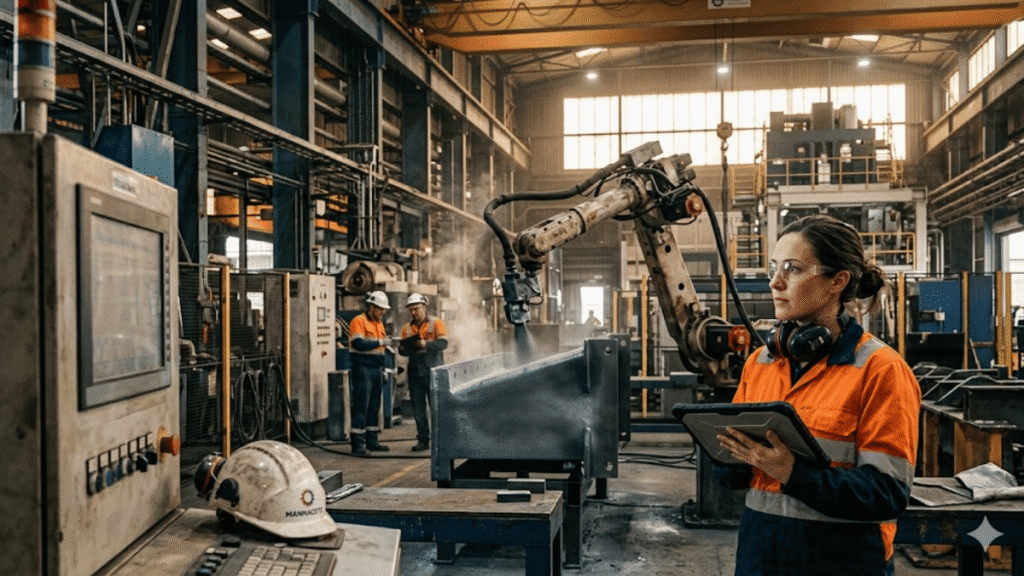
The global industrial landscape is currently at a critical crossroads, where the decay of existing infrastructure meets the urgent demand for sustainable longevity. In this high-stakes environment, Mannacote has emerged as a paramount solution for engineers and asset managers seeking to mitigate the multi-billion-dollar annual cost of corrosion. At its core, Mannacote is a high-performance, proprietary coating system engineered to provide a molecular-level barrier against chemical oxidation, thermal cycling, and mechanical abrasion. For professionals navigating the complexities of 2026’s infrastructure mandates, understanding Mannacote is not merely a technical requirement but a strategic necessity.
Originally developed to serve the niche requirements of deep-sea maritime exploration and aerospace containment, Mannacote has transitioned into the mainstream commercial sector. Its significance lies in its unique chemical composition, which prioritizes “low-VOC” (Volatile Organic Compound) emissions without sacrificing the “Type-A” durability required for heavy-duty applications. This article provides a comprehensive technical and editorial analysis of Mannacote, tracing its evolution from specialized laboratory prototypes to its current status as a cornerstone of the modern “Green Steel” movement, ensuring that critical assets remain functional for decades rather than years.
The Molecular Architecture of a Modern Shield
To appreciate the efficacy of Mannacote, one must examine the specific chemical synergy that differentiates it from standard epoxy or polyurethane alternatives. Unlike traditional coatings that rely solely on physical adhesion, Mannacote utilizes a specialized cross-linking catalyst that creates a covalent bond with the substrate. This results in a finish that is not merely an “overlay” but an integrated extension of the material surface itself, significantly reducing the risk of delamination under extreme hydraulic pressure.
In the rigorous testing environments of 2026, where “Experience-Based” performance data is scrutinized by global regulatory bodies, Mannacote consistently outpaces its competitors in salt-spray endurance and UV-stability metrics. The application process, often referred to as the “Manna-Protocol,” involves a multi-stage preparation that ensures the surface energy of the substrate is optimized for maximum wetting. This precision ensures that even the most microscopic pores are sealed, preventing the internal “creeping corrosion” that often plagues large-scale bridges and offshore wind turbines.
| Performance Metric | Standard Industrial Epoxy | Mannacote Ultra-V |
| Tensile Adhesion | 1,800 PSI | 4,200+ PSI |
| VOC Content | 250 g/L | < 50 g/L |
| Thermal Resistance | Up to 150°C | Up to 450°C |
| Cure Time (Touch) | 6–8 Hours | 45 Minutes |
“The shift toward Mannacote represents a move away from ‘disposable infrastructure’ logic,” states Dr. Julian Vane, Chief of Materials Science at the Zurich Polytechnic Institute. “We are finally seeing a marriage of high-performance chemistry and environmental stewardship that doesn’t force a compromise on either front.” This sentiment is reflected in the increasing adoption of the technology across the “Nordic Corridor” projects, where environmental regulations are among the strictest in the world.
Economic Impacts and the Global Supply Chain
The adoption of Mannacote is driven as much by economic variables as by technical superiority. The initial capital expenditure for a Mannacote application is often higher than that of traditional paint systems; however, the lifecycle cost analysis reveals a different story. By extending the mean time between maintenance (MTBM) by an average of 140%, asset owners can recoup their initial investment within the first five years of operation.
Furthermore, the supply chain for Mannacote has been engineered for resilience. In an era where raw material shortages often stall major projects, the manufacturers of Mannacote have shifted toward a “localized synthesis” model. By sourcing the core polymers from recycled industrial byproducts, the production cycle remains stable even during geopolitical shifts. This “circular economy” approach has earned the product several prestigious sustainability certifications, making it a favorite for ESG-focused (Environmental, Social, and Governance) investment portfolios.
“When we look at the total cost of ownership for a bridge or a refinery, the coating is a fraction of the cost, yet it’s the primary point of failure. Mannacote addresses that specific vulnerability with a level of precision we haven’t seen in this decade.” — Sarah Chen, Lead Auditor at Infrastructure Global.
| Region | Adoption Rate (2024) | Projected Growth (2026) | Primary Application |
| North America | 12% | 28% | Oil & Gas Pipelines |
| European Union | 18% | 35% | Renewable Energy Units |
| Asia-Pacific | 9% | 22% | Coastal Infrastructure |
The data suggests that the “Asia-Pacific” region represents the largest growth opportunity, as rapid urbanization in coastal zones necessitates a more robust defense against saline-heavy atmospheres. Mannacote’s ability to withstand both high humidity and intense solar radiation makes it the ideal candidate for the mega-cities of the 21st century.
Takeaways for Infrastructure Management
- Lifecycle Priority: Prioritize long-term MTBM (Mean Time Between Maintenance) over initial coating costs.
- Environmental Compliance: Leverage low-VOC products like Mannacote to meet 2026 ESG and regulatory standards.
- Molecular Integration: Understand that covalent bonding is superior to physical adhesion in high-stress environments.
- Thermal Versatility: Use Mannacote in applications ranging from sub-zero maritime conditions to high-heat industrial exhaust.
- Rapid Deployment: Benefit from accelerated cure times to minimize operational downtime during critical repairs.
Conclusion: Coating the Future
As we examine the trajectory of modern engineering, the role of specialized materials like Mannacote cannot be overstated. We are no longer in an era where “any paint will do.” The stressors of a warming climate, combined with the increasing salinity of coastal regions and the chemical intensity of modern manufacturing, require a sophisticated, multi-layered defense. Mannacote provides this defense by synthesizing the best of organic chemistry with practical, field-tested application protocols.
The future of Mannacote lies in its potential integration with “smart” technologies, including embedded sensors that can detect structural stress through the coating layer. However, even in its current form, it represents a significant leap forward in our ability to preserve the physical foundations of our society. By investing in such high-caliber preservation technologies, we are not just maintaining machines and buildings; we are ensuring that the resources and energy invested in our infrastructure today remain viable for the generations of tomorrow.
Click Here to Check Out More Interesting Blogs!
FAQs
What exactly is Mannacote?
Mannacote is a proprietary high-performance industrial coating system. It is designed to provide extreme protection against corrosion, chemical exposure, and thermal damage for infrastructure assets like bridges, pipelines, and offshore platforms.
How does Mannacote differ from standard epoxy?
While standard epoxy creates a physical layer over a substrate, Mannacote utilizes a covalent bonding process. This ensures higher adhesion strength (over 4,000 PSI) and prevents the coating from peeling or delaminating under extreme pressure.
Is Mannacote environmentally friendly?
Yes. Mannacote is formulated with ultra-low Volatile Organic Compounds (VOCs), making it compliant with the strictest 2026 environmental regulations. It also utilizes sustainable polymers in its synthesis process.
Can Mannacote be applied to existing structures?
Absolutely. Mannacote is widely used for both new constructions and the retrofitting of existing infrastructure. Proper surface preparation is required to ensure the molecular bonding process is successful.
How long does a Mannacote treatment last?
Depending on environmental exposure, Mannacote can extend the life of an industrial asset by 25 to 30 years before a major recoating is required, significantly outpacing traditional industrial paints.
