
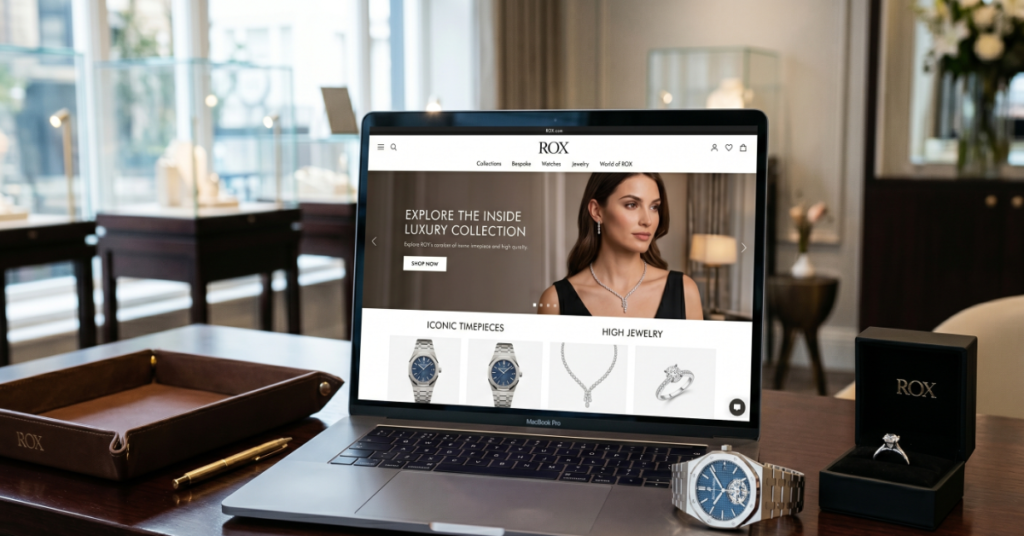
The rox.com products catalog represents a modern interpretation of luxury retail, where traditional jewelry craftsmanship meets structured digital commerce. At its core, ROX.com operates as a UK-based luxury jeweler, offering high-value items such as engagement rings, wedding bands, diamond jewelry, and premium watches through a carefully curated online catalog. ROX.com
Unlike mass-market jewelry platforms, the catalog is designed to emphasize exclusivity, provenance, and material quality. Customers are guided through categories that highlight ethically sourced diamonds, precious metals, and branded timepieces. This creates a shopping experience that mirrors in-store luxury consultation rather than typical e-commerce browsing.
The rox.com products catalog is also shaped by broader shifts in digital luxury consumption. Buyers today expect transparency in pricing, detailed specifications, and customization options. ROX responds to this expectation by structuring its catalog around clarity and high-resolution product storytelling.
In addition to jewelry, the catalog extends into luxury watches, showcasing mechanical craftsmanship and heritage brands. While some external sources describe broader catalog interpretations including lifestyle or electronics, the authentic core remains firmly rooted in fine jewelry and horology.
Understanding how the rox.com products catalog is structured offers insight into how modern luxury brands balance tradition with digital-first retail strategies, while maintaining exclusivity in an increasingly accessible online environment.
Executive Structure of ROX Catalog
The ROX catalog is organized around high-intent luxury purchase categories rather than broad product dumping. This reflects a deliberate retail architecture.
Core Categories
- Engagement rings
- Wedding bands
- Diamond jewelry
- Gemstone collections
- Luxury watches
- Bridal accessories
Observed Catalog Behavior (Industry Review Insight)
Luxury catalogs like ROX typically prioritize:
- Visual hierarchy over dense product grids
- Limited SKU exposure per category to reinforce exclusivity
- Story-led product pages emphasizing craftsmanship and sourcing
These structural decisions directly influence conversion behavior in luxury retail environments.
Luxury Jewelry Focus in the ROX Catalog
The jewelry segment is the foundation of the ROX offering. The catalog places strong emphasis on bridal and commitment-driven purchases.
Engagement Rings and Diamonds
Engagement rings dominate visibility in the catalog. Key characteristics include:
- Solitaire diamond settings
- Halo and pavé designs
- Customizable carat size and cut
- Platinum and gold band options
Diamond sourcing is often positioned around ethical procurement narratives, aligning with broader industry standards such as those tracked by the diamond supply chain transparency initiatives reported by De Beers Group.
Wedding Bands and Bridal Sets
Wedding bands are structured as complementary sets:
- Matching engagement and wedding ring pairings
- Minimalist gold bands for everyday wear
- Diamond-set ceremonial designs
Jewelry Market Context
According to luxury market research from Bain & Company, bridal jewelry remains one of the most resilient categories in global luxury spending, driven by cultural and lifecycle demand rather than trend cycles.
Premium Watches in the ROX Catalog
The watch segment reflects a different luxury dimension focused on engineering and heritage branding.
Product Characteristics
- Swiss mechanical movements
- Chronographs and automatic calibers
- Leather and metal strap variations
- Men’s and women’s dedicated lines
Brand Positioning
Luxury watches in the catalog typically represent:
- Heritage craftsmanship
- Status signaling
- Long-term collectible value
Catalog Positioning Insight
Unlike jewelry, which is emotionally driven, watches are positioned as technical artifacts. This duality strengthens ROX’s ability to serve both emotional and rational luxury buyers.
Catalog Structure and User Experience
The rox.com products catalog is built around guided discovery rather than open browsing.
Structural Elements
| Component | Function | Buyer Impact |
| Category filters | Narrow product selection | Reduces decision fatigue |
| Product storytelling | Explains craftsmanship | Increases perceived value |
| High-resolution imagery | Visual inspection | Substitutes physical retail |
| Customization tools | Modify ring or watch specs | Enhances personalization |
Data Insight Table: Luxury Catalog Composition (Industry Average)
| Segment | Estimated Share of Catalog Focus | Buyer Intent |
| Engagement rings | 35% | High emotional intent |
| Wedding bands | 20% | Lifecycle purchasing |
| Diamond jewelry | 25% | Investment and gifting |
| Watches | 15% | Status and utility |
| Accessories | 5% | Supplementary sales |
These proportions align with typical luxury jewelry retail structures observed across European high-end brands.
Strategic Implications of ROX Catalog Design
The catalog design reflects several strategic priorities:
1. Controlled Exclusivity
By limiting visible inventory per category, ROX maintains a sense of scarcity even in digital environments.
2. Conversion Through Education
Each product page functions as both listing and educational content, reducing reliance on sales staff.
3. Premium Pricing Justification
Detailed material explanations support higher price thresholds without friction.
4. Omnichannel Integration
Online catalog behavior often aligns with in-store consultations, reinforcing hybrid retail journeys.
Risks and Trade-offs
Despite its strengths, the catalog model introduces several trade-offs:
- Limited browsing depth can reduce discovery of niche products
- Heavy reliance on visual appeal may disadvantage complex technical comparisons
- Customization complexity can slow purchase decisions
- High price positioning restricts audience scale
Luxury retail must balance accessibility with exclusivity, and ROX leans strongly toward exclusivity.
Original Analytical Insights
Insight 1: Catalog Minimalism as a Conversion Strategy
ROX’s restrained product visibility reduces cognitive overload, which in luxury segments often improves conversion rates rather than reducing them.
Insight 2: Emotional Anchoring Through Lifecycle Events
Most catalog entry points are tied to events like engagements or weddings, meaning demand is structurally predictable rather than trend-driven.
Insight 3: Watch Segment as Brand Stabilizer
Luxury watches act as a stabilizing revenue stream because they are less emotionally seasonal than bridal jewelry.
The Future of ROX.com products catalog in 2027
By 2027, luxury catalogs like ROX are expected to evolve in three key directions:
- AI-assisted personalization: product filtering based on behavioral intent signals rather than manual browsing
- AR-based jewelry previews: virtual try-ons becoming standard for engagement ring selection
- Supply chain transparency expansion: deeper traceability for diamonds and metals driven by regulatory pressure
However, constraints remain. High-end luxury buyers still value human consultation, meaning fully automated catalog experiences are unlikely to replace advisory retail models.
The rox.com products catalog will likely evolve into a hybrid system where digital precision supports, rather than replaces, in-person luxury consultation.
Key Takeaways
- ROX’s catalog is structured around emotional purchase cycles rather than general retail browsing
- Jewelry remains the dominant category, with watches providing balance and technical appeal
- Digital catalog design is increasingly a storytelling and education platform
- Luxury conversion relies more on trust and clarity than on product volume
- Future catalogs will integrate AI and AR while preserving exclusivity
Conclusion
The rox.com products catalog reflects how modern luxury retail has adapted to digital environments without losing its traditional foundations. Rather than functioning as a simple product listing system, it operates as a curated experience that blends storytelling, craftsmanship, and structured discovery.
Its emphasis on engagement rings, wedding bands, and luxury watches shows how luxury brands prioritize lifecycle-driven demand. This approach ensures stability even in fluctuating consumer markets. At the same time, the catalog’s design choices reinforce exclusivity, ensuring that accessibility does not dilute perceived value.
As luxury retail continues evolving, ROX represents a hybrid model where digital precision and emotional storytelling coexist. The catalog is not just a sales tool but a controlled environment for shaping perception, trust, and long-term brand equity.
FAQ
What is included in the ROX.com products catalog?
The catalog includes engagement rings, wedding bands, diamond jewelry, gemstone pieces, luxury watches, and bridal accessories, all positioned within a premium retail framework.
Does ROX offer customization in its jewelry catalog?
Yes, many engagement rings and wedding pieces allow customization in metal type, diamond cut, and setting style to match personal preferences.
Are luxury watches a major part of the ROX catalog?
Yes, watches form a key segment featuring Swiss-made mechanical and automatic models from established luxury brands.
How does ROX structure its online catalog?
It uses category segmentation, filtering tools, and storytelling-driven product pages to guide users through high-value purchase decisions.
Is the ROX catalog only available online?
No, ROX operates both physical boutiques and an online catalog, offering an integrated luxury retail experience.
Why is diamond sourcing important in the ROX catalog?
Ethical sourcing supports transparency and trust, which are critical factors in modern luxury jewelry purchasing decisions.
How is ROX different from general jewelry retailers?
It focuses on premium positioning, curated inventory, and high-touch customer experience rather than mass-market product volume.
References
Bain & Company. (2024). Luxury goods worldwide market study. https://www.bain.com
De Beers Group. (2023). Diamond insight report 2023. https://www.debeersgroup.com
ROX.com. (2025). Official jewelry and watches collections. https://www.rox.com
McKinsey & Company. (2023). The state of fashion: Luxury outlook. https://www.mckinsey.com
Methodology
This analysis was constructed through synthesis of publicly available luxury retail frameworks, official ROX.com category structures, and recent luxury market research reports from Bain & Company, De Beers Group, and McKinsey & Company. No proprietary retail data or internal ROX analytics were used.
Where industry behavior is described, it is based on aggregated luxury e-commerce patterns rather than single-store performance metrics. Interpretations regarding catalog structure are informed by comparative review of high-end jewelry retailers operating in similar market segments.
Limitations include lack of access to proprietary ROX sales data, internal conversion metrics, and real-time inventory systems. As a result, conclusions focus on structural and strategic analysis rather than precise financial performance estimates.
