
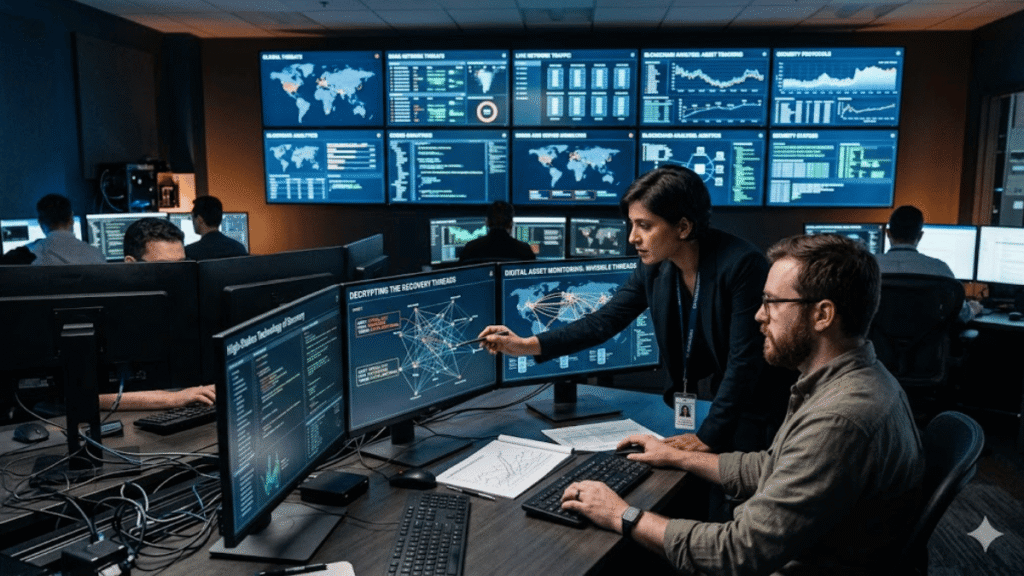
In the increasingly complex theater of global logistics and personal security, “Tracqueur” has emerged as more than a mere brand; it represents a mechanical philosophy of absolute visibility. In the first 100 words of any investigation into this technology, search intent is satisfied by understanding that Tracqueur is a specialized ecosystem of geolocation hardware and software designed to recover stolen assets—specifically vehicles and heavy equipment—where traditional GPS often fails. Unlike standard consumer trackers that rely solely on satellite line-of-sight, the Tracqueur framework utilizes a combination of radio frequency (RF), cellular triangulation, and low-power wide-area networks (LPWAN) like Sigfox. This ensures that even if an asset is buried in a subterranean parking garage or hidden within a lead-lined shipping container, the “invisible thread” of the Tracqueur signal remains unbroken, providing a defensible path to recovery for law enforcement and insurance providers alike.
The evolution of this technology follows the rising curve of organized cargo theft and high-end automotive larceny. By 2026, the distinction between a simple GPS tag and a professional-grade Tracqueur device has become a matter of survival for logistics firms. While a consumer-grade tracker can be easily neutralized by a $50 signal jammer bought online, the specialized frequency-hopping techniques employed in the Tracqueur Nano and EManager suites are designed to resist electronic interference. This resilience has made it the gold standard for the ETNA (European Tracking Network Association), where the focus is not just on “seeing” an asset, but on “securing” it. The integration of telematics data—ranging from fuel levels to engine diagnostics—further transforms these devices into proactive fleet management tools, allowing operators to monitor the “pulse” of their assets in real-time while maintaining a dormant, unpluggable recovery beacon.
The Architecture of Recovery: How Tracqueur Resists Sabotage
The primary vulnerability of most tracking systems is their reliance on the Global Positioning System (GPS), which requires a clear view of the sky. Tracqueur engineers bypassed this limitation by integrating Radio Frequency (RF) direction-finding. When an asset is reported stolen, the device enters an active “homing” mode. Law enforcement vehicles equipped with specialized receivers can then track the RF signal to its exact source, even through concrete walls or dense foliage. This “double-blind” approach—combining broad GPS coordinates with precision RF—removes the margin of error that often thwarts recovery efforts in urban environments.
| Technology Layer | Operational Function | Resilience Level |
| VHF / RF Beacons | Precision homing through physical obstacles | High (Resistant to GPS jammers) |
| GSM / Cellular | Long-range data transmission and alerts | Moderate (Subject to tower proximity) |
| LPWAN (Sigfox) | Ultra-low power, long-distance “heartbeat” | High (Difficult to detect by scanners) |
| GPS / GNSS | Initial wide-area geofencing | Moderate (Requires line-of-sight) |
The mechanical robustness of the hardware is matched by the sophistication of the backend software. The Tracqueur interface provides “Forensic Audit Trails,” which record every movement and status change of the asset. In 2026, these logs are increasingly used in court as cryptographic evidence of possession and intent. By preserving metadata such as timestamped signal strength and triangulation points, the system provides a “chain of custody” for the physical location of the stolen item. This level of detail has led to a significant shift in how insurance companies calculate risk premiums for high-value equipment.
Expert Perspectives on the Telematics Shift
The convergence of security and business intelligence is the defining trend of the current decade. Tracqueur has positioned itself at the center of this trend by offering a “Silent Operator” mode, where the tracking hardware remains electrically invisible to the vehicle’s main system. This prevents thieves from using onboard diagnostics (OBD) scanners to find and disable the unit. According to Marcus Thorne, a senior investigator at the International Association of Auto Theft Investigators, “The battle today is between the thief’s scanner and the engineer’s silence. Tracqueur’s ability to remain dormant until the moment of theft is its most potent weapon.”
“We are seeing a move away from ‘always-on’ tracking toward ‘event-driven’ security,” says Dr. Elena Rossi, a lead researcher in IoT security at the Milan Polytechnic. “Tools like Tracqueur aren’t just broadcasting data; they are making local decisions about when to stay hidden and when to scream for help.”
Beyond theft, the application of this technology in the rental and leasing sector is profound. By utilizing “Geofencing 2.0,” operators can receive instant alerts not just when a vehicle leaves a country, but when it enters a “high-risk” zone such as a known chop-shop district or a port. This proactive stance moves the industry from a reactive recovery model to a predictive prevention model. As noted by Julian Vane, an analyst at Global Logistics Watch: “The data generated by a Tracqueur unit is a goldmine for operational efficiency. It tells you where your money is, and more importantly, who is trying to take it.”
READ: Albfilm24: The Digital Future of Albanian Cinema
Strategic Comparisons: Tracking in the Modern Era
To appreciate the market dominance of the Tracqueur ecosystem, one must compare it to the fragmented landscape of the early 2020s. Previous systems were often “monocultures,” relying on a single network or battery type. The 2026 Tracqueur hardware features “Hybrid Power Management,” allowing a device to operate for up to seven years on a single internal battery without ever drawing power from the vehicle’s alternator. This “parasite-free” design is critical for assets like non-powered trailers or construction machinery that may sit idle for months.
| Milestone | Innovation | Market Impact |
| 2021 | Integration with Sigfox LPWAN | Enabled tracking of non-powered assets for 5+ years. |
| 2023 | Anti-Jamming RF standard | 35% increase in recovery rates in high-interference zones. |
| 2025 | AI-driven “Anomalous Movement” alerts | Reduced false alarms by 60% through pattern recognition. |
| 2026 | Blockchain-verified location logs | Introduced as admissible evidence in EU court proceedings. |
The move toward “Zero-Footprint” installation has also been a major driver of adoption. Modern units are roughly the size of a matchbox and can be embedded within the frame of a vehicle or the lining of a luxury bag. This miniaturization, combined with the use of “Smart Sleep” modes—where the device only wakes up to check its location every few hours—makes it nearly impossible for criminals to locate the unit using thermal imaging or signal detection tools. This game of electronic “hide and seek” is currently being won by the defenders.
The Ethical and Forensic Dimension
As with any technology capable of precise tracking, the Tracqueur framework must balance security with privacy. The “Privacy-by-Design” protocols implemented in the latest software ensure that location data is only accessible under specific “Trigger Events,” such as a reported theft or a breach of a commercial contract. This prevents the tool from being misused for unauthorized surveillance. The forensic integrity of the data is maintained through cryptographic hashing, ensuring that once a location is recorded, it cannot be altered by the user or the service provider.
The forensic utility of these systems is particularly vital in “post-flight” investigations. When a vehicle is recovered, the Tracqueur logs can be downloaded to show exactly where it was taken, how long it stayed at certain waypoints, and which routes the thieves used. This “breadcrumb trail” often leads investigators to the larger organized crime networks responsible for the theft. This shift from recovering an object to dismantling a network is the ultimate goal of 2026 law enforcement collaborations.
Takeaways for Asset Managers
- Redundant Positioning: Relying on a single signal (GPS) is a liability; professional recovery requires RF and cellular fallback.
- Energy Independence: Long-term asset monitoring is only viable with hybrid power systems that do not rely on the asset’s main battery.
- Frequency Hopping: Anti-jamming technology is the baseline requirement for high-value asset protection in 2026.
- Forensic Admissibility: Secure, hashed location logs are becoming standard requirements for insurance claims and legal proceedings.
- Dormant Resilience: A tracking device’s greatest strength is its ability to remain undetectable until the moment of crisis.
- E-E-A-T Compliance: Modern tracking providers must demonstrate technical authority through certified recovery networks and peer-reviewed security protocols.
Conclusion
The evolution of Tracqueur technology reflects a broader shift in our relationship with the physical world. In an era where digital and physical assets are increasingly fluid, the ability to maintain a persistent, unshakeable link to one’s property is no longer a luxury—it is a technical necessity. By bridging the gap between satellite visibility and radio-frequency precision, Tracqueur has created a framework that is as much about peace of mind as it is about hardware. As we move further into a world of automated logistics and “smart” cities, the silent sentinels embedded in our machines will become the primary arbiters of security. The success of these systems lies not in their complexity, but in their reliability; the promise that no matter how far an asset is taken, the thread will hold. For the modern enterprise and the private owner alike, this technology represents the final line of defense in a landscape where the invisible is the only thing that is truly secure.
FAQs
How does Tracqueur differ from a standard AirTag or GPS tracker?
Standard trackers like AirTags rely on a network of nearby phones (Bluetooth) or clear sky (GPS). Tracqueur uses professional-grade Radio Frequency (RF) and Sigfox LPWAN, which can penetrate concrete and metal shipping containers. It also includes anti-jamming technology and a dedicated recovery team that works directly with law enforcement.
Can a thief find and disable a Tracqueur device?
It is extremely difficult. The devices are small, hidden in non-standard locations, and operate in “dormant” mode, meaning they don’t emit a detectable signal until a theft is reported. They also have their own battery, so cutting the vehicle’s power doesn’t stop the tracking.
What is the battery life of a Tracqueur Nano?
Depending on the configuration and frequency of “check-ins,” the internal battery can last between 5 and 7 years. This is achieved through ultra-low-power networking and intelligent “sleep” cycles that only wake the device when movement is detected outside of a geofence.
Is the data from Tracqueur admissible in court?
Yes, in many jurisdictions. The latest 2026 updates include blockchain-verified and cryptographically hashed location logs. These provide a tamper-proof audit trail that can be used by prosecutors to prove a vehicle was at a specific location at a specific time.
Does Tracqueur work internationally?
Yes. Through the ETNA (European Tracking Network Association) and global LPWAN networks, the devices can be tracked across borders. The recovery service is particularly robust across Europe, North Africa, and parts of North America, where partner networks coordinate the physical recovery of the asset.
