
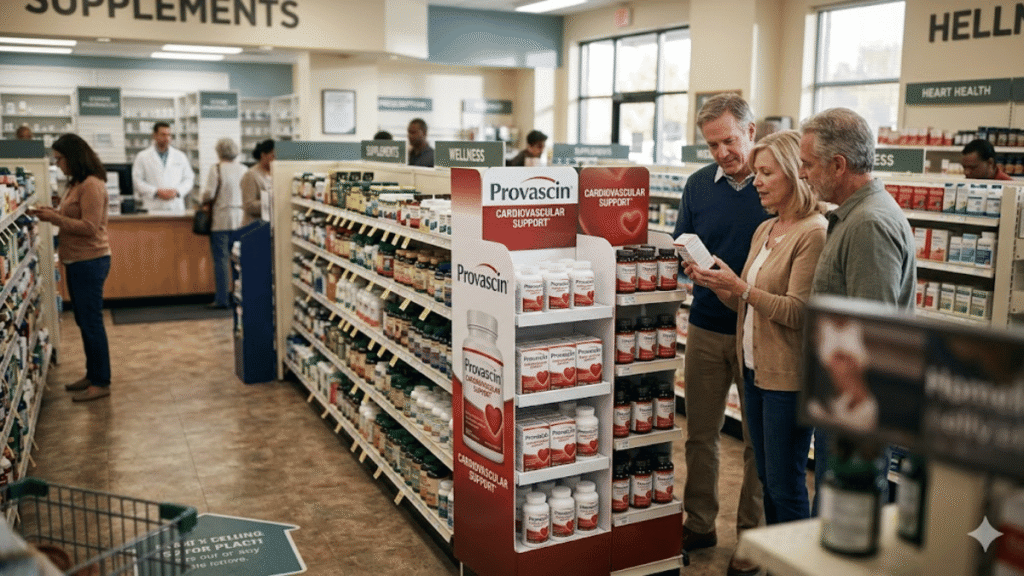
Provascin is commonly marketed as a dietary supplement designed to support cardiovascular health, often promoted for improving blood circulation, reducing inflammation, and aiding heart function. For readers seeking immediate clarity, Provascin is not an FDA-approved medication but a wellness product typically composed of vitamins, plant extracts, and amino acids aimed at supporting vascular performance. Within the first moments of investigation, the central issue becomes evident: while such supplements are widely available and popular, their clinical effectiveness varies, and scientific validation is often limited or indirect.
The global rise in cardiovascular disease—responsible for an estimated 17.9 million deaths annually, according to the World Health Organization—has fueled interest in preventive health measures. Supplements like Provascin position themselves within this preventive space, offering an accessible alternative to prescriptionدوية or invasive treatments. They are particularly appealing to individuals seeking “natural” solutions or those managing early-stage risk factors such as mild hypertension or poor circulation.
Yet the appeal is accompanied by uncertainty. Unlike regulated pharmaceuticals, dietary supplements operate under different standards of evidence and oversight. Claims about benefits may rely on general research about individual ingredients rather than clinical trials of the product itself.
As Provascin gains visibility in online marketplaces and health forums, it becomes part of a broader conversation: how consumers navigate the increasingly blurred line between medical treatment and wellness products in pursuit of better heart health.
The Science of Cardiovascular Supplements
To understand Provascin, it is necessary to examine the broader category it belongs to—cardiovascular dietary supplements. These products often include ingredients such as L-arginine, Coenzyme Q10, omega-3 fatty acids, and herbal extracts like garlic or hawthorn.
These compounds have been studied individually for their potential effects on vascular function. For example, L-arginine plays a role in nitric oxide production, which helps relax blood vessels and improve circulation. Coenzyme Q10 is involved in cellular energy production and has been investigated for its role in heart health.
The table below summarizes common ingredients found in cardiovascular supplements and their documented effects:
| Ingredient | Proposed Benefit | Evidence Level | Common Use Case |
|---|---|---|---|
| L-Arginine | Improves blood flow | Moderate | Circulation support |
| Coenzyme Q10 | Supports heart energy metabolism | Moderate–strong | Heart failure adjunct |
| Omega-3 Fatty Acids | Reduces inflammation | Strong | Cholesterol management |
| Garlic Extract | Lowers blood pressure | Moderate | Hypertension support |
| Hawthorn | Enhances cardiac function | Limited–moderate | Mild heart conditions |
Dr. Dariush Mozaffarian, a cardiologist and nutrition researcher, has emphasized that “dietary components can influence cardiovascular risk, but their effects are often modest compared to lifestyle changes andدوية.” This perspective underscores the importance of context when evaluating supplements like Provascin.
Regulatory Landscape: Supplements vs. Pharmaceuticals
One of the defining characteristics of Provascin is its classification as a dietary supplement rather than a medication. In the United States, supplements are regulated under the Dietary Supplement Health and Education Act of 1994, which allows products to be marketed without prior approval, provided they do not claim to diagnose, treat, or cure diseases.
This regulatory framework differs significantly from that governing pharmaceuticals, which require rigorous clinical trials and approval processes. As a result, the burden of proof for efficacy is lower for supplements.
| Aspect | Dietary Supplements | Pharmaceuticals |
|---|---|---|
| Approval Process | No pre-market approval | Extensive clinical trials |
| Evidence Requirement | Limited | High |
| Claims Allowed | General health support | Specific medical treatment |
| Regulatory Oversight | Post-market monitoring | Strict pre- and post-market |
Dr. Pieter Cohen, a physician and supplement safety researcher, has noted that “consumers often assume supplements are tested like drugs, but this is not the case.” This gap in perception can influence purchasing decisions and expectations.
Market Growth and Consumer Demand
The global dietary supplement market has expanded rapidly, reaching an estimated value of over $150 billion by the early 2020s. Cardiovascular health products represent a significant segment, driven by aging populations and increased awareness of heart disease.
Provascin fits within this trend, often marketed through online platforms, targeted advertising, and affiliate networks. Its branding typically emphasizes natural ingredients, convenience, and preventive care.
Consumer behavior plays a critical role. Many individuals seek supplements as a way to take control of their health, particularly when access to healthcare is limited or costly. Others are influenced by testimonials, reviews, and social media endorsements.
Health economist Dr. Christopher Wild has observed that “the demand for supplements reflects both a desire for autonomy and gaps in healthcare systems.” This dual motivation helps explain the sustained growth of products like Provascin.
Efficacy and Evidence: What Research Says
The effectiveness of Provascin as a specific product remains difficult to evaluate without publicly available clinical trials. However, research on its potential ingredients provides some insight.
For example, a meta-analysis published in the Journal of the American College of Cardiology found that omega-3 fatty acids can modestly reduce cardiovascular risk. Similarly, studies on Coenzyme Q10 have shown benefits for patients with heart failure, though results vary.
However, combining multiple ingredients does not guarantee additive or synergistic effects. Interactions between compounds can influence absorption, efficacy, and safety.
Dr. Steven Nissen, a cardiologist, has cautioned that “supplements are often marketed based on plausible mechanisms rather than definitive clinical outcomes.” This distinction is crucial for understanding the limitations of products like Provascin.
Risks and Safety Considerations
While generally considered safe for most users, cardiovascular supplements can pose risks, particularly when taken without medical supervision. Potential issues include:
- Interactions with prescription medications such as blood thinners
- Variability in ingredient جودة and concentration
- Allergic reactions or gastrointestinal side effects
The lack of standardized dosing further complicates safety. Unlike pharmaceuticals, supplements may vary between manufacturers.
The World Health Organization has highlighted the importance of pharmacovigilance in monitoring adverse effects of non-prescription products. Consumers are advised to consult healthcare professionals before starting any supplement regimen.
Cultural and Psychological Dimensions
The popularity of products like Provascin reflects broader cultural attitudes toward health. There is a growing preference for “natural” solutions, often perceived as safer or more holistic than conventional medicine.
This perception is reinforced by marketing narratives that emphasize empowerment and self-care. Supplements become not just health products but symbols of proactive living.
Psychologically, they offer reassurance—a sense of taking action against potential health risks. This effect can be powerful, even when clinical benefits are uncertain.
Dr. Timothy Caulfield, a health policy expert, has argued that “the appeal of natural health products often lies more in belief than in evidence.” Understanding this dynamic is key to interpreting the rise of supplements like Provascin.
The Future of Cardiovascular Supplements
Advances in personalized medicine and nutrigenomics may reshape the supplement industry. Future products could be tailored to individual genetic profiles, optimizing efficacy and reducing risks.
At the same time, regulatory pressures are increasing. Governments and health organizations are calling for greater transparency, improved labeling, and stronger evidence standards.
For Provascin and similar products, the challenge will be to balance consumer demand with scientific validation. As awareness grows, users may become more discerning, seeking products backed by robust research.
Takeaways
- Provascin is a dietary supplement aimed at supporting cardiovascular health
- Its effectiveness depends largely on its individual ingredients rather than product-specific clinical trials
- The supplement market is rapidly growing, driven by consumer demand for preventive health solutions
- Regulatory standards for supplements are less stringent than for pharmaceuticals
- Potential risks include interactions with medications and variability in product quality
- Cultural beliefs and psychological factors significantly influence usage
Conclusion
Provascin occupies a complex space within modern healthcare—a space where science, commerce, and personal belief intersect. It reflects a broader shift toward preventive, consumer-driven health practices, offering accessibility and autonomy in an often پیچیدہ medical landscape.
Yet this accessibility comes with responsibility. Without rigorous clinical validation, the benefits of such supplements remain uncertain, and risks, though often understated, are real. For consumers, the challenge lies in navigating these uncertainties with informed judgment.
As the boundaries between medicine and wellness continue to blur, products like Provascin will remain both popular and controversial. Their future will depend not only on market demand but on the evolving relationship between evidence, regulation, and trust in the pursuit of better heart health.
Click Here to Check Out More Interesting Blogs!
FAQs
What is Provascin used for?
Provascin is marketed as a supplement to support cardiovascular health, including circulation and heart function.
Is Provascin clinically proven?
There is limited evidence specific to the product; most claims rely on studies of individual ingredients.
Can Provascin replace heart medications?
No, it should not replace prescribed medications without medical advice.
Are there side effects?
Possible side effects include mild digestive issues and interactions with medications.
Who should avoid Provascin?
Individuals on blood thinners, pregnant women, or those with medical conditions should consult a doctor before use.
