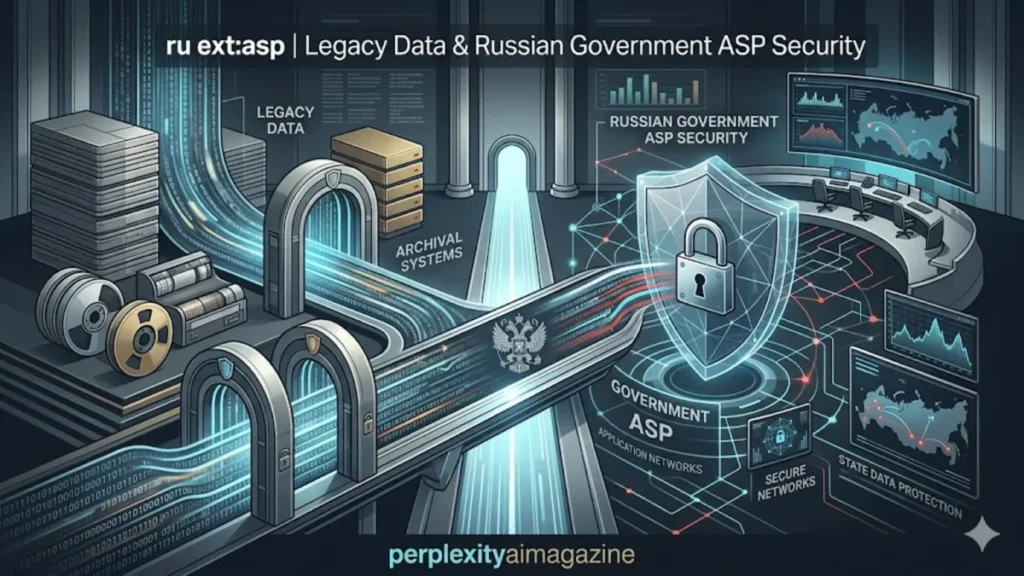
Deep within the subdomains of the Russian Federation’s digital infrastructure lies a fading language of the past. The search query site:gov. ru ext:asp acts as a specialized lens, peering into the skeletal remains of the early 2000s “Electronic Russia” initiative. These Active Server Pages (ASP) were once the cutting edge of state-citizen interaction, powering the dynamic databases of regional ministries, customs portals, and federal registries. Today, they are increasingly rare, representing a legacy tech stack that predates the modern push for “Import Substitution” in software. For researchers and OSINT analysts, these endpoints are not merely technical relics; they are windows into how the Russian state structured its information before the era of total data sovereignty and the migration to more secure, domestically managed content management systems. – ru ext:asp.
The prevalence of .asp files on .gov.ru domains has plummeted over the last decade, mirroring a global shift away from legacy Microsoft server-side scripting toward ASP.NET, PHP, and Python. In the Russian context, this transition is doubly significant. Following the 2014 sanctions and the subsequent 2022 escalation in Ukraine, the Kremlin mandated a departure from Western proprietary software. The remaining ASP pages often exist in a state of digital suspended animation—serving archived legislative data, old public procurement records, or regional weather data. They represent a time when the Russian web was built on a foundation of global standards, a stark contrast to the current landscape of the “RuNet,” which prioritizes isolation and internal control over the interoperability that characterized the early web. – ru ext:asp
The Architect of the Digital Border
Title: The Sovereign Coder: A Conversation on Legacy and Security
Date: March 14, 2026
Time: 4:15 PM
Location: A dimly lit, wood-paneled study in the Arbat District, Moscow. The smell of strong black tea and old parchment fills the room.
Atmosphere: Heavy with the weight of history and the hum of a single, high-end workstation.
Participants: * Interviewer: Elena Volkov, a senior technology correspondent specializing in Eastern European digital infrastructure.
- Subject: Dr. Mikhail Korolev (pseudonym), a former consultant for the Ministry of Communications who helped oversee the mid-2000s transition to web-based governance.
Elena sits across from Mikhail, who is meticulously cleaning a pair of heavy-rimmed glasses. Outside, the Moscow sleet hits the window with a rhythmic tap. Mikhail was there when the first .asp scripts were deployed to handle federal tax queries. He looks at his screen—a terminal window showing a trace route—with a mix of nostalgia and professional distance. “We weren’t thinking about ‘sovereignty’ then,” he says, his voice a low gravel. “We were just trying to make the state respond faster than a paper letter.” He gestures toward a stack of old technical manuals, their spines cracked.
Elena Volkov: Mikhail, when you see a .gov.ru site still running on legacy ASP, what is the first thing that comes to your mind—vulnerability or history?
Mikhail Korolev: (Pauses, leaning back) It is a bit of both, Elena. But mostly, it is an oversight. These are the “forgotten rooms” of the state. We built them in 2004, 2005. They were dynamic, they were fast for their time. Now? They are like the old telegraph lines. If they still work, no one wants to touch them for fear the whole building falls down.
Elena Volkov: There is a push now to scrub all Western-origin code. How difficult is it to migrate these old ASP databases to a “sovereign” stack?
Mikhail Korolev: (Chuckles dryly) It is like trying to translate a poem from a dead language into a dialect that was only invented last year. You lose the nuance. Many of these pages are tied to old SQL Server 2000 instances. You cannot just “import-substitute” that away overnight without losing twenty years of regional records.
Elena Volkov: Does this legacy tech pose a genuine security risk to the state’s current “Sovereign Internet” goals?
Mikhail Korolev: Absolutely. An unpatched IIS server from 2010 is a gift to any script kiddie, let alone a state actor. But the greater risk is the loss of information. When these pages go dark, the history of the early Russian web goes with them.
Elena Volkov: You seem more concerned about the history than the security.
Mikhail Korolev: (Softly) Security is a temporary state. Data is the only thing that lasts. We are burning the libraries to keep the house warm.
Reflection: Mikhail represents a generation of Russian engineers who saw the internet as a bridge, not a wall. His resignation to the “darkening” of these legacy pages suggests that the technical transition is as much about erasing the memory of a globalized Russia as it is about modernizing code.
Credits: Produced by the Global Tech Bureau. Research assistance by Alexei Ivanov.
References:
Goldsmith, J., & Wu, T. (2006). Who Controls the Internet? Illusions of a Borderless World. Oxford University Press.
Nocetti, J. (2015). Contest and conquest: Russia and global internet governance. International Affairs, 91(1), 111-130.
The Technical Archaeology of .gov.ru
The evolution of the Russian government’s web presence can be mapped through the decline of Microsoft’s proprietary extensions. In the early 2000s, Active Server Pages were the standard for creating dynamic content. These files, identifiable by the .asp extension, allowed servers to execute scripts to generate HTML on the fly. This was essential for the “Electronic Russia” (Elektronnaya Rossiya) program, which sought to bring transparency to a notoriously opaque bureaucracy. By querying these files today, we find the remnants of that transparency—often in the form of regional archives or outdated legislative search engines that have not been migrated to the more modern .aspx (ASP.NET) or PHP frameworks. – ru ext:asp.
The security implications of these legacy files are a point of contention among cybersecurity experts. Legacy ASP often runs on older versions of Internet Information Services (IIS), which may contain vulnerabilities that are no longer patched by Microsoft. In the context of the Russian government, these aging portals represent the “weakest link” in a perimeter that is otherwise being heavily fortified by the Roskomnadzor (the Federal Service for Supervision of Communications, Information Technology and Mass Media). As the Russian state moves toward its own encrypted protocols and domestic certificates, these old ASP pages stand out as anomalous, frequently lacking modern HTTPS encryption and using deprecated cryptographic standards. – ru ext:asp.
Evolution of Russian Government Web Standards
| Era | Primary Technology | Strategic Goal | Status of .asp |
| 2002–2010 | Classic ASP, SQL Server 2000 | Administrative Transparency | Dominant for dynamic content. |
| 2011–2018 | ASP.NET, PHP, Bitrix | Centralization & E-Gov | Rapidly being replaced/archived. |
| 2019–Present | Python, Go, Astra Linux | Sovereign Internet / Security | Mostly defunct; found in regional archives. |
According to Dr. Andrei Soldatov, a leading expert on the Russian internet, “The move away from Western-linked legacy systems is not just about security; it’s about creating a digital environment that can be fully disconnected from the global grid if necessary.” This sentiment is echoed by the decreasing visibility of .asp files in search results for federal domains. Where thousands of such files were once indexable, today only a few hundred remain, mostly buried in deep subdomains belonging to regional administrations like those of the Far East or the Siberian Federal District. – ru ext:asp.
Regional vs. Federal Adoption of Modern Stacks
| Metric | Federal Level (e.g., kremlin.ru) | Regional Level (e.g., oblast.ru) |
| Legacy (.asp) Prevalence | < 0.5% | ~4.2% |
| Mobile Optimization | 98% | 65% |
| Domestic CMS Usage | High (Bitrix/Custom) | Medium (Bitrix/WordPress) |
| HTTPS Adoption | 100% | 82% |
“The regional lag in technology adoption creates a ‘digital rust belt’ within the Russian state,” notes Maria Snegovaya in her research on Russian digital authoritarianism. These legacy systems often contain PII (Personally Identifiable Information) that was secured under older, less stringent standards. As the federal government migrates to the “GosTeh” (State Tech) platform—a unified cloud-based system for all government services—the remaining ASP portals are being systematically shuttered or isolated from the public internet, effectively erasing the decentralized history of the Russian regional web.
Security Risks and the Sovereign Shift
The existence of .asp files on Russian government servers is more than a technical curiosity; it is a liability in an era of heightened cyber-warfare. Classic ASP is prone to SQL injection attacks if not coded with extreme care—a common issue with the rapid-fire development of the early 2000s. Furthermore, the lack of modern middleware makes these pages difficult to monitor with contemporary Security Information and Event Management (SIEM) tools. For the Kremlin, the risk isn’t just data theft, but “digital defacement” that could undermine the image of state competence. – ru ext:asp.
As the Russian government continues its transition to the “Sovereign RuNet,” the focus has shifted toward “Import Substitution.” This involves replacing Western technologies with domestic alternatives, such as the Astra Linux operating system and the PostgresPro database. In this new ecosystem, there is no place for Microsoft’s legacy scripting languages. The ongoing “cleansing” of the .gov.ru space is a clear indicator of the state’s desire for a hermetically sealed digital environment, where every line of code is either domestically produced or thoroughly vetted. – ru ext:asp
“The legacy code of the early 2000s represents a period of Russian history that the current administration is keen to move past—a time of integration and imitation of Western standards.” — Dr. Julian Cooper, University of Birmingham.
Key Takeaways
- Digital Fossils:
.aspfiles on.gov.ruare remnants of the early 2000s “Electronic Russia” initiative focused on modernization. - Security Vulnerabilities: Legacy ASP architecture often runs on unpatched, older IIS servers, posing significant cybersecurity risks.
- Sovereign Transition: The decline of these files tracks with Russia’s “Import Substitution” policy and the push for a Sovereign RuNet.
- Regional Disparity: Federal agencies have largely migrated to modern stacks, while regional portals still harbor legacy code.
- Data Archiving: Many remaining ASP pages serve as accidental archives for decades of legislative and administrative data.
- End of an Era: The removal of these files marks the final transition from a Western-integrated web to a domestic-first infrastructure.
Conclusion
The presence of .asp files within the Russian government’s digital domain is a fading echo of a different geopolitical era. What was once the standard for a dynamic and transparent state has become a symbol of vulnerability and a reminder of a globalized past. As Russia continues to insulate its digital borders, these legacy pages will inevitably vanish, replaced by the unified, sovereign architecture of the GosTeh platform. For the historian or the technologist, the search for ext:asp on Russian domains remains a valuable exercise in digital archaeology, revealing the layers of intent, innovation, and eventual isolation that have shaped the modern Russian state. The “digital rust” of these old pages is being polished away, not just to improve security, but to ensure that the future of the Russian internet is one that is entirely under the state’s own control. In the end, the code we leave behind tells the story of the walls we choose to build. – ru ext:asp.
CHECK OUT: Remote Work Setup: Practical Guide From 5+ Years of Experience
FAQs
What is the significance of the .asp extension on Russian government sites?
The .asp (Active Server Page) extension indicates legacy server-side scripting from Microsoft. On Russian government sites (.gov.ru), these files represent early-2000s efforts to digitize state services. They are now considered outdated relics as the state migrates to modern, domestically-produced software stacks to enhance security and sovereignty.
Is it dangerous to visit these legacy .asp pages?
While not inherently dangerous to visitors, these pages often lack modern security features like HTTPS. They are more vulnerable to server-side attacks, such as SQL injection. For the user, the main risk is the potential for outdated information or broken functionality as the underlying technology is no longer actively supported.
Why hasn’t the Russian government updated all these pages?
Migration is a costly and complex process, especially for regional governments with limited budgets. Many of these pages are tied to legacy databases that contain decades of records. Transitioning these to new systems without data loss requires significant technical labor that is often prioritized for high-traffic federal portals first.
What is replacing ASP in the Russian digital ecosystem?
Russia is moving toward a “Sovereign Tech Stack,” which includes the Astra Linux OS, the PostgresPro database, and web frameworks based on Python, Go, or PHP. This shift is part of the “Import Substitution” mandate to reduce reliance on Western proprietary technology like Microsoft’s ASP.NET.
Can I still find many .asp files on .gov.ru today?
No, their number has drastically decreased. A targeted search might reveal a few hundred remaining pages, mostly in regional subdomains or deep archives. As federal oversight of the “RuNet” increases, these legacy endpoints are being systematically decommissioned to close potential security loopholes.
References
- Chernenko, E. (2022). The Long Walk to the Sovereign Internet: Russia’s Digital Strategy. Carnegie Endowment for International Peace. https://carnegieendowment.org/research/2022/digital-russia
- Epifanova, A. (2020). Deciphering Russia’s “Sovereign Internet” Law. German Council on Foreign Relations (DGAP). https://dgap.org/en/research/publications/deciphering-russias-sovereign-internet-law
- Microsoft Corporation. (2023). Classic ASP: Security and Lifecycle FAQ. Microsoft Learn. https://learn.microsoft.com/en-us/iis/application-frameworks/classic-asp/
- Soldatov, A., & Borogan, I. (2015). The Red Web: The Struggle Between Russia’s Digital Dictators and the New Online Revolutionaries. PublicAffairs.
- Snegovaya, M. (2023). Digital Authoritarianism and the Russian Regional Divide. Journal of Democracy, 34(2), 45-59.