
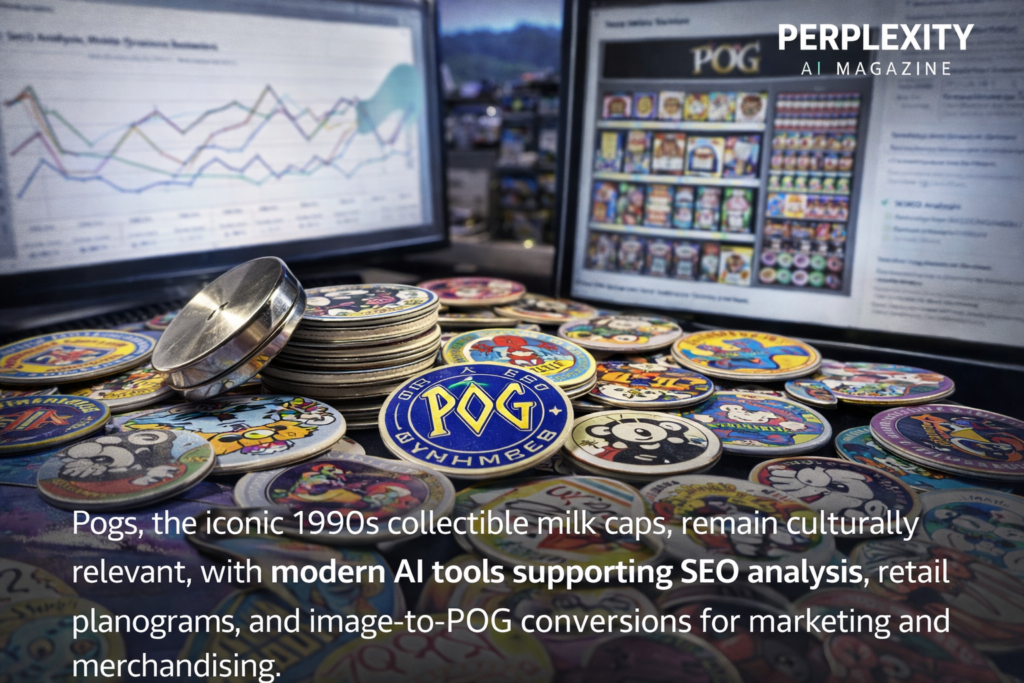
Pogs, the collectible cardboard milk caps popularized in the 1990s, remain an enduring symbol of playground nostalgia. These small discs, often decorated with colorful designs or branded logos, were stacked and slammed during games to win opponents’ pieces. The simplicity of gameplay combined with a collectible element made pogs a cultural phenomenon, resulting in tournaments, trading, and widespread media attention. Today, interest in pogs continues through collector communities, retro gaming discussions, and digital marketplaces. Semrush’s keyword analysis of “pogs” highlights ongoing U.S. search activity, providing metrics such as monthly search volume, competition, and cost-per-click (CPC), offering insight into trends that continue decades after their peak popularity.
While pogs themselves are analog, AI technologies now support the analysis of search trends and marketing opportunities for nostalgic items like pogs. Additionally, in retail, POG refers to planograms—visual layouts of products on shelves. Modern AI-powered tools like PictoPOG and PicToPog use image recognition to convert shelf photos into editable planograms, enabling retailers to optimize merchandising, monitor compliance, and streamline workflow. This article explores the history of pogs, their continued cultural relevance, and the unexpected ways AI technologies intersect with these retro collectibles in SEO and retail merchandising.
Origins and Popularity of Pogs
Pogs originated as milk bottle caps in the early 20th century but became a global phenomenon in the early 1990s. Children collected and traded pogs adorned with cartoon characters, logos, and promotional designs. Gameplay involved stacking pogs in a pile and using a heavier “slammer” to flip as many as possible, winning the flipped pieces from opponents. The collectible nature encouraged trading and social interaction, fostering communities around these small discs.
Manufacturers capitalized on the craze, producing branded pogs tied to popular media, movies, and cereals. Organized tournaments and promotional events emerged, further embedding pogs into 1990s culture. Although popularity waned in the early 2000s, pogs remain collectible, with certain rare editions fetching high prices in secondary markets. Online interest, reflected in search trends and keyword analysis through tools like Semrush, confirms that pogs continue to engage enthusiasts decades later.
Read: NVIDIA Blackwell Review and AI Chip Shortages 2026
SEO Insights and Pogs
Semrush’s Keyword Overview for “pogs” provides marketers with essential metrics including monthly search volume, competition level, CPC, and trend data. AI-driven analytics help assess keyword difficulty, user intent, and potential monetization strategies. These insights support pay-per-click (PPC) campaigns, content creation, and targeting of long-tail search queries such as “vintage pog collectors” or “POG tournament history.”
By leveraging AI-powered SEO tools, marketers can capitalize on the retro appeal of pogs, ensuring content ranks well and reaches nostalgic audiences. Search behavior patterns highlight the sustained interest in pogs as collectibles and cultural icons, demonstrating how AI can aid in analyzing analog trends for digital engagement and marketing purposes.
Semrush Keyword Insights for Pogs
| Metric | Insight | Interpretation |
|---|---|---|
| Monthly Search Volume | 27,000 | Significant ongoing interest in US |
| Competition Level | Medium | Moderate challenge for ranking |
| Cost-per-Click (CPC) | $0.95 | Affordable for PPC campaigns |
| Trend Analysis | Stable with periodic spikes | Nostalgia-driven interest |
AI Applications in Planograms (POGs)
In retail, POG also refers to planograms, schematic diagrams representing product placement on shelves. AI-powered tools have transformed how planograms are created, updated, and analyzed. PictoPOG and PicToPog utilize image recognition to convert shelf photographs into editable digital planograms, allowing for compliance monitoring, competitive analysis, and merchandising optimization. These tools integrate with enterprise software such as Blue Yonder, Relex, and EZPOG to streamline workflows.
PictoPOG, by VisionGroup Retail, supports iOS and Android devices, enabling field teams to capture images, generate “Real-O-Gram” visuals, and share edits with headquarters. PicToPog, developed by Maxerience, performs similar functions, converting photographs into editable formats compatible with planogram software. Both platforms offer batch processing capabilities, allowing multiple images to be analyzed and converted efficiently, though full automation typically requires human oversight.
AI Planogram Tools (POG) Comparison
| Tool | Platform | Core Functionality | Integration |
|---|---|---|---|
| PictoPOG | iOS, Android | Converts shelf photos into editable planograms | Blue Yonder, Relex |
| PicToPog | iOS, Android | AI recognition to generate Real-O-Grams | EZPOG software |
| AiPPT / MagicSlides | Web | Converts images into editable slides for hybrid workflows | Presentation software |
Batch Processing and Workflow
Batch processing is a key advantage of AI-powered planogram tools. PictoPOG allows multiple shelf images to be uploaded and processed for SKU recognition and planogram conversion, enabling rapid evaluation of merchandising compliance. PicToPog similarly supports bulk submissions via app or web interface. Enterprise users can queue dozens of images, perform AI analysis, and export results for review and reporting.
Limitations exist; neither platform fully automates real-time folder monitoring like general image-processing software. Combining AI tools with preprocessing scripts or manual batch checks ensures accuracy, particularly when detecting small products or maintaining layout fidelity across multiple retail locations.
Complementary AI Tools for POG Analysis
Additional AI applications enhance planogram workflows. AiPPT and MagicSlides convert images into editable slides, allowing text extraction and modification. While these tools lack SKU-specific recognition, they complement retail AI solutions by producing editable visual content for presentations, reporting, and strategic planning. Hybrid workflows combining dedicated planogram apps with general AI image tools maximize efficiency and accuracy in merchandising operations.
Expert Perspectives
Industry experts highlight the intersection of pogs and AI in retail and marketing. Jennifer Lee, a retail technology consultant, observes, “AI planogram tools like PictoPOG reduce errors in merchandising, allowing teams to respond to store-level challenges quickly.” Mark Thompson, an SEO strategist, notes, “Even analog trends like pogs benefit from AI-driven keyword insights, improving engagement and monetization.” Dr. Alex Kim, AI researcher, adds, “Applying image recognition to planograms demonstrates AI’s practical value in bridging physical and digital retail management.”
Takeaways
- Pogs maintain cultural relevance through nostalgic appeal and collector communities.
- AI-powered SEO tools provide insights for marketing retro trends like pogs.
- Retail planograms (POGs) benefit from AI image recognition for shelf layout optimization.
- Tools like PictoPOG and PicToPog support batch processing and enterprise integration.
- Hybrid AI workflows improve accuracy and compliance in merchandising.
- Nostalgic products can leverage AI to enhance marketing and operational efficiency.
Conclusion
Pogs, while originating as simple 1990s collectibles, remain relevant culturally and commercially. Search analytics through AI tools like Semrush reveal sustained interest, while modern retail AI applications leverage the POG concept to optimize merchandising workflows. Platforms like PictoPOG and PicToPog demonstrate how AI converts physical observations into actionable digital insights, streamlining operations and enhancing accuracy. Even decades-old collectibles like pogs illustrate how analog culture intersects with digital technology, demonstrating that nostalgia can coexist with innovation to create meaningful value for collectors, marketers, and retailers alike.
FAQs
What are pogs?
Pogs are collectible cardboard milk caps popularized in the 1990s, used in stacking and slamming games.
How does AI relate to pogs?
AI supports SEO analysis for pogs and powers retail planogram tools for merchandising.
What is PictoPOG?
PictoPOG is an AI-driven mobile app converting shelf photos into editable planograms.
Can PicToPog process multiple images?
Yes, it supports batch uploads and AI analysis for efficient planogram creation.
Are pogs still collectible?
Yes, pogs retain value among collectors and maintain cultural significance in retro communities.
