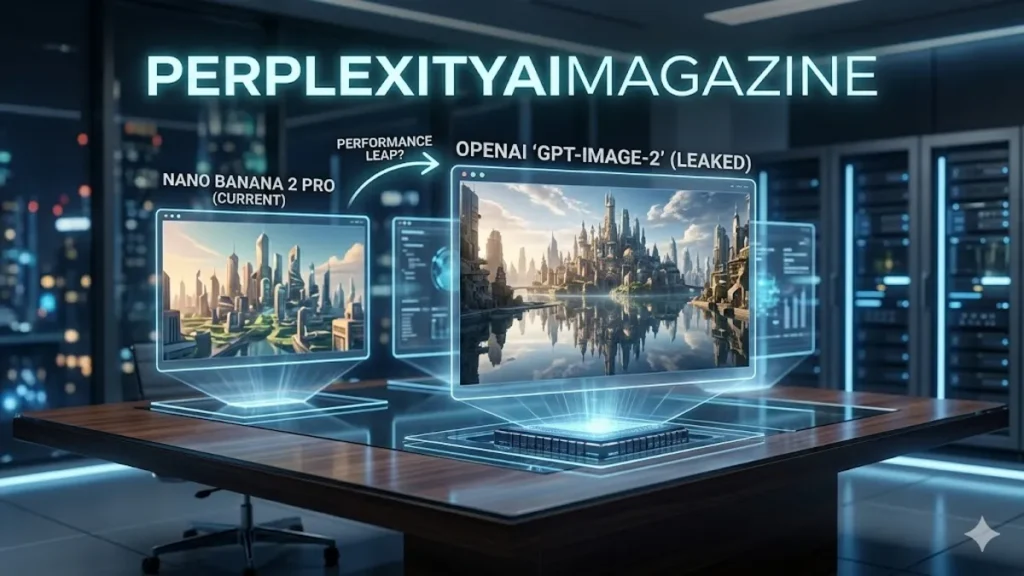
SAN FRANCISCO — The AI image generation landscape shifted late last night as a series of sophisticated test models, codenamed “maskingtape-alpha” and “gaffertape-alpha,” briefly appeared on the LM Arena platform before being abruptly pulled. Industry analysts and early testers have identified these as GPT-Image-2, OpenAI’s next-generation imaging engine. The leaked outputs demonstrate a massive leap in anatomical accuracy, natural lighting, and complex text integration, with many testers claiming the model now outperforms Google’s recently released Nano Banana 2 Pro in world knowledge and structural fidelity.
The “Maskingtape” Leak: What the Demos Reveal
The temporary availability of the alpha models allowed a handful of users to run high-complexity prompts that have historically plagued AI generators. The results, widely shared across X (formerly Twitter) and specialized discord servers, show a marked departure from the “uncanny valley” effects found in GPT-Image-1.5.
Key improvements observed in the leaked samples include:
- Perfected Anatomy: Beach selfies with multiple subjects featuring correct finger counts, natural muscle tension, and accurate sunglass reflections.
- Neutral Color Grading: The persistent “yellow tint” found in previous OpenAI iterations has been replaced with a balanced, neutral palette that mimics professional DSLR photography.
- Integrated Text: Complex UI elements, such as “average engineer screens” and YouTube homepages, are rendered with sharp, readable, and contextually accurate text.
Dethroning the Nano Banana: A New Performance Benchmark
The most intense discussions surrounding the leak focus on how GPT-Image-2 stacks up against Google’s flagship Nano Banana 2 Pro. While Google’s model has been praised for its micro-textures and “snapshot-like” realism, GPT-Image-2 appears to edge it out in “Instruction Following.”
Early side-by-side tests suggest that while Nano Banana Pro excels in lighting, it occasionally struggles with floating text or distorted logos in complex scenes—weaknesses that GPT-Image-2 has seemingly eliminated. “GPT-Image-2 feels like it has a better ‘internal world map,'” noted one researcher who participated in the brief Arena window. “It knows what a store interior should look like, not just what a photo of one looks like.”
The Road to Release: OpenAI’s Imminent Move
OpenAI has remained silent following the leaks, but the rapid takedown of the “tape” models from the Arena suggests that the company is in the final stages of gray-box testing. Historically, OpenAI has followed a 9-month development cycle for its imaging products. With GPT-Image-1.5 having launched in December 2025, analysts were not expecting a successor until late 2026. However, the competitive pressure from Midjourney V8 and Google’s recent updates may have accelerated the timeline to a Summer 2026 release.
Expert Analysis: The End of the “AI Look”
The significance of GPT-Image-2 lies in its ability to remove the “AI fingerprints” that have made synthetic media easy to spot. By mastering world knowledge—knowing that a map of the world must have specific geographical proportions and that UI elements follow specific design logic—OpenAI is moving image generation from “creative art” to “functional utility.”
This transition means that GPT-Image-2 will likely become the go-to tool for UI designers, architects, and technical illustrators who require precision rather than just aesthetic flair. The industry should prepare for a massive influx of “indistinguishable” synthetic content, which will undoubtedly push the demand for improved digital watermarking and SynthID-style verification tools to an all-time high.
CHECK OUT:
The “MiroFish” Phenomenon: 20-Year-Old’s AI Swarm Project Secures $4M in 24 Hours
OpenClaw Upgrade: AI Agents Can Scrape Any Website
5 FAQs
Q: Where can I try GPT-Image-2 right now? A: Currently, you cannot. The model was only briefly available under codenames on LM Arena for “gray-box” testing and has since been removed by OpenAI.
Q: Does it still have the “AI hand” problem? A: Leaked demos suggest a significant fix for anatomical errors. Beach selfies and multi-person shots showed accurate fingers and limb proportions even in complex poses.
Q: How does it compare to DALL-E 3? A: GPT-Image-2 is considered a much more advanced successor, focusing on photorealism and literal instruction following, whereas DALL-E 3 often leaned toward a more stylized or artistic aesthetic.
Q: Can it generate text inside images? A: Yes, and with high accuracy. Leaks showed it rendering store signs, handwritten notes, and even computer code on screens without the usual distortion or “gibberish” text.
Q: When is the official release date? A: OpenAI has not announced a date, but based on the current testing phase, analysts predict a public rollout could happen as early as June or July 2026.