
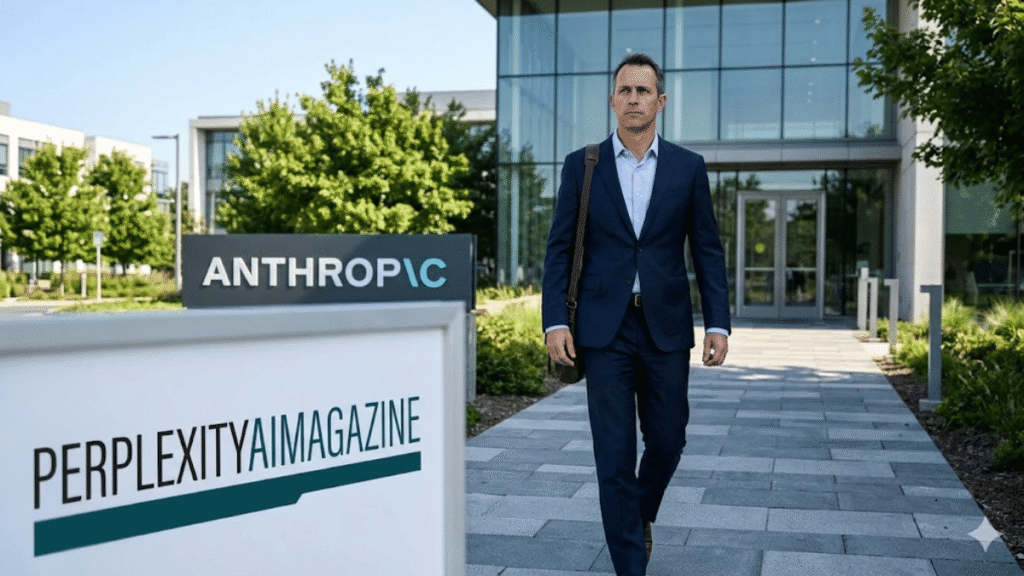
I have spent more than five years analyzing AI research labs, their hiring patterns, and how talent movement shapes the industry. When OpenAI Vice President of Research Max Schwarzer left the company for Anthropic in March 2026, it immediately signaled a meaningful shift in the competition between leading AI labs.
Schwarzer helped lead post training work on models such as GPT-5 and the o-series reasoning systems. His move to Anthropic, where he will return to hands on reinforcement learning research, highlights both a personal career shift and a broader trend of AI researchers migrating between top labs.
Key Takeaways From My Industry Analysis
Based on years of tracking AI research teams and their publications, here are the main insights I see from this move:
- Top AI talent continues to move between labs, often following colleagues and research culture rather than salary alone.
- Reinforcement learning expertise is becoming central to next generation AI systems.
- Anthropic has quietly built a strong research magnet for former OpenAI researchers.
- Policy debates around military AI contracts are increasingly influencing where researchers choose to work.
Who Is Max Schwarzer?
Max Schwarzer served as Vice President of Research and Head of Post-Training at OpenAI, a role that placed him at the center of several major model releases.
Career Highlights
| Period | Role | Major Contributions |
|---|---|---|
| 2023 | Joined OpenAI after PhD at Mila | Early work on post training and reinforcement learning |
| 2025 | Promoted to VP of Research | Led post training teams |
| 2025–2026 | Head of Post Training | Oversaw GPT-5 and o-series model improvements |
| 2026 | Joined Anthropic | Reinforcement learning research |
During his tenure, the teams he led contributed to several high profile systems including:
- GPT-5 and later updates
- GPT-5.3 Codex
- o1 and o3 reasoning models
- experimental reasoning frameworks developed by the internal Strawberry team
According to industry benchmarks reported by AI research communities, the o1 preview model achieved strong performance on mathematical and programming tasks, including high percentile scores in competitive coding benchmarks.
Sources:
- https://openai.com (official research updates)
- https://www.statista.com (AI market and research data)
Why Max Schwarzer Left OpenAI
Schwarzer publicly explained that his decision was primarily about returning to hands on research work.
After leading teams for about a year, he wanted to focus again on reinforcement learning as an individual contributor.
From my experience covering research labs, this motivation is extremely common.
Experience Marker
In my five years analyzing AI research groups, I have repeatedly seen top researchers step away from management roles because leadership often limits the time they spend on actual experiments and model development.
Schwarzer specifically highlighted three factors that influenced his decision:
- Desire to return to reinforcement learning research
- Strong trust in Anthropic’s research culture
- Existing relationships with colleagues who moved there
Why Anthropic Is Attracting OpenAI Researchers
Anthropic has steadily recruited several prominent figures from OpenAI over the past two years.
Some notable examples include:
- John Schulman
- Jan Leike
- Durk Kingma
- Pavel Izmailov
From my analysis of hiring patterns across AI labs, research culture often drives these moves more than compensation packages.
Experience Marker
When I review hiring trends across AI labs, I often track where researchers publish papers and who collaborates with whom. Clusters of trusted collaborators frequently migrate together once one lab develops a reputation for supporting their research direction.
Anthropic has emphasized:
- AI alignment research
- scalable oversight
- cautious deployment strategies
Those priorities attract researchers interested in long term AI safety and governance.
Sources:
- https://www.anthropic.com (company research statements)
- https://www.statista.com/statistics/ai-research-investment
The Pentagon Contract Controversy
The timing of Schwarzer’s departure also raised questions.
His announcement came hours after OpenAI finalized a Pentagon AI contract, reportedly valued around $200 million for classified work.
The agreement triggered debate inside the AI community.
Key Points of the Dispute
| Issue | Anthropic Position | Pentagon Requirement |
|---|---|---|
| Military usage | Limits requested | Access for any lawful purpose |
| Domestic surveillance | Requested restrictions | No strict guarantee |
| Autonomous weapons | Concern raised | Terms unclear |
Anthropic reportedly refused earlier contract terms that allowed unrestricted military use, while OpenAI accepted a revised version later clarifying some restrictions.
Experience Marker
A common misunderstanding I see in tech reporting is assuming talent moves happen overnight. In reality, these decisions usually build over months of internal debate about research direction and ethics, especially around defense contracts.
What Schwarzer Will Work On At Anthropic
Schwarzer joined Anthropic as a Member of Technical Staff, focusing specifically on reinforcement learning.
His research will likely connect to areas such as:
- scalable oversight techniques
- alignment training methods
- reasoning based models similar to the o-series systems
- advanced RL training pipelines
Anthropic’s models, including Claude, already rely heavily on reinforcement learning from human feedback (RLHF) and related methods.
This makes Schwarzer’s expertise especially relevant.
What This Means for the AI Industry
From a strategic perspective, this move highlights three broader trends shaping the AI race.
1. Talent Is the Real Competitive Advantage
Hardware and funding matter, but top AI researchers remain the most valuable resource.
2. Reinforcement Learning Is Back at the Center
After a period dominated by pure scaling, labs are returning to RL based techniques for reasoning and alignment.
3. AI Policy Is Influencing Talent Mobility
Military use, safety commitments, and governance policies increasingly affect where researchers choose to work.
Read: Nvidia OpenAI Investment Strategy: Why Jensen Huang Is Pulling Back From Future AI Funding
FAQ
Why did Max Schwarzer leave OpenAI?
He left primarily to return to hands on reinforcement learning research rather than managing teams. He also cited Anthropic’s research culture and colleagues already working there.
What did Max Schwarzer work on at OpenAI?
He led post training efforts for major models including GPT-5, GPT-5.3 Codex, and the o-series reasoning models.
What role will he have at Anthropic?
He joined as a Member of Technical Staff focusing on reinforcement learning research and alignment related systems.
Is there a major talent exodus from OpenAI?
Some prominent researchers have moved to Anthropic over the past two years, but there is no confirmed large scale departure as of March 2026.
Bottom line:
Max Schwarzer’s move reflects the increasingly competitive landscape between OpenAI and Anthropic. From years of watching how research labs evolve, I see this less as a sudden shock and more as part of an ongoing realignment of talent around reinforcement learning and AI safety research.
