I have followed AI music systems long enough to remember when they felt like party tricks. Tinny melodies, awkward rhythms, and a sense that the machine was guessing rather than listening. That context matters, because when Google DeepMind unveiled Lyria 3 on February 17, 2026, the announcement landed with a different weight. This was not a demo hidden behind research partnerships or limited APIs. It was a consumer-facing tool, embedded directly inside the Gemini app, available in beta to anyone over 18.
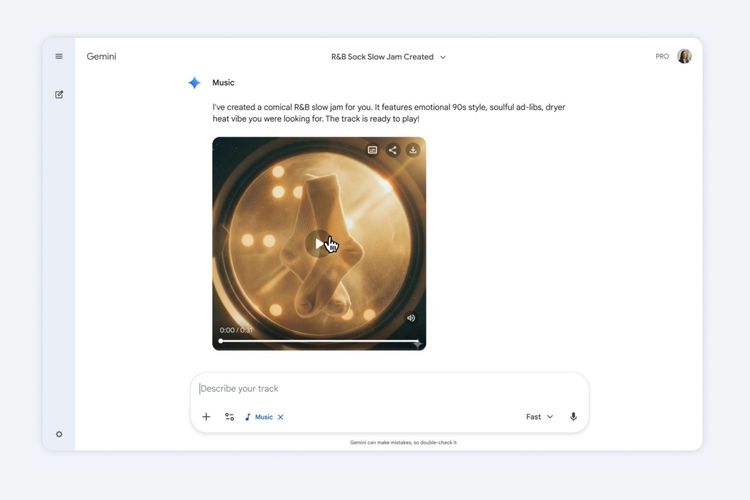
Within the first moments of use, the intent becomes clear. Lyria 3 is designed to remove friction. A user types a prompt, uploads an image, or drops in a short video, and the system returns a fully structured, 30-second track with lyrics, vocals, instrumentation, and a sense of musical arc. No theory knowledge required. No external lyrics. No digital audio workstation.
This matters because music has always been both deeply human and deeply technical. The promise of Lyria 3 is not that it replaces musicians, but that it lowers the barrier to expression. For non-musicians, it offers voice. For professionals, it offers speed and ideation. For platforms like YouTube Shorts, it offers an endless well of soundtracks with built-in provenance via SynthID watermarking.
What follows is not a product review, but a closer look at what Lyria 3 represents. Its capabilities, its limits, and its cultural implications reveal how AI creativity is moving from novelty toward infrastructure.
Read: Gemini 3.1 Pro vs Claude 4.6 Sonnet Explained
From Experimental Labs to the Gemini App

Earlier iterations of Lyria lived mostly behind the scenes. Lyria 2023 and Lyria 2 were research-driven systems, showcased through controlled demos and selective partnerships. Lyria 2’s most visible appearance came through YouTube’s Dream Track experiment, where creators could generate short instrumental clips inspired by broad genres.
Lyria 3 marks a clean break from that model. By integrating directly into Gemini, Google signals confidence not just in audio quality, but in safety, scalability, and everyday usability. The rollout strategy mirrors what happened with text-to-image models several years earlier. Experimental at first, then suddenly everywhere.
According to Google DeepMind’s release notes, the shift was intentional. The goal was to bridge the gap between experimental generative audio and a tool that feels collaborative rather than opaque. That design philosophy explains features like iterative refinement and multimodal prompting. A photo of a foggy street can become an ambient jazz track. A short video clip can steer tempo and mood.
As one DeepMind researcher wrote in a public blog post, “The leap from lab to app is not about model size alone, but about trust, guardrails, and creative affordances.” Lyria 3 is as much a product decision as a technical one.
What Lyria 3 Can Actually Do


At its core, Lyria 3 generates 30-second tracks with a level of polish that would have seemed implausible a few years ago. Each clip includes a clear structure. Intros lead into verses. Choruses resolve. Bridges add variation. Outros feel intentional rather than abrupt.
One of the most striking upgrades is lyric generation. Previous systems required users to supply text or settle for instrumental output. Lyria 3 writes its own lyrics based on prompt intent, mood, and genre constraints. The vocals, while not indistinguishable from human singers, carry phrasing and emotional contour that feels musical rather than synthetic.
The model supports more than 100 genres, from EDM and jazz to K-pop and Afrobeat, across eight languages. Tempo, instrumentation, and vocal presence can be adjusted through simple controls. For non-musicians, templates and inspiration prompts lower the intimidation factor further.
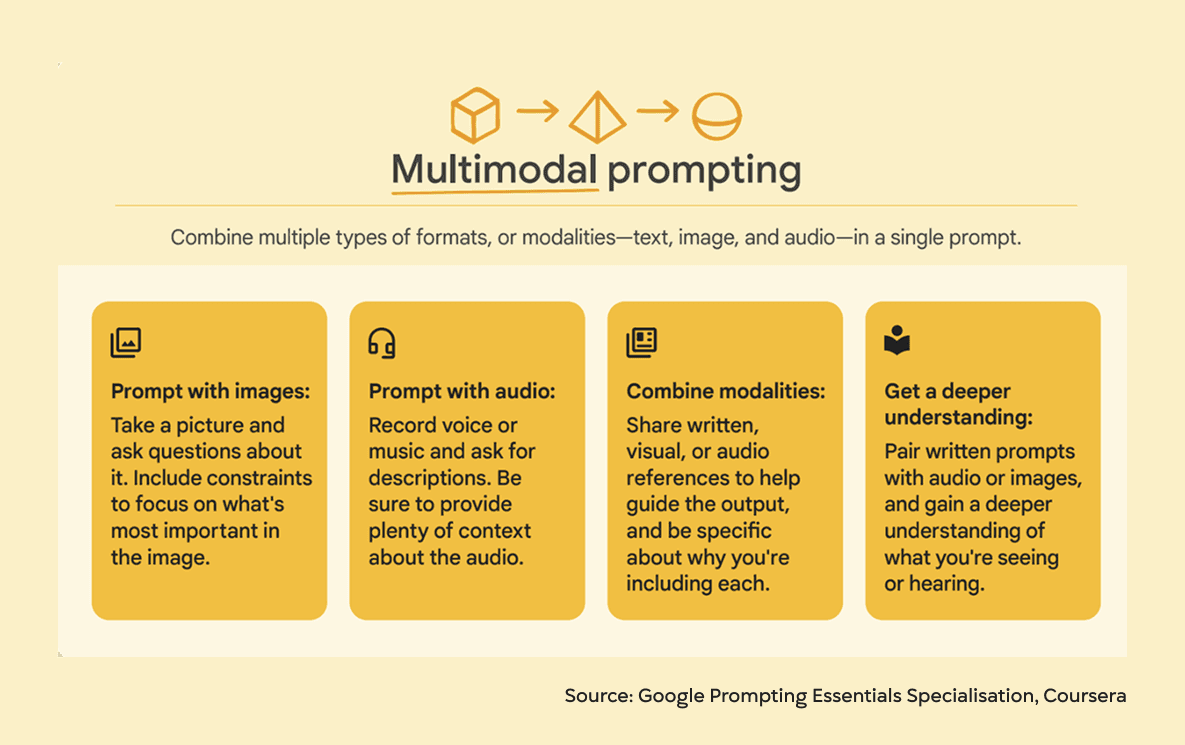
Importantly, Lyria 3 is multimodal. Images and videos are not just aesthetic inputs. They influence pacing, tonal density, and arrangement. This capability aligns with broader trends in multimodal AI, where sound becomes another expressive dimension rather than an isolated output.
How Lyria 3 Compares to Earlier Versions
| Feature | Lyria 2 (2025) | Lyria 3 (2026) |
|---|---|---|
| Access | Limited partnerships | Gemini app beta |
| Lyrics | User-provided or none | Auto-generated |
| Inputs | Text only | Text, image, video |
| Output | Loops, simpler structures | Full 30-second songs |
| Vocals | Limited | Realistic, multilingual |
This comparison highlights why Lyria 3 feels like a generational shift. The improvements are not cosmetic. They address long-standing weaknesses in AI music generation, particularly structure and accessibility.
Music technologist Holly Herndon once observed that “the hardest part for machines is not sound, but form.” Lyria 3’s emphasis on coherent musical form suggests meaningful progress on that front.
Integration, Access, and the Business Logic

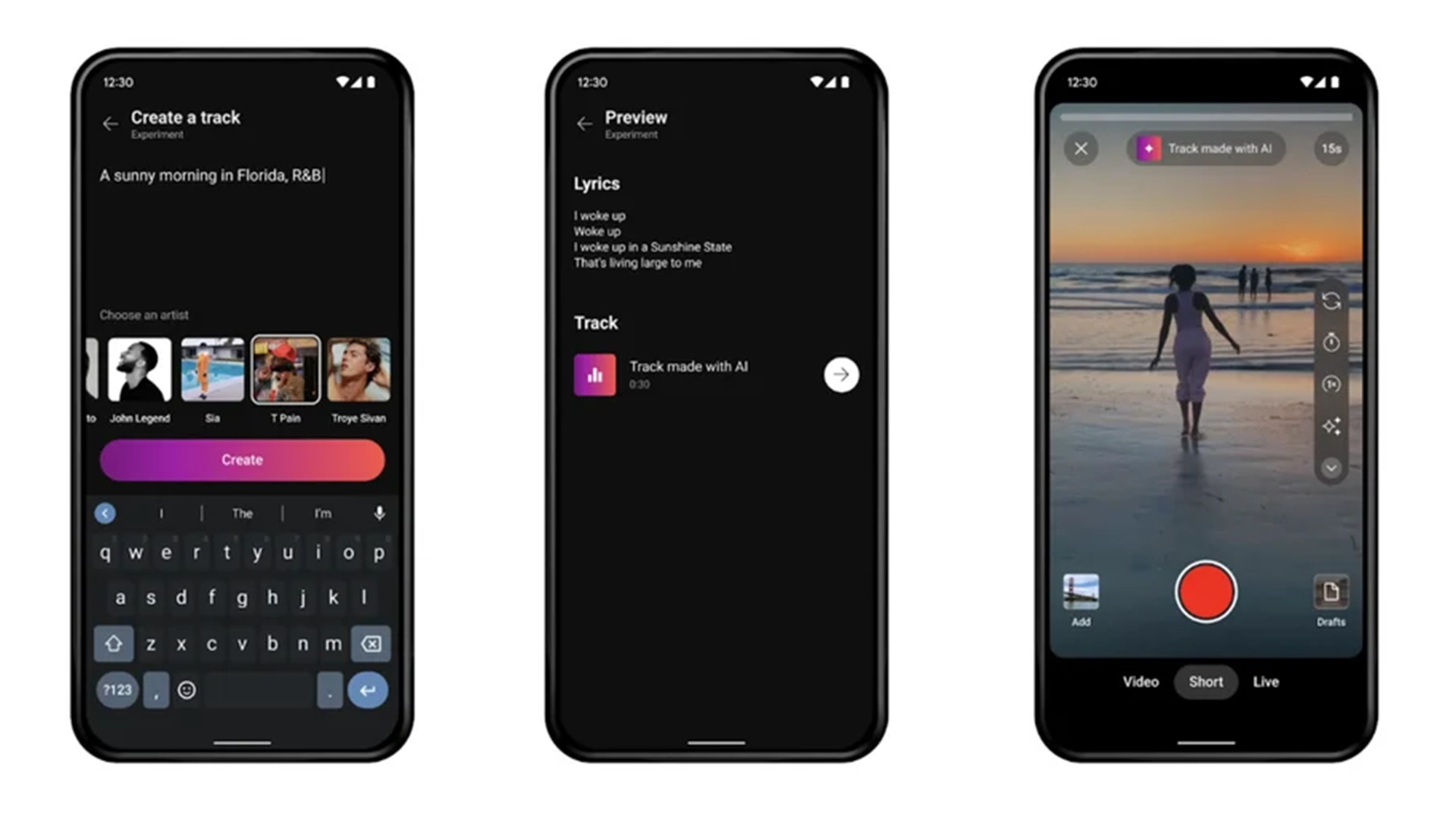
Access to Lyria 3 is deliberately broad. Any Gemini user over 18 can enable music generation through the app’s Tools menu. Free users receive basic access, while Google AI Pro and Ultra subscribers enjoy higher generation limits and priority queues. Workspace administrators can manage availability through settings, reflecting enterprise governance concerns.
The integration with YouTube’s Dream Track for Shorts reveals a clear business logic. Short-form video thrives on sound. By offering creators instant, royalty-safe music, Google strengthens its creator ecosystem while sidestepping traditional licensing bottlenecks.
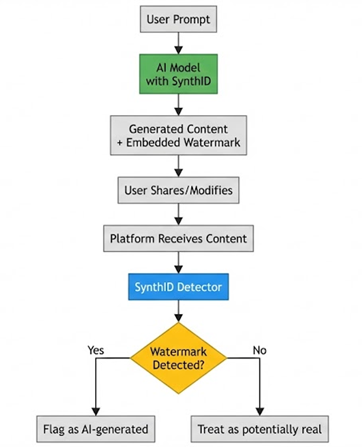
SynthID watermarking plays a crucial role here. Each track includes an imperceptible marker that identifies it as AI-generated. This addresses provenance concerns and aligns with Google’s public commitments to transparency in generative media.
As media scholar Kate Crawford has argued, “Creative AI without provenance invites cultural confusion.” Lyria 3’s safeguards suggest that lesson has been internalized.
The Limits of the Machine
Despite its polish, Lyria 3 remains a beta system with clear constraints. Track length is fixed at 30 seconds. Users seeking full songs must stitch multiple generations together, often encountering thematic drift.
Commercial use is restricted. At launch, Lyria 3 is free for personal, non-commercial use only. Licensing frameworks for professional release remain future work. Generation limits apply, with peak-time queues and latency ranging from 10 to 20 seconds per track.
Creative control, while improved, is not absolute. Fine-grained editing tools are minimal. Multi-turn refinement can feel inconsistent. Some users report repetitive beats or emotionally flat compositions, especially when prompts lack specificity.
Artist mimicry is explicitly blocked. Prompts naming specific musicians are rejected, a safeguard designed to prevent stylistic plagiarism. Instrumental-only generation is available through Vertex AI, but vocals and lyrics remain exclusive to the Gemini app.
These limitations underscore an important truth. Lyria 3 is not a replacement for musicians. It is a sketchpad, a collaborator, and sometimes an inspiration generator.
Cultural Stakes and Creative Tensions
The arrival of Lyria 3 reopens familiar debates. Who owns AI-generated music. What counts as authorship. Does accessibility dilute craft or democratize it.
Music historian Mark Katz has noted that every new sound technology, from the phonograph to sampling, initially triggered fears of devaluation. Over time, those tools reshaped genres instead. Lyria 3 fits that historical pattern more than it breaks it.
For non-musicians, the model offers entry into a space once gated by training and equipment. For professionals, it offers acceleration. Demo tracks, background scores, and idea exploration become faster.
Yet there is unease. If sound becomes abundant and cheap, attention becomes the scarce resource. The value may shift from composition to curation, from creation to context.
Lyria 3 does not resolve these tensions. It amplifies them.
Takeaways
- Lyria 3 represents a shift from experimental AI music to consumer-facing infrastructure.
- Auto-generated lyrics and structure mark a major qualitative leap.
- Multimodal inputs expand how sound can be directed and contextualized.
- Safeguards like SynthID address provenance and trust.
- Limitations around length, licensing, and editing remain significant.
- The tool democratizes expression without replacing musicianship.
Conclusion
I do not hear Lyria 3 as the end of human music. I hear it as a new instrument entering the room. Like all instruments, its impact depends on how people choose to play it.
By embedding high-fidelity music generation into Gemini, Google DeepMind signals that creativity is no longer a side effect of AI systems. It is a core feature. That shift carries responsibility. Safeguards matter. Transparency matters. Cultural humility matters.
Lyria 3 will frustrate some users and delight others. It will produce forgettable tracks and occasionally surprising ones. Over time, it may quietly change how sound is made for videos, games, and personal expression.
What feels certain is this. AI music has crossed a threshold. It is no longer asking for permission. It is asking how we want to listen.
FAQs
What is Lyria 3?
Lyria 3 is Google DeepMind’s latest AI music generation model, integrated into the Gemini app, capable of producing 30-second songs with vocals and lyrics.
When was Lyria 3 released?
It was unveiled on February 17, 2026, and rolled out globally in beta through the Gemini app.
Can Lyria 3 be used commercially?
No. At launch, it is limited to personal, non-commercial use. Commercial licensing is expected in the future.
Does Lyria 3 copy real artists?
No. Prompts that attempt to mimic specific artists are blocked, and outputs include SynthID watermarks.
What are its main limitations?
Fixed 30-second length, limited editing tools, generation limits, and inconsistent multi-turn refinement.