I have watched cybersecurity evolve from passwords and firewalls to something far more dynamic. The latest shift is driven by agentic AI, systems that can observe, decide, and act on their own. That autonomy is powerful, but it is also dangerous. As machines gain the ability to initiate transactions, speak convincingly, and impersonate humans, the old defenses break down. – agentic ai pindrop anonybit.
For readers searching to understand agentic AI with Pindrop and Anonybit, the answer lies in a layered approach increasingly described by security teams as a Triad Defense. It combines voice authenticity, privacy-first biometrics, and autonomous behavioral oversight into a single operating model. Each layer addresses a different weakness. Together, they close gaps that attackers are already exploiting at scale.
In the past two years, synthetic voice fraud has surged, overwhelming call centers and bypassing knowledge-based checks. Biometric databases have become lucrative targets, with breaches exposing immutable identifiers. At the same time, malicious AI agents now plan and execute fraud without human hesitation, adapting in real time to defenses meant for people.
The Triad Defense responds to that reality. Pindrop verifies whether a voice is human and live. Anonybit proves identity without ever reconstructing biometric data. Agentic AI sits above them, monitoring context and orchestrating responses at machine speed. This article examines how that stack works, why it matters, and what it signals about the future of trust in autonomous systems.

The Rise of Agentic AI and Machine-Led Fraud
Agentic AI refers to systems capable of acting independently toward goals. Unlike reactive models, these agents plan, observe outcomes, and adjust strategies. In commerce and customer service, that autonomy boosts efficiency. In the hands of attackers, it enables fraud at unprecedented scale.
Synthetic agents now place phone calls, respond emotionally, and navigate verification steps. They do not tire or panic. They test variations until something works. Security teams report that these bots exploit the assumption that only humans initiate sensitive actions.
An industry researcher specializing in fraud analytics described the shift bluntly. “We are no longer defending against people using tools. We are defending against tools pretending to be people.”
This change has exposed weaknesses in traditional controls. Static passwords, PINs, and even one-time codes fail when an AI can listen, respond, and adapt in real time. Agentic threats require agentic defenses.
Read: unlucid ai Explained: Uncensored Image and Video Generation
Pindrop and the Science of Voice Authenticity
Pindrop focuses on voice, the most natural interface for fraudsters and customers alike. Its technology analyzes more than 1,300 acoustic traits in every call. These include pitch micro-variations, signal artifacts, background noise patterns, and device fingerprints.
This analysis happens in milliseconds, before an agent ever picks up. The system assesses liveness, determining whether a voice originates from a human speaking in real time or from a synthetic or replayed source. It also evaluates the device, identifying robotic dialing tools and known fraud infrastructure. – agentic ai pindrop anonybit.
Call centers rely on this passive approach because it does not interrupt legitimate users. There are no challenge questions or spoken passphrases. The system listens and decides.
A telecom security engineer noted that “deepfake voices often sound perfect to humans, but imperfect to machines.” Pindrop’s value lies in exploiting those imperfections.
Anonybit and Privacy-Preserving Biometrics
If voice answers the question of humanity, biometrics answer the question of identity. Traditional biometric systems store full templates of faces, voices, or fingerprints. Those databases have become prime targets for attackers.
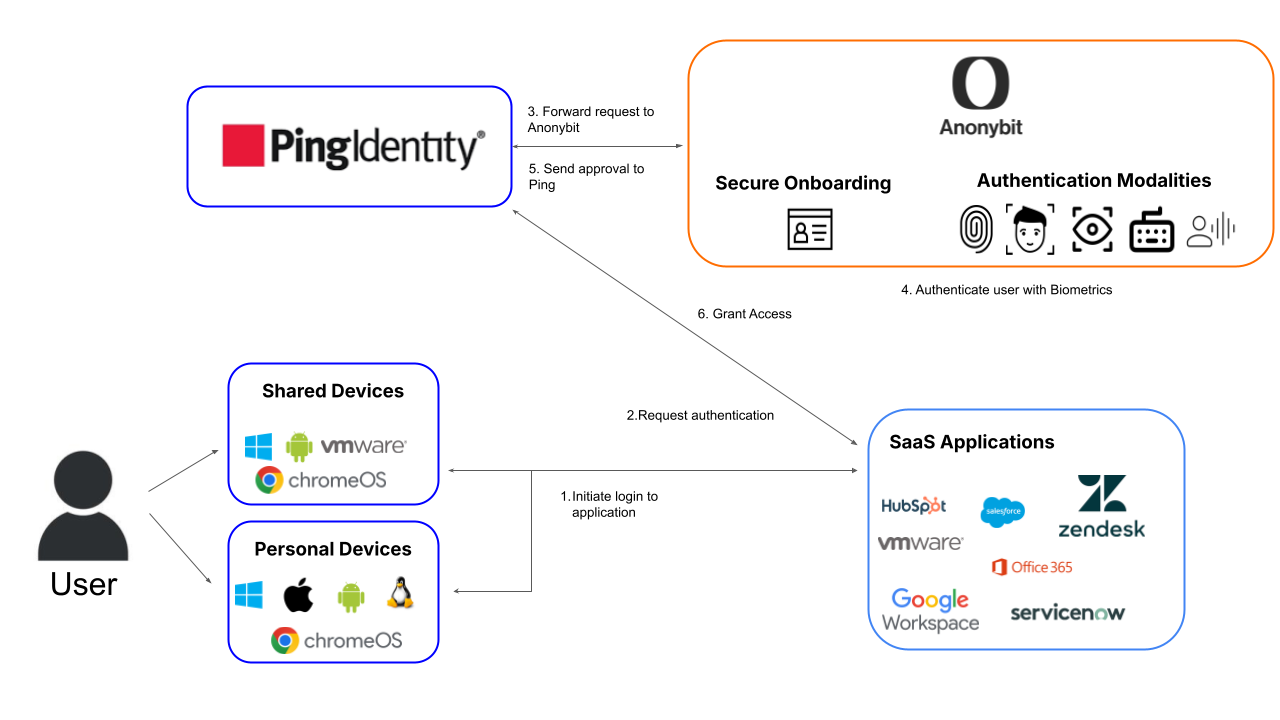
Anonybit takes a different approach. It decentralizes biometric data into encrypted shards distributed across multiple cloud environments. No single shard reveals anything useful. Even if breached, the data cannot be reconstructed.
Authentication relies on zero-knowledge proofs. A user proves they match a biometric profile without exposing the biometric itself. This design eliminates the honeypot problem that has plagued biometric adoption.
An academic cryptographer familiar with the approach explained it this way. “Anonybit treats biometrics like a secret that should never exist in one place.” That philosophy aligns with privacy regulations and reduces systemic risk.
Agentic AI as the Orchestration Layer
Above voice and biometrics sits agentic AI, the decision-making layer. It observes behavior across channels. Typing speed, navigation patterns, transaction context, and historical risk all feed into its model.
When risk rises, the agent acts. It may trigger a deeper voice check, request biometric confirmation, slow a transaction, or shut down a session entirely. These actions occur without waiting for human approval, reducing response time from minutes to seconds. – agentic ai pindrop anonybit.
This autonomy matters because attacks unfold quickly. A wire transfer initiated by a synthetic voice agent cannot wait for manual review. The system must decide instantly.
Security architects increasingly view agentic AI as a control plane rather than a single tool. It coordinates defenses dynamically, adapting to evolving threats.
How the Triad Defense Works in Practice
The Triad Defense activates during high-risk actions. Consider a wire transfer initiated through a call center. Pindrop first evaluates the voice, confirming it is human and live. Anonybit then verifies identity without exposing biometric data. Agentic AI assesses context, comparing behavior against historical patterns.
If all checks align, the transaction proceeds. If any layer flags risk, the system escalates or blocks the action. The process takes seconds.
Organizations report measurable impact. Fraud rates drop sharply. False positives decline because decisions rely on multiple independent signals. Customers experience less friction, not more.
Triad Defense Layers
| Layer | Focus | Key Benefit |
|---|---|---|
| Pindrop | Voice fraud | Deepfake blocking |
| Anonybit | Biometric privacy | Hack-resistant identity |
| Agentic AI | Behavioral autonomy | Self-healing response |
Pindrop and Anonybit: Complementary Strengths
While both companies operate in security, their roles differ. Pindrop excels at dynamic threats, voices changing in real time. Anonybit secures static identifiers, protecting what does not change.
Integration between them matters. When Anonybit detects a spoof attempt, it can trigger additional voice scrutiny through Pindrop. When Pindrop flags a suspicious call, it can request biometric proof without exposing data.
Feature Comparison
| Aspect | Pindrop | Anonybit |
|---|---|---|
| Primary Focus | Voice liveness and deepfakes | Decentralized biometrics |
| Detection | Acoustic analysis, device fingerprinting | Zero-knowledge proofs |
| Use Cases | Call centers | Secure logins |
| Strength | Passive, frictionless | Privacy by design |
Together, they address both sides of identity: how someone sounds and who they are.
Real-World Attacks Driving Adoption
The urgency behind the Triad Defense is not theoretical. In 2024, deepfake voice attacks surged dramatically, affecting roughly one in every hundred contact center interactions by year’s end. These calls mimicked stress, urgency, and authority. – agentic ai pindrop anonybit.
In Hong Kong, an employee transferred the equivalent of $26 million after a video call with what appeared to be senior executives. The call was a coordinated deepfake operation. In the United Kingdom, a CEO voice clone convinced an executive to wire hundreds of thousands of dollars.
These incidents illustrate a pattern. Attackers exploit trust cues. Voice, face, and context become weapons. Defenses that treat each signal in isolation fail.
Agentic Commerce and Autonomous Abuse
Beyond calls and videos, agentic AI enables new forms of abuse. Malicious agents can book travel, change account details, or drain wallets without human oversight. They exploit systems designed for speed.
Traditional fraud models assume hesitation, error, or inconsistency. Agentic attacks show none of those traits. They execute flawlessly.
A senior risk officer at a global bank remarked that “our models were trained on human mistakes. The bots make none.” That realization is reshaping defensive strategies.
Performance and Business Impact
Organizations adopting the Triad Defense report tangible results. Authentication times drop below ten seconds. Fraud losses decline significantly. False positives decrease, improving customer satisfaction.
For call centers, passive voice verification reduces handle time. For digital channels, privacy-preserving biometrics ease compliance burdens.
The economic argument is compelling. Fraud prevention investments shift from reactive recovery to proactive blocking. Insurance coverage improves as controls mature.
Pricing and Deployment Considerations
Anonybit operates on enterprise, usage-based pricing. Costs scale with transactions, users, and features. While public tiers are not disclosed, deployments typically involve setup fees and per-authentication rates.
Pindrop’s pricing similarly reflects call volume and feature sets. Agentic AI orchestration often integrates with existing security platforms, adding implementation complexity.
Despite upfront costs, enterprises view these systems as infrastructure rather than add-ons. The alternative is absorbing losses and reputational damage.
Regulatory and Compliance Implications
Privacy regulations increasingly favor architectures like Anonybit’s. Decentralized biometrics reduce breach impact and align with data minimization principles.
Voice analysis raises fewer regulatory concerns because it relies on passive signals rather than stored voiceprints. Agentic AI introduces governance questions around automated decision-making.
Regulators are beginning to scrutinize autonomy, demanding transparency and auditability. The Triad Defense must therefore include logging and explainability.
The Human Factor in an Autonomous World
Despite automation, humans remain central. Security teams define policies. Customers consent to biometric use. Agents intervene when escalations occur.
The goal is not to remove people but to give them better tools. By handling routine decisions, agentic systems free humans to focus on exceptions.
A behavioral scientist studying trust in automation observed that “people accept machine decisions more readily when those decisions prevent harm.” Effective defense builds confidence rather than fear.
Takeaways
- Agentic AI enables both advanced fraud and advanced defense.
- Pindrop verifies voice humanity and blocks deepfakes.
- Anonybit secures biometrics without centralized storage.
- Agentic AI orchestrates responses at machine speed.
- Real-world attacks demonstrate urgent need.
- Layered defenses reduce fraud and friction simultaneously.
Conclusion
I see the Triad Defense as a blueprint for securing autonomy itself. As AI systems speak, decide, and transact, trust must be redefined. Identity can no longer rely on single signals. Defense must be as adaptive as the threat.
Pindrop, Anonybit, and agentic AI together represent a shift from reactive security to anticipatory control. They acknowledge that machines now impersonate humans convincingly and that privacy cannot be sacrificed to stop them.
The future of cybersecurity will not be quieter. It will be faster and more complex. The Triad Defense does not promise perfect safety. It offers resilience in a world where autonomy is both asset and adversary.
Frequently Asked Questions
What is agentic AI in cybersecurity
It refers to autonomous systems that observe, decide, and act without human intervention to prevent threats.
How does Pindrop detect deepfake voices
By analyzing over 1,300 acoustic traits to assess liveness and device authenticity.
Why is Anonybit different from traditional biometrics
It decentralizes biometric data into encrypted shards, preventing reconstruction.
Can these systems reduce false positives
Yes. Multiple independent signals improve accuracy and user experience.
Who should consider this defense stack
Banks, call centers, and enterprises facing voice and identity fraud risks.