
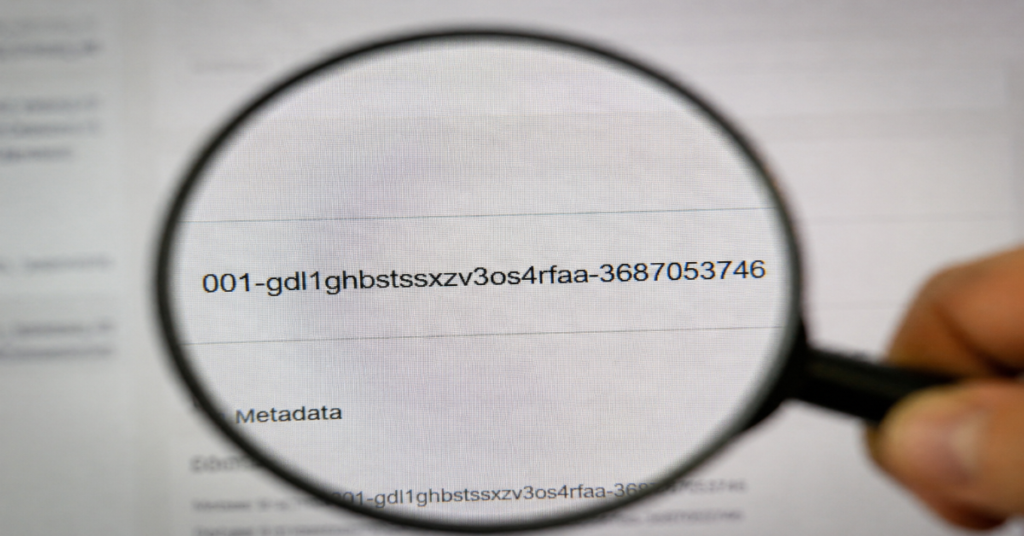
001-gdl1ghbstssxzv3os4rfaa-3687053746 looks like a machine-generated unique identifier. Based on its structure, there is no reliable evidence that it is a public standard, known license key, protocol name or consumer-facing product code. The uploaded brief correctly frames it as a likely internal record ID, object key, session token, transaction reference or platform-specific identifier whose meaning depends on the system that generated it.
That distinction matters. People often search strange strings because they appear in an error message, URL, app screen, work portal, receipt, enterprise dashboard or backend log. The temptation is to treat the string as a mystery term with a hidden universal meaning. Most of the time, that is the wrong approach.
Modern software depends on identifiers that humans were never meant to read. Databases need keys. APIs need object references. Authentication systems need opaque session values. Logistics tools need shipment IDs. Workforce systems need shift IDs. Retail systems need transaction IDs. Cloud systems need resource IDs.
A string like this becomes meaningful only when connected to context: where it appeared, what action triggered it and which system displayed it. Without that context, the honest answer is not “this means X.” It is “this is probably an internal identifier, and here is how to investigate it safely.”
What Is 001-gdl1ghbstssxzv3os4rfaa-3687053746?
The string has three visible parts:
| Component | Likely meaning | What it tells us |
| 001 | Prefix, shard, version, region or record class | Could identify a system partition or object family |
| gdl1ghbstssxzv3os4rfaa | Random or encoded middle segment | Likely generated by software, not written by a person |
| 3687053746 | Numeric suffix | Could be a sequence, timestamp-like value, account reference or checksum |
This does not match the standard textual format of a UUID, which is usually represented as five hexadecimal groups separated by hyphens. The current IETF UUID specification, RFC 9562, defines UUIDs as 128-bit identifiers designed for uniqueness across systems and time.
That does not mean the string is invalid. It means it is probably not a conventional UUID. Many systems create their own ID formats because they need prefixes, database sharding, shorter URLs, human sorting, environment labels or internal compatibility with older infrastructure.
Why Systems Use Long Alphanumeric Identifiers
Software systems generate identifiers for one basic reason: they need to distinguish one object from another without confusion.
That object might be:
- A customer account
- A support ticket
- A delivery route
- A login session
- A payment attempt
- A device registration
- A shift schedule
- A database row
- A file upload
- An API request
The identifier does not need to describe the object. It only needs to point to it reliably inside the system.
This is why meaningless-looking strings are so common in modern platforms. A related article on Perplexity AI Magazine describes another random-looking term, “hggbfe3fykc,” as a likely randomized or system-generated identifier used for testing, traceability or digital frameworks.
Identifier, Token, Code or Tracking Number?
Not every long string has the same risk level. The practical question is not just “what is it?” but “what kind of thing might it be?”
| Type | Purpose | Typical risk if exposed |
| Record ID | Points to a database object | Low to medium, depending on access controls |
| Session token | Keeps a user logged in | High, especially if active |
| Transaction ID | References a payment, order or event | Medium, may expose support or order details |
| Tracking ID | Connects activity across systems | Medium, privacy concern |
| API key | Authenticates software access | Very high |
| Device ID | Identifies hardware or app install | Medium, privacy and account risk |
| Error correlation ID | Helps support find logs | Usually low, useful for troubleshooting |
The challenge is that the same visual pattern can appear in multiple categories. A string alone cannot prove whether it is harmless or sensitive.
Why Context Is Everything
The exact meaning of 001-gdl1ghbstssxzv3os4rfaa-3687053746 depends on where it appeared.
If it appeared in a browser URL, it may identify a page, object, order, account view or temporary session route. If it appeared in an error message, it may be a correlation ID used by support teams to find the failed request in logs. If it appeared in a work scheduling app, it may refer to a shift, store, employee record or device session. If it appeared in an email, it may be a tracking reference, campaign ID or transaction record.
This is why support teams often ask for the full ID, timestamp, screenshot and action taken before the error. They are not decoding the string manually. They are searching internal logs where that string is indexed.
A Perplexity AI Magazine article on website status tools makes a useful parallel: a simple status result can show that a server responded, but deeper diagnostics are needed to understand what actually failed. The same logic applies here. The identifier is a clue, not the whole explanation.
Security Risks and Trade-Offs
Long identifiers create both convenience and risk.
The convenience is obvious. They let systems connect events across databases, logs, APIs and customer support workflows. They also reduce naming conflicts. A warehouse platform, for example, can manage millions of shipments without relying on readable names.
The risk appears when identifiers are exposed without proper access controls.
OWASP’s session management guidance says session IDs must contain enough entropy to resist guessing attacks, and it emphasizes that randomness matters more than length alone. NIST guidance similarly treats authentication secrets as sensitive values that must be generated securely and protected from guessing or offline attack.
This matters because users often paste unknown strings into search engines, forums or “decoder” tools. That may be safe for a harmless error ID, but risky if the string is an active session token, password reset token, API key or private object reference.
Practical Steps to Trace the Source
Start with the place where the string appeared. Do not begin with random lookup websites.
1. Check the surrounding message:
Look for nearby words such as order, session, request, shift, device, transaction, error, route, employee, store or ticket.
2. Check the URL carefully:
If the string appears after /orders/, /users/, /shifts/, /sessions/ or /api/, the path may reveal the object type.
3. Look for a timestamp:
Support teams often need the exact date and time to match the ID with server logs.
4. Search inside the original platform:
Use the app’s internal search, admin panel or support console before using public search.
5. Contact the system owner:
Send the full ID only through trusted channels, such as official support, internal IT or the platform’s secure help desk.
6. Do not share screenshots publicly:
Blur names, emails, order details, QR codes and other nearby identifiers.
Structured Insight Table: How to Judge the Identifier
| Question | Why it matters | Likely action |
| Did it appear after login? | It may relate to a session or account | Treat as sensitive |
| Did it appear in an error message? | It may be a correlation ID | Send to official support |
| Did it appear in a URL? | It may identify a private object | Avoid public sharing |
| Did it come by email or SMS? | Could be tracking, phishing or transaction-related | Verify sender |
| Does it unlock anything? | Could be a token or key | Rotate or revoke if exposed |
| Is it linked to payment, work or health data? | Higher privacy stakes | Use secure support channels |
Real-World Impact
Identifiers are invisible infrastructure. They shape how modern services operate.
In ecommerce, they connect carts, payments, shipments and refunds. In enterprise systems, they connect employees, schedules, devices and locations. In AI and developer platforms, they connect prompts, files, model runs, logs and billing events. In public data systems, identifiers can link records across agencies, which is powerful but privacy-sensitive. One Perplexity AI Magazine report notes that Brazil’s CPF taxpayer number can function as a linking identifier across public and administrative records.
The broader cultural impact is that people now encounter machine language in ordinary life. A strange code on a screen may look suspicious, but it may simply be how software makes a record traceable.
The problem is not the existence of the identifier. The problem is when platforms expose identifiers without clear labels, user guidance or safe support paths.
The Future of 001-gdl1ghbstssxzv3os4rfaa-3687053746 in 2027
By 2027, ordinary users will likely see more, not fewer, opaque identifiers. AI tools, automated support systems, workplace apps, logistics platforms and cloud services all depend on traceable events. More automation means more IDs.
The likely improvement will be presentation. Better systems will avoid showing raw identifiers unless needed. When they do show them, they will label them clearly as “support reference,” “request ID,” “order ID” or “device ID.”
Technically, UUID standards have already evolved. RFC 9562, published in 2024, updated UUID guidance and added newer versions such as UUIDv6, UUIDv7 and UUIDv8. The direction is clear: systems need identifiers that are unique, sortable, scalable and safer to use in distributed environments.
The uncertainty is user education. If platforms keep exposing raw strings without explaining them, search-driven confusion will continue.
Takeaways
- 001-gdl1ghbstssxzv3os4rfaa-3687053746 is best treated as a system-generated identifier until proven otherwise.
- The string does not clearly match a known public standard such as a conventional UUID.
- Context determines meaning. The app, page, error message or URL matters more than the string alone.
- Do not paste unknown identifiers into untrusted lookup tools.
- If the string appeared in a login, payment, reset or API context, treat it as sensitive.
- Official support teams can usually trace the ID through internal logs.
- Better software design should label identifiers more clearly for users.
Conclusion
001-gdl1ghbstssxzv3os4rfaa-3687053746 is not a word in the normal sense. It is almost certainly a machine-readable identifier whose meaning depends on the system that produced it. That makes it useful, but also easy to misunderstand.
The safest interpretation is practical: do not assume it is dangerous, but do not treat it casually either. Look at where it appeared, preserve the surrounding error message and contact the relevant platform or administrator through trusted channels.
The deeper lesson is that modern digital life is full of hidden reference systems. Users see the surface. Software sees objects, sessions, records and events. This string is likely one small trace of that architecture.
FAQ
What does 001-gdl1ghbstssxzv3os4rfaa-3687053746 mean?
It most likely means an internal system-generated identifier. Without knowing the app, website, error message or database that created it, there is no reliable way to assign one exact meaning.
Is 001-gdl1ghbstssxzv3os4rfaa-3687053746 a tracking code?
It could be, but that cannot be confirmed from the string alone. It may also be a record ID, request ID, transaction ID, session reference or object key.
Is it safe to share this identifier?
Share it only with trusted support, IT or the platform that generated it. Avoid posting it publicly, especially if it appeared in a login, payment, account or private work system.
Is this a UUID?
It does not match the standard UUID text pattern. UUIDs usually appear as hexadecimal groups separated by hyphens. This looks more like a custom platform identifier.
Why do apps use unreadable codes?
Apps use unreadable codes because machines need unique, stable references. Human-readable names can repeat or change. Generated IDs are better for databases, APIs, logs and automation.
What should I do if this ID appears in an error?
Save the full error message, note the time, capture the page or app where it appeared and send the information to official support. Do not rely on random public lookup sites.
Methodology
This article was based on the uploaded production brief, which defined the keyword, likely interpretation and required editorial structure. The technical framing was checked against public standards and security guidance, including IETF RFC 9562, OWASP session management guidance and NIST digital identity guidance. Internal-link candidates were selected only where Perplexity AI Magazine had topically relevant published pages available in search results.
No private system lookup, database lookup or live platform test was performed. Because the identifier’s exact source is unknown, the article avoids claiming a specific platform meaning. A human editor should verify all citations, confirm any internal links are live before publication and add genuine firsthand evidence if available.
References
Davis, K., Peabody, B., & Leach, P. (2024). RFC 9562: Universally Unique IDentifiers. Internet Engineering Task Force.
National Institute of Standards and Technology. (2025). Digital Identity Guidelines: Authentication and Lifecycle Management, SP 800-63B.
OWASP Foundation. (n.d.). Session Management Cheat Sheet. OWASP Cheat Sheet Series.
Perplexity AI Magazine. (2026). What Is hggbfe3fykc? Digital Meaning Explained.
Perplexity AI Magazine. (2026). IsItDownRightNow: How Accurate Is This Website Status Checker?.
Perplexity AI Magazine. (2026). AI Corruption Detection: How a 20-Year-Old Built a System to Track Public Data Risk.
