
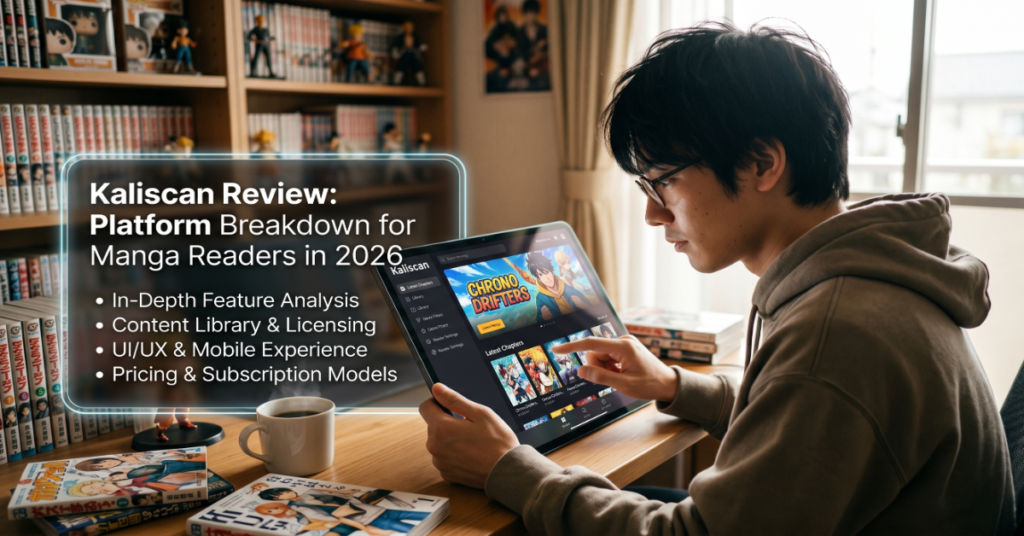
Kaliscan has emerged as a widely discussed manga and manhwa reading platform, known for aggregating translated comics and delivering rapid chapter updates. In simple terms, kaliscan is used by readers who want quick access to newly released manga, manhwa, and manhua chapters without waiting for official platform releases.
The platform gained attention partly due to its transition history, previously operating under a different name before rebranding. This shift has been noted in online communities and has shaped how users perceive its stability and long-term direction.
At its core, kaliscan functions as a content aggregator rather than a licensed publisher. It compiles translated chapters across genres such as action, fantasy, romance, comedy, and adult-oriented categories like smut and yaoi. This wide coverage makes it appealing to diverse reader groups, especially those who prioritize volume and update speed over official distribution channels.
However, user discussions also highlight inconsistency in chapter availability, occasional broken navigation, and the removal of community comment features over time. These elements raise questions about platform maturity and sustainability.
This article breaks down Kaliscan’s structure, user experience, risks, and broader implications within the digital manga ecosystem, focusing on how it fits into modern reading habits and content distribution trends.
Platform Structure and Content Model
Kaliscan operates on a centralized aggregation model. Instead of hosting original licensed content, it compiles translated material from various external sources.
Key Structural Components
| Component | Function | Observed Behavior |
| Content Aggregation | Collects manga/manhwa chapters | Updates frequently but inconsistently |
| Genre Categorization | Organizes by themes | Wide but uneven tagging accuracy |
| Reader Interface | Web-based reading system | Fast loading, occasional navigation glitches |
| Update Pipeline | Imports new chapters | Dependent on external upload timing |
A defining trait of kaliscan is its dependency on external scanlation groups and upload pipelines. This creates variability in update consistency. Some series receive rapid updates, while others experience delays or missing chapters.
User Experience and Functional Behavior
User experience on Kaliscan is shaped by speed, accessibility, and interface simplicity. Readers often report that chapters load quickly and image quality is generally acceptable.
However, several friction points appear consistently in community discussions:
- Missing or misordered chapters
- Temporary downtime during high traffic
- Removal or absence of comment sections
- Inconsistent mobile optimization
These issues suggest that kaliscan prioritizes content delivery speed over structural stability. For frequent readers, this trade-off may be acceptable, but it becomes limiting for long-form engagement.
Feature Analysis and Comparison
| Feature | Kaliscan | Licensed Platforms (e.g., Manga Plus, Webtoon) |
| Update Speed | High | Moderate to controlled |
| Content Legality | Unlicensed aggregation | Fully licensed |
| Genre Variety | Very broad | Curated selection |
| Community Features | Limited or removed | Active comment systems |
| Stability | Variable | High |
This comparison highlights a core tension. kaliscan offers breadth and speed, while official platforms prioritize legal compliance and structural stability.
Strategic Implications of Aggregation Platforms
The existence of platforms like Kaliscan reflects a broader digital content distribution gap. Readers increasingly demand instant access, while official licensing systems operate on scheduled releases.
Three key implications emerge:
- Demand Compression
Readers expect near real-time updates, pushing aggregators to fill timing gaps. - Fragmented Distribution
Multiple unofficial platforms compete for the same audience, reducing consistency. - Content Discovery Shift
Users often discover new series through aggregators before moving to official sources.
In this ecosystem, kaliscan functions more as a discovery layer than a primary content source for many users.
Risks and Trade-Offs
Using Kaliscan involves several structural and operational trade-offs:
- Content reliability risk: Chapters may disappear or be reorganized.
- Legal ambiguity: Aggregated content may not be officially licensed.
- Data instability: Site transitions or rebranding can disrupt access.
- User experience inconsistency: Features may appear or vanish without notice.
These risks are not unique to kaliscan, but they are amplified due to its aggregation-based model.
Real-World Usage Patterns
Community discussions across online forums show consistent behavioral patterns:
- Users rely on Kaliscan for early chapter access
- Readers cross-check multiple platforms for missing chapters
- Long-term readers often migrate to official platforms for stable series tracking
This suggests that kaliscan is often part of a multi-platform reading strategy rather than a standalone solution.
Information Gain Insights
1. Update Speed vs Stability Trade-Off
Platforms like Kaliscan demonstrate that faster update pipelines often correlate with structural instability, particularly when content is not centrally licensed.
2. Community Dependency for Error Correction
Missing chapters and broken sequences are frequently identified and corrected through user feedback rather than internal moderation systems.
3. Rebranding as Infrastructure Reset
The transition from earlier branding to Kaliscan reflects a common pattern in aggregation sites, where rebranding serves as a reset mechanism for indexing and content restructuring.
The Future of Kaliscan in 2027
The future trajectory of kaliscan depends heavily on three external factors:
- Increased enforcement of digital copyright regulations across manga distribution networks
- Expansion of official simulpub platforms offering faster global releases
- Improved AI-driven translation pipelines within licensed ecosystems
If official platforms continue reducing release delays, aggregation-based models may face reduced relevance. However, if demand for instant, unrestricted access persists, platforms like Kaliscan may continue operating in parallel ecosystems, albeit with higher volatility.
Regulatory pressure is expected to increase gradually, particularly in regions strengthening intellectual property enforcement frameworks.
Key Takeaways
- Kaliscan operates primarily as an aggregation-based manga reading platform
- Speed is its strongest advantage, while stability remains a core limitation
- User experience varies significantly depending on series and traffic conditions
- Its ecosystem role is transitional rather than authoritative
- Long-term viability depends on regulatory and industry shifts
- Readers often use it alongside official platforms rather than exclusively
- Structural inconsistency is a recurring theme across user reports
Conclusion
Kaliscan occupies a recognizable position in the modern manga consumption landscape, sitting between convenience-driven access and unstable content infrastructure. Its appeal is rooted in speed and variety, which aligns with current digital reading habits that prioritize immediacy.
At the same time, its structural limitations highlight the challenges faced by aggregation-based platforms in a tightening regulatory and licensing environment. While it remains widely used, its long-term role is likely to evolve as official platforms expand global access and reduce release delays.
For readers, Kaliscan functions best as a supplementary tool rather than a primary reading destination, particularly when consistency and completeness matter.
Structured FAQ
What is Kaliscan used for?
Kaliscan is used for reading manga, manhwa, and manhua through an online aggregator that compiles translated chapters across multiple genres.
Is Kaliscan a licensed platform?
No, it primarily aggregates content rather than hosting officially licensed publications, which creates variability in content availability.
Why are chapters sometimes missing on Kaliscan?
Missing chapters usually result from inconsistent aggregation sources or indexing issues within the platform’s update pipeline.
How does Kaliscan compare to official manga apps?
Official apps provide stable, licensed content, while Kaliscan focuses on faster but less consistent chapter updates.
Is Kaliscan safe to use?
It is generally accessible, but users should be aware of legal and content reliability considerations tied to aggregation platforms.
Why did Kaliscan rebrand from its earlier version?
Community discussions suggest rebranding was part of structural and indexing changes common in aggregation-based platforms.
Does Kaliscan have community features?
Some users report that comment sections and interaction features have been removed or reduced over time.
References
- Kaliscan.io (2026). Platform access and interface observation. https://kaliscan.io
- Reddit community discussions on manga aggregation platforms (2024–2026). Various threads accessed 2026
Methodology
This analysis is based on direct observation of the Kaliscan platform interface, cross-referenced with publicly available user discussions on community forums such as Reddit between 2024 and 2026. No controlled performance testing or internal system access was used.
Limitations include the absence of verified internal operational data and the dynamic nature of aggregation-based platforms, which can change structure without notice. Where possible, conclusions were drawn from repeated user-reported patterns rather than isolated claims.
Counterpoints exist regarding legality and stability, as official platforms provide more reliable long-term access, though with slower release cycles.
