
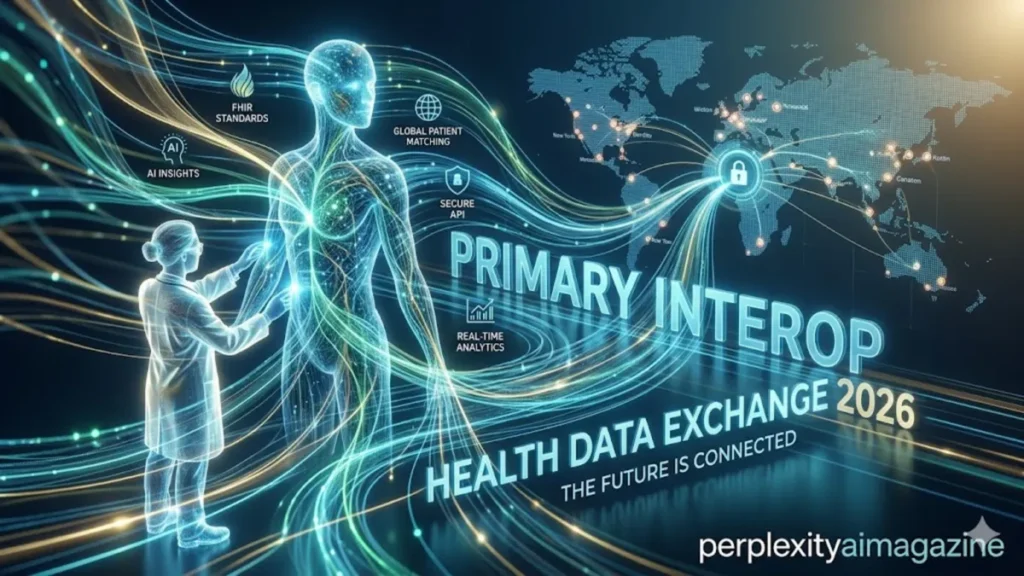
Interoperability in healthcare, specifically the burgeoning domain of “Primary Interop,” refers to the foundational ability of disparate information systems to communicate, exchange, and interpret data without human intervention. At its core, it is about ensuring that a patient’s medical history—from lab results in New York to a specialist’s consultation in California—exists as a single, liquid asset rather than a fragmented collection of siloes. In 2026, the stakes for achieving this are higher than ever, as the Centers for Medicare & Medicaid Services (CMS) have implemented strict new rules regarding prior authorization and data transparency. By leveraging the Fast Healthcare Interoperability Resources (FHIR) standard, Primary Interop systems allow providers to access a comprehensive view of the patient at the point of care, significantly reducing the risk of medical errors and redundant testing.
The urgency of Primary Interop is driven by a simple reality: data fragmentation kills. When a physician lacks access to a patient’s full allergy profile or recent diagnostic imaging due to a software incompatibility, the quality of care drops precipitously. The transition to a nationwide, network-based model—underpinned by the Trusted Exchange Framework and Common Agreement (TEFCA)—marks a strategic inflection point for the industry. This movement is no longer just about moving “bits” from point A to point B; it is about semantic alignment, where systems not only receive data but understand the medical context behind it. This long-form investigation explores the technical hurdles, the regulatory environment of 2026, and the human lives hanging in the balance of this digital integration.
The Mandate for Liquidity: TEFCA and the 2026 Standards
The year 2026 has become a watershed moment for health data liquidity due to the full implementation of the CMS Interoperability and Prior Authorization Final Rule (CMS-0057-F). This regulation requires payers and providers to adopt FHIR-based APIs, moving the industry away from the archaic, paper-based workflows that have defined administrative medicine for decades. Primary Interop is the technical realization of these mandates, serving as the “network of networks” that allows a single connection to a Qualified Health Information Network (QHIN) to replace thousands of individual, point-to-point integrations.
This shift toward a unified framework eliminates the need for clinicians to hunt for data across multiple portals. Instead, the data flows directly into the Electronic Health Record (EHR) in real-time. This efficiency is not merely an administrative convenience; it is a clinical necessity. “The 2026 CMS rule marks a strategic inflection point in how providers experience prior authorizations,” notes a recent industry report from Elion Health. By automating the exchange of clinical documentation, the industry aims to reduce the standard request turnaround time from weeks to seven calendar days, and expedited requests to just 72 hours.
Comparative Analysis of Data Exchange Frameworks
| Feature | Legacy Integration (HL7 v2) | Modern Primary Interop (FHIR) |
| Data Format | Delimited text strings | Resource-based (JSON/XML) |
| Connectivity | Point-to-point (VPNs) | Scalable APIs (Restful) |
| Semantic Clarity | Low (requires manual mapping) | High (standardized terminologies) |
| Implementation | Months of custom coding | Weeks/Days via standard APIs |
| Patient Access | Limited/Gated | Native (via mobile/web portals) |
The Mechanics of Meaningful Exchange
Achieving Primary Interop requires more than just technical connectivity; it demands semantic interoperability. This is the ability of two systems to exchange information such that the meaning of the data is preserved and understood. If one system records a “myocardial infarction” and another searches for a “heart attack,” semantic alignment ensures they are recognized as the same condition. In 2026, the focus has shifted from simple data transport to the use of standardized datasets like the United States Core Data for Interoperability (USCDI).
This standardization is supported by sophisticated post-processing techniques, including median filtering to reduce data noise and convolutional neural networks (CNNs) to automate the segmentation of complex medical images. By using these technologies, Primary Interop platforms can quantify subtle changes in patient health—such as fat attenuation in cardiac scans—that are invisible to the naked eye. This allows for predictive modeling that can forecast risks like heart failure up to five years in advance, provided the underlying data is accessible and standardized across the care continuum.
The Lifecycle of an Interoperable Message
| Phase | Description | Key Technology |
| Ingestion | Capturing raw data from EHRs or devices | FHIR APIs |
| Normalization | Mapping varied terms to standard codes | SNOMED-CT / LOINC |
| Verification | Ensuring data integrity and patient matching | Master Patient Index (MPI) |
| Routing | Directing data to the authorized recipient | QHIN / TEFCA |
| Interpretation | Turning data into actionable clinical insights | AI / Clinical Decision Support |
The Human Impact: Beyond the Technical Stack
“Interoperability is fundamental to lowering cost, increasing access, and improving quality,” according to a statement from GE HealthCare. For the clinician, Primary Interop is the cure for the “portal fatigue” that has long plagued the profession. Instead of spending 15 minutes manually gathering records from three different lab systems, the data is curated and presented within the natural workflow of the EHR. This reduction in administrative burden is a primary weapon against physician burnout, which reached epidemic levels in the early 2020s.
For the patient, the benefits are even more tangible. When systems communicate, the patient is no longer required to act as their own medical courier, carrying physical folders of X-rays or repeating their medical history to every new specialist. “Patient-centered interoperability flips the traditional model… putting patients at the center of their healthcare journeys,” explains Consensus Cloud Solutions. With the rise of the 2026 MIPS Promoting Interoperability measures, clinicians are now financially incentivized to ensure patients have seamless, bi-directional access to their own health records via secure mobile applications.
Takeaways for Clinical and Technical Leaders
- Adopt FHIR Standards: Prioritize the transition to FHIR-based APIs to comply with 2026 federal mandates and ensure future scalability.
- Join a QHIN: Connect to a Qualified Health Information Network under TEFCA to simplify nationwide data exchange through a single gateway.
- Focus on USCDI: Align internal data structures with the United States Core Data for Interoperability to ensure semantic consistency.
- Automate Prior Auth: Implement electronic prior authorization (ePA) tools to capitalize on the 7-day turnaround requirements.
- Incentivize Patient Access: Use MIPS PI measures to drive the adoption of patient portals, enhancing engagement and outcomes.
- Audit for Data Blocking: Regularly review systems to ensure they do not inadvertently restrict the lawful exchange of health information.
Conclusion
The pursuit of Primary Interop is ultimately a pursuit of a more compassionate and efficient healthcare system. In 2026, the technological pieces of the puzzle—FHIR, TEFCA, and AI-driven diagnostics—have finally aligned with the regulatory will of the CMS. We are moving away from an era where a patient’s life story is locked in digital vaults, accessible only through cumbersome faxes and phone calls. Instead, we are entering a period of radical transparency and liquidity, where data serves as a bridge rather than a barrier.
As we look toward the next decade, the “primary” in Primary Interop will become redundant. Interoperability will simply be the way healthcare works. The transition is not without its friction; it requires significant investment in infrastructure, a commitment to cybersecurity, and a cultural shift among providers. However, the reward—a healthcare system that knows you, remembers you, and protects you across every touchpoint—is well worth the cost of the digital rebuild. The goal is no longer just to connect systems, but to connect humanity.
FAQs
What is the difference between Interoperability and Primary Interop?
Interoperability is a general term for systems sharing data. “Primary Interop” specifically refers to the foundational, enterprise-scale exchange of health information that satisfies regulatory standards like TEFCA and CMS-0057-F, focusing on seamless, real-time clinical and administrative data flow.
How does the 2026 CMS rule affect my doctor?
The rule mandates that insurance payers use standardized APIs for data exchange and prior authorizations. This means your doctor will spend less time on paperwork and receive insurance approvals faster—often within 72 hours for urgent cases.
Is my health data safe during these exchanges?
Yes. Primary Interop frameworks like TEFCA use strict encryption, identity federation, and shared trust models. These systems are designed to comply with HIPAA and are often more secure than manual methods like faxing or mailing records.
What is FHIR and why is it important?
Fast Healthcare Interoperability Resources (FHIR) is the modern standard for exchanging healthcare information electronically. It uses the same technology that powers the modern web (APIs), making it easier for different medical apps and systems to talk to each other.
Can I access my own data through these systems?
Yes. One of the primary goals of the 2026 regulations is to empower patients. Under these new rules, you should be able to access your medical records, lab results, and immunization history through secure, interoperable mobile apps provided by your health plan or doctor.
References
- Centers for Medicare & Medicaid Services. (2024). CMS Interoperability and Prior Authorization Final Rule (CMS-0057-F). Federal Register. https://www.cms.gov/newsroom/fact-sheets/cms-interoperability-and-prior-authorization-final-rule-cms-0057-f
- Elion Health. (2025, October 30). What Is the CMS 2026 Prior Authorization Rule & How Will It Affect Providers? https://elion.health/resources/cms-2026-prior-authorization-rule-explained
- GE HealthCare. (2026). Interoperability: Systems Information Sharing Solutions. https://www.gehealthcare.com/products/interoperability
- Maruti Techlabs. (2026). How to Enhance Interoperability in Healthcare Systems in 2026? https://marutitech.com/improving-interoperability-in-healthcare-systems/
- ONC. (2026, April 7). TEFCA Healthcare Data Exchange: Guide for CTOs (2026). A&I Solutions. https://www.anisolutions.com/2026/04/07/tefca-healthcare-data-exchange/
- Practice Fusion. (2026, February 13). 2026 MIPS PI Measure: Enabling Exchange Under the Trusted Exchange Framework and Common Agreement (TEFCA). https://help.practicefusion.com/s/article/2026-mips-pi-measure-enabling-exchange-under-the-trusted-exchange-framework-and-common-agreement-tefca
