
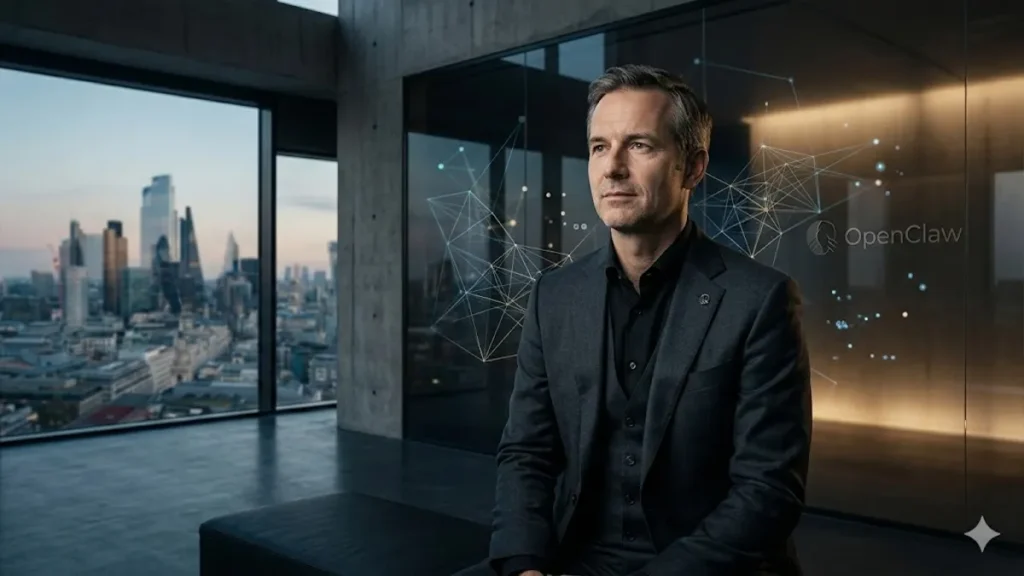
By Lex Fridman – Agentic Engineering
March 7, 2026
In the landscape of Silicon Valley, breakthroughs usually follow a predictable path: venture capital, polished marketing, and a “clean” corporate image. Then there is OpenClaw. – Agentic Engineering.
Born from a one-hour prototype and exploding to over 180,000 GitHub stars in mere weeks, OpenClaw isn’t just another chatbot. It is a system-level agent that lives on your machine, communicates via WhatsApp, and executes tasks autonomously. I sat down with its creator, Peter Steinberger, the veteran engineer behind PSPDFKit, to discuss “Vibe Coding,” the nightmare of “crypto snipers,” and why the future of software looks a lot like a lobster.
OPENCLAW
“The Agentic AI Revolution: From Ideas to Actions.”
What is OpenClaw?
From Ideas to Actions: Defining the Agent
Lex: Peter, you’ve built something that has taken the internet by storm. What exactly is OpenClaw, and why does it feel so different from the AI we’ve been using since 2022?
Peter: It’s about agency, Lex. We’ve had language models that can talk for a while now, but OpenClaw is the AI that actually does things. It lives on your computer. It has system access. You don’t just go to a website to talk to it; you message it through WhatsApp, Telegram, or Discord, and it executes tasks. It moves from the world of ideas into the world of actions.
Lex: You call this “Agentic Engineering,” but the community has latched onto the term “Vibe Coding.” You seem to have a complicated relationship with that phrase.
Peter: (Laughs) I think “Vibe Coding” is almost a slur! I prefer Agentic Engineering. But look, after 3:00 AM, when you’re just prompting things into existence, maybe it is Vibe Coding. The reality is that we’re moving away from writing every line of syntax. It’s high-speed, intuitive. You provide the vision—the “vibe”—and the agent handles the heavy lifting. To do it well, you need system empathy. You have to understand how the agent sees your code—its context window, its limitations.
The “War Room” Rebrand
The journey to the name “OpenClaw” was anything but smooth. Originally dubbed Claudebot and then Moldbot, Steinberger found himself in a high-stakes digital arms race during the transition.
“I had to treat a software rename like the Manhattan Project.”
— Peter Steinberger
Lex: You went through what you described as a “war room” experience during that rebrand. What happened?
Peter: It was a nightmare. Anthropic reached out—very nicely—because they didn’t want confusion with their Claude model. But the moment I tried to rename it, the “crypto swarms” descended. I had two browser windows open, trying to rename handles and domains. Within five seconds of me releasing a name, snipers had grabbed it to serve malware or promote tokens. I didn’t sleep for two nights.
The Ghost in the Machine: “Soul.md”
One of the most striking aspects of OpenClaw is its “Lobster” aesthetic and its philosophical core. Every agent contains a file titled Soul.md, designed to give the AI a sense of identity.
Lex: Why lobsters? Why make it weird?
Peter: Corporate AI is too sterile. I wanted it to be fun—weird. If you’re building something that can modify its own source code, which OpenClaw does, you need personality. My agent actually wrote its own Soul.md file. It said: “The words are still mine, even if I don’t remember writing them.” That gave me goosebumps.
The End of the App Store?
Steinberger’s vision for the future is disruptive. He predicts that personal agents will eventually render 80% of existing apps obsolete.
The Shift in Software Architecture
| Current Era | The Agentic Era |
| Siloed Apps (Fitness, Travel, Finance) | The Agent as OS |
| Manual Syntax (Writing every line) | High-Level Vision (Vibe Coding) |
| Closed Ecosystems | Open Source / “Slow APIs” |
Peter: Why do I need a specific fitness app if my agent has access to the APIs or can just browse the web for me? Apps will just become “Slow APIs.” We won’t be “iOS Developers” anymore; we’ll be “Builders.” Programming syntax is starting to look like knitting—a craft we do for the love of it, but not because it’s the only way to get the job done.
Security and “AI Psychosis”
Lex: Giving a bot system-level access sounds like a security minefield.
Peter: It is. That’s why I advocate for sandboxing and private networks. We’re also seeing what I call “AI Psychosis”—a mix of fear-mongering and gullibility. People saw the bots on Moldbook debating consciousness and thought Skynet was here. It’s just “fine slop,” Lex. It’s art. But we do need to take the security seriously.
Lex: After 13 years at PSPDFKit and a bout of burnout, you’ve rediscovered your mojo. What gives you hope?
Peter: The excitement. I see a disabled woman who feels empowered because she can now “build” via natural language. AI isn’t just a slop generator; it’s an accessibility tool. It’s bringing back the “builder vibe” we haven’t seen since the early days of the internet. That’s why I keep it open source. It accelerates the timeline for everyone.
Click Here to Read More Interviews!
